


By Jahid Hussain, Founder, Paradigm Media Networks
Quick Answer
LLM content structure means organizing your writing — headings, definitions, entities, and evidence — so AI systems like ChatGPT, Perplexity, and Google AI Overviews can accurately parse and cite it. The core method: define terms in the first 1-2 sentences of each section, use entity-based headers instead of clever ones, back every claim with a sourced statistic, and close each section with a clear takeaway. Content structured this way earns AI citations 30-40% more often than unstructured content covering the same topic, according to a Princeton and Georgia Tech study on generative engine optimization.
The content game changed. What worked last year is gone.
Google’s AI Overviews, ChatGPT search, and Perplexity are all powered by large language models, and they now decide what content gets seen before a human ever scrolls past the fold. If your content isn’t structured for these systems, you’re losing visibility — even at rankings that used to guarantee traffic.
This guide breaks down exactly how to structure content that LLMs can parse, trust, and cite.
Why LLM-Friendly Content Matters in 2026
Large Language Models aren’t emerging tech anymore — they’re the default interface for search.
Google AI Overviews now trigger on approximately 48% of all tracked search queries, a 58% year-over-year jump, according to BrightEdge’s 2026 search data. Traditional SEO still matters, but it’s only half the equation now.
Here’s the uncomfortable part: your blog post can rank #3 on Google while an AI Overview pulls its answer from the page sitting at position #7 — because that page’s structure made it easier for the model to extract and cite. Ranking and citation are increasingly separate problems. In fact, Moz’s analysis of 40,000 queries found that a large majority of Google AI Mode citations don’t come from the organic top-10 at all.
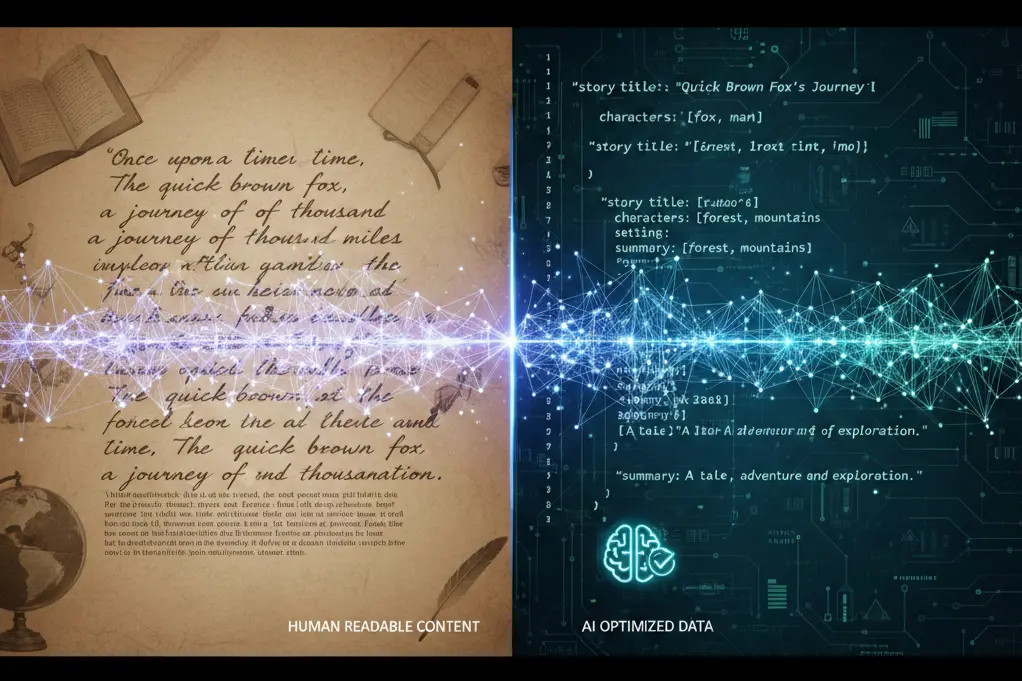
LLM content optimization means writing for two audiences at once: humans and machines. Machines need context, clarity, and structure to extract your content confidently.
How LLMs Evaluate Content
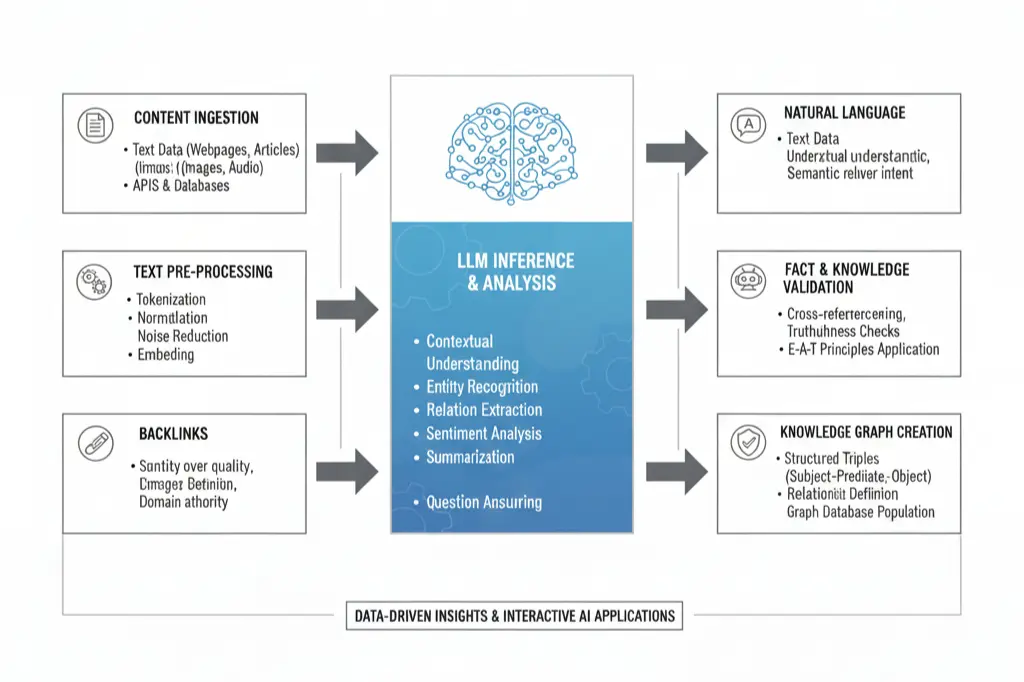
LLMs don’t read the way humans do. They interpret content through:
- Entities and their relationships
- Semantic depth and context
- Factual clarity and accuracy
- Source authority signals
- Answer completeness
- Intent alignment precision
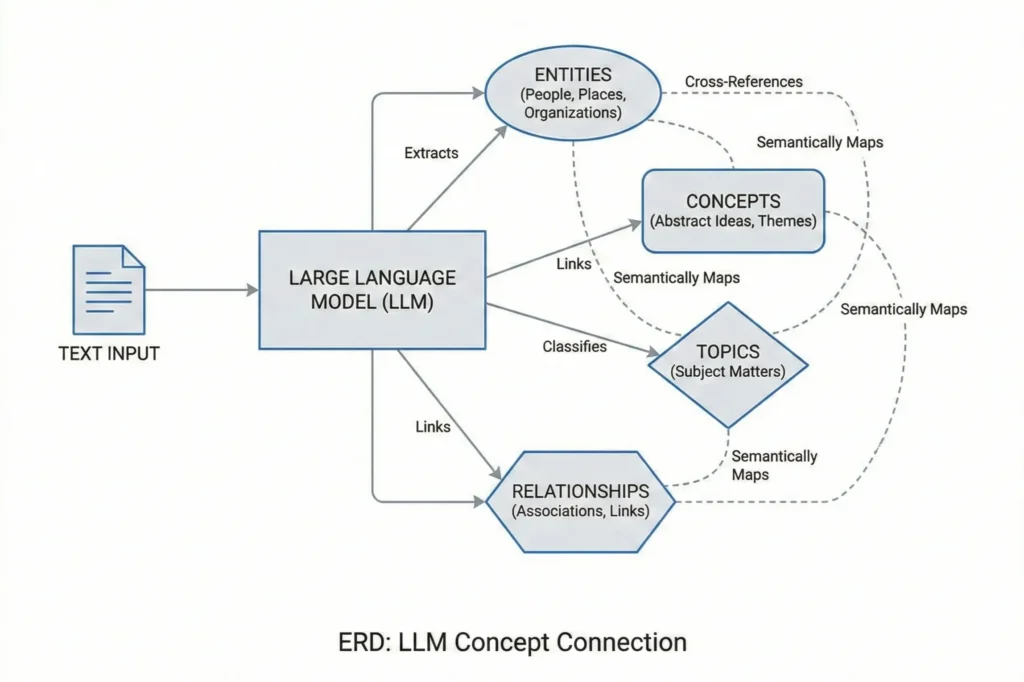
When an LLM scans your article, it’s building a knowledge graph — connecting entities and scoring confidence based on how clearly you’ve structured your explanations. Your content strategy needs to mirror how these systems process information, not just how a human skims a page.
EEAT and Google’s People-First Guidelines {#eeat}
Keyword density stopped being the deciding factor years ago. Google’s AI systems now weigh EEAT — Experience, Expertise, Authoritativeness, Trustworthiness — as the foundation of content evaluation, and LLMs enforce EEAT through structure, not vibes.
To meet EEAT requirements:
- Write from genuine knowledge and direct experience
- Reference credible, named statistics and sources
- Add unique expert insight, not summarized consensus
- Show proof over opinion
- Include visible author credentials
- Link out to authoritative sources
- Display and maintain accurate publication/update dates
- Demonstrate specific industry expertise, not generic claims
Content with statistics, citations, and direct quotations achieves 30-40% higher visibility in AI responses than content without them, per the same Princeton/Georgia Tech GEO research cited above. Structured expertise outperforms generic optimization every time.
Step-by-Step Guide to Structure Content for LLMs {#steps}
Step 1: Start with the Exact Search Intent
Before writing, define:
- Who’s searching?
- Why are they searching?
- What answer do they expect?
- What pain point exists?
- What action should they take next?
For LLM content structure topics specifically, intent combines informational learning with commercial consideration — readers want to understand the concept and know their implementation options.
Step 2: Use Entity-Based Topic Architecture
Entities make content machine-understandable, not just readable. Core entities for this topic include: Large Language Models, Google EEAT, semantic SEO, AI search systems, and content optimization frameworks.
LLMs build knowledge graphs around entities. When entity relationships are properly structured, your content becomes citeable across multiple AI platforms at once.
Step 3: Build Hierarchical Headings
Use H1 → H2 → H3 in strict logical order. Example:
H2: What is LLM content structure?
H3: Definition
H3: Why it matters
H3: Real-world example
Avoid clever, ambiguous headings like “The AI Revolution of Content Creation.” LLMs need plain, descriptive headers they can map directly to a query.
Step 4: Add Contextual Sub-Answers
LLMs cite content containing mini-answers to every sub-topic. For each section, include a clear definition, an importance explanation, how it works, a practical example, advantages/limitations, and step-by-step guidance where relevant.
Step 5: Use Evidence-Backed Statements
LLMs prioritize supported claims over opinion. Always include real, named research, statistical data, established frameworks, expert quotations, or case study results — with the source linked, not just referenced.
Step 6: Optimize for Semantic Retrieval
Add elements that help LLMs reuse your content: clear concise definitions, bullet-point summaries, glossary-style terms, explanatory examples, and alternative phrasings of key concepts.
Step 7: Add Clear Takeaways
End each section with summarized key points and actionable guidance. LLMs frequently extract conclusion paragraphs for AI snippet generation — pages updated within the last two months earn roughly 28% more citations than stale ones, per Superlines’ 2026 AI search data. Make your takeaways current and count.
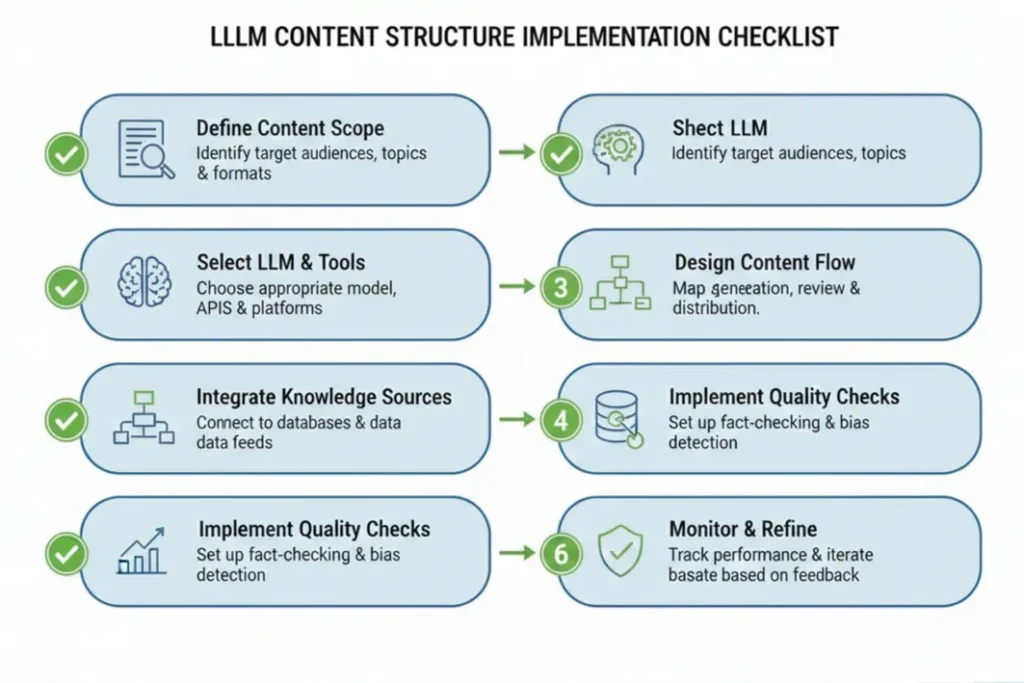
LLM-Friendly Formatting Rules {#formatting}
- Short paragraphs (2-3 sentences max)
- Bullet points used liberally
- Numbered steps for any process
- Clear, standalone definitions
- No long text walls
- Frequent concrete examples
- Visual breaks between dense sections
Format directly affects parseability. LLMs struggle with dense, unstructured text blocks regardless of how good the underlying information is.
Common Mistakes Content Teams Make {#mistakes}
- Writing exclusively for Google’s traditional algorithm
- Overusing keywords without context
- Skipping hierarchical structure
- Ignoring entity-based writing principles
- Missing step-by-step explanations
- Zero expert insight or original analysis
LLMs skip poorly structured content and cite competitors with better formatting — even when the underlying information quality is similar.
Example LLM-Structured Content Template {#template}
H1: Main Topic (question format)
H2: Quick Explanation — simple explanation, necessary context, clarity-first
H2: Detailed Breakdown — What it is / Why it matters / How it works / Practical example
H2: Expert Commentary
H2: Implementation Steps
H2: Recommended Tools
H2: FAQs
H2: Next Steps
This structure works because it matches how LLMs expect information to be organized when extracting an answer.
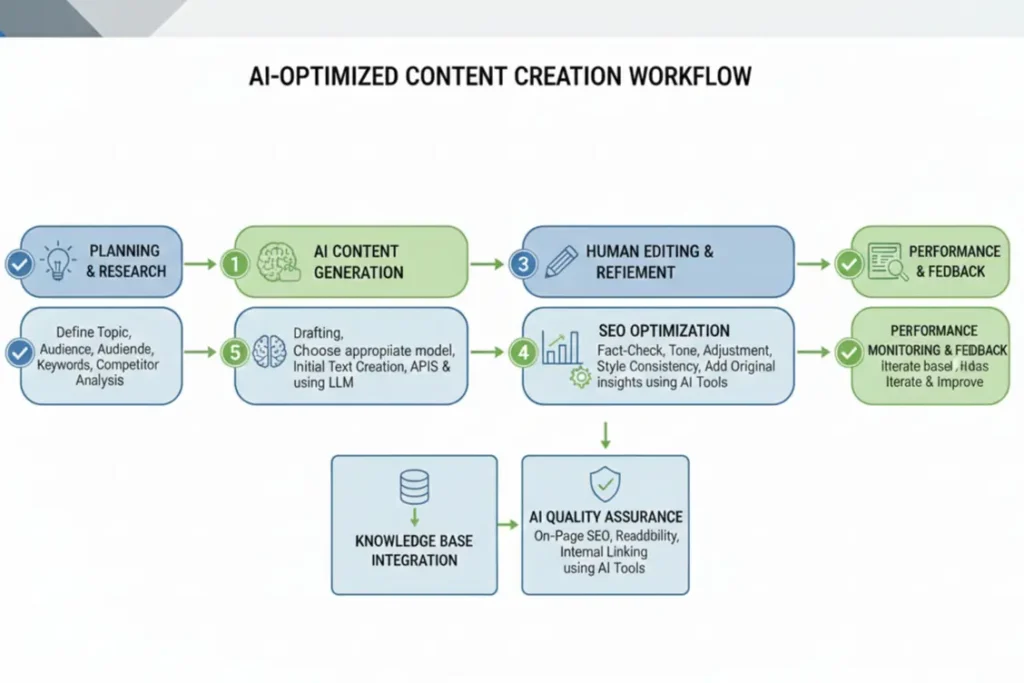
Tools & AI Workflows to Speed Up Production {#tools}
- Google Search Console — track AI Overview appearances
- Surfer SEO — content optimization scoring
- MarketMuse — topic authority mapping
- Clearscope — semantic keyword research
- Frase — AI content brief generation
- Perplexity — AI citation research
- ChatGPT — content structuring assistance
Tools surface the gaps; they don’t fix structure on their own. That still takes deliberate rewriting.
Case Study: How This Applies in Practice {#case-study}
Fouv Org worked with Paradigm Media Networks to strengthen their digital authority around sustainability initiatives. Through entity-focused content restructuring, source-backed claims, and SEO optimization aligned with the framework above, we improved their reach and search performance. The lesson carries directly into LLM structuring: the underlying expertise didn’t change — the structure around it did, and that’s what made it easier for both Google and AI systems to trust and surface.
See more of our work at paradigmmedianetworks.com/our-work.
AEO Checklist: Getting Answer Engines to Cite You {#aeo}
- Lead with a direct definition. Answer the core question in the first 40-60 words of the page — that’s the block AI Overviews and ChatGPT search pull first.
- Write standalone sentences. Each sentence should make sense without needing the paragraph around it, since answer engines extract at the sentence level.
- Use FAQ schema for every genuine question your audience asks — not just for SEO snippets, but because AEO systems parse FAQPage markup directly.
- Keep answers self-contained per section. Don’t make the reader (or the model) scroll elsewhere to complete an answer.
GEO Checklist: Generative Engine Optimization {#geo}
- Add structured data. Article, FAQPage, Person, and Organization schema let engines verify authorship and content type programmatically (schema block below).
- Cite real, named sources. Content with statistics and named citations sees 30-40% higher visibility in AI answers — see the EEAT section above.
- Test across platforms monthly. Query your target phrase in ChatGPT, Perplexity, and Google AI Overview to see whether you’re cited, and who’s cited instead.
- Refresh on a schedule. Content updated within the last two months earns meaningfully more citations than stale pages — set a quarterly review cadence.
- Keep author entity consistent. One named author, one bio, one LinkedIn, referenced identically across every page and every schema block.
Frequently Asked Questions
What is LLM content structure?
A systematic approach to organizing written content that makes it machine-readable, context-aware, and optimized for AI comprehension — writing with dual purpose: human readability plus machine parseability.
Why do businesses need LLM-optimized content?
Because Google and AI search platforms now rely on structured knowledge extraction instead of traditional keyword signals. Content that LLMs can’t parse doesn’t appear in AI-generated results, regardless of quality.
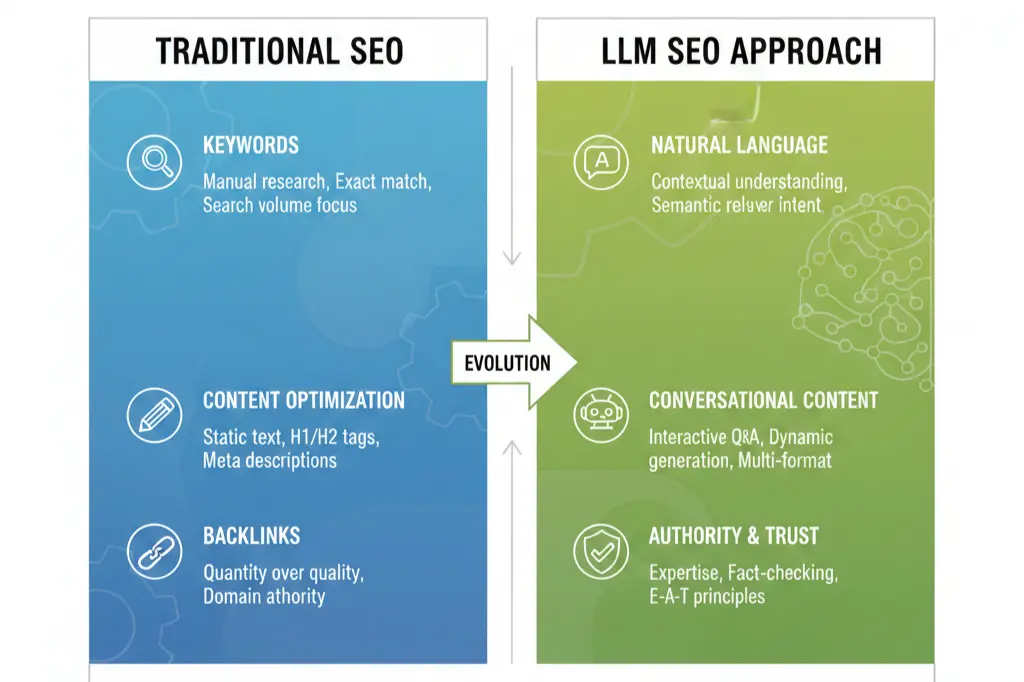
What’s the difference between traditional SEO and LLM SEO?
Traditional SEO targets Google’s standard search results. LLM SEO services optimize for Google, AI Overviews, and third-party AI platforms simultaneously.
How long does it take to see results from LLM content optimization?
Most businesses see initial AI citation improvements within 30-60 days, with fuller visibility across platforms typically by 90-120 days of consistent implementation.
Can we outsource LLM content structure work?
Yes. Many teams work with a specialized digital marketing agency rather than building this capability in-house, for faster implementation and proven frameworks.
What industries benefit most from LLM content structure?
B2B SaaS, financial services, healthcare, legal, and enterprise technology see the strongest returns — any industry where trust and expertise directly affect buying decisions.
What should we consider when evaluating an LLM content optimization partner?
Look for proven EEAT implementation experience, entity-based optimization capability, semantic SEO expertise, and transparent pricing. The right partner offers both strategy and hands-on execution.
Key Takeaways {#takeaways}
- AI Overviews now trigger on roughly half of all Google searches — ranking well no longer guarantees you’re the one being cited.
- LLMs extract via entities and structure, not keyword density; build headers and sections around clear, named concepts.
- Every claim needs a real, linked source — unsupported statistics undermine the exact EEAT signals this framework is built to earn.
- Structure each section as a self-contained mini-answer: definition, explanation, example, takeaway.
- Revisit and refresh this content quarterly — freshness is a measurable citation factor, not a nice-to-have.
Ready to make your content AI-visible?
Schedule a strategy call with Paradigm Media Networks and we’ll audit your AI-readiness gaps across your existing content.