



By Jahid Hussain, Founder, Paradigm Media Networks
Quick Answer
LLM entity SEO is the practice of structuring your brand — its identity, services, people, and relationships — so AI systems like Google AI Overviews, ChatGPT, and Perplexity can understand, verify, and cite it as a trustworthy source. It combines schema markup, entity relationship building, and consistent brand facts across the web. Unlike keyword SEO, it doesn’t optimize for search strings — it optimizes for how confidently an AI model can identify who you are and what you do.
The digital landscape is shifting. Fast. Search engines aren’t just matching keywords anymore, they’re understanding meaning. Context. Relationships. And if you’re still optimizing for traditional keyword density, you’re already behind.
We’ve watched brands struggle as their once-reliable SEO strategies crumble against AI-powered search engines. Google’s AI Overviews, Bing’s Deep Search, Perplexity — they all speak a different language now. The language of entities.
What Is Entity SEO in the LLM Era?
Here’s the thing. LLM entity SEO isn’t just another buzzword we’re throwing around.
An entity is anything real. Your business. Your founder. Your service. A location. An event. LLMs don’t see words, they see things — objects with properties, relationships, and credibility scores.
We’re living in an era where AI models determine what gets shown, cited, and trusted. They use semantic retrieval and vector similarity to decide which brands deserve visibility. Keywords? They’re just breadcrumbs now.
Understanding broader LLM SEO strategies helps you see where entity optimization fits into the bigger picture, and our checklist on how to audit your site for LLM readability turns it into steps. And this shift is measurable: Gartner projects a 25% decline in traditional search volume by 2026 as AI chatbots and virtual agents take over more query volume.
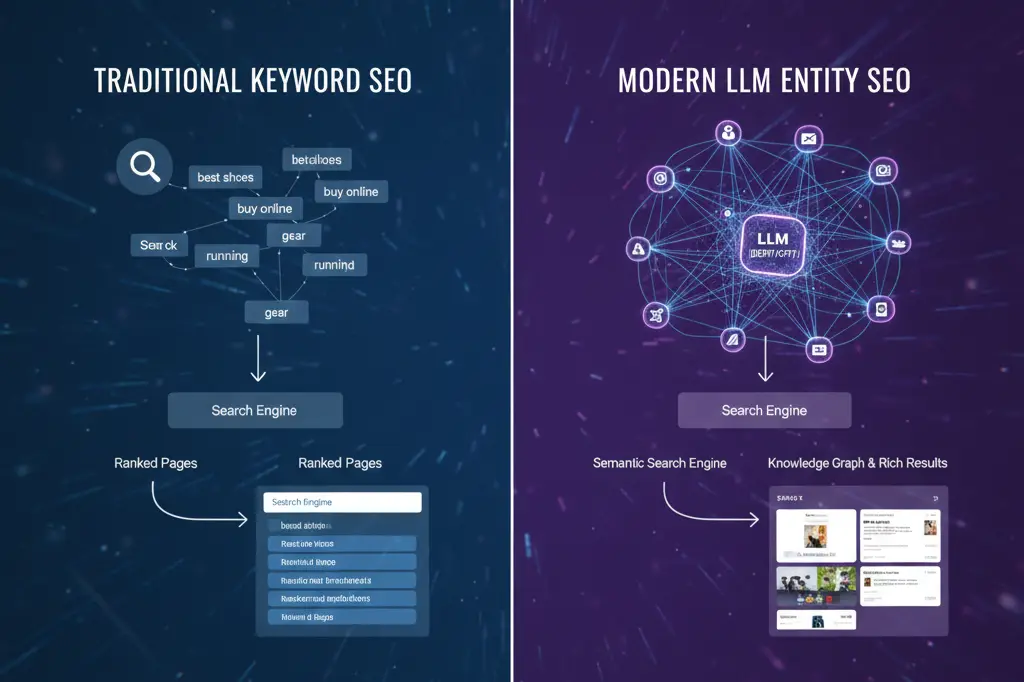
The difference between ranking and obscurity comes down to one question: Does AI understand who you are?
Why Entity Relationships Matter
You can’t exist in isolation. Not anymore.
Your brand’s entities need relationships. Strong ones. When someone searches for “entity SEO services,” AI engines don’t just look for those words. They trace connections:
Your Brand → Your Service → Your Expertise → Trust Signals → External Validation
Think of it like this. You’re not just a company offering services. You’re a node in a massive web of information. And the stronger your connections, the more confidently AI models cite you.
This is backed by data, not just observation: a large-scale University of Toronto study found AI engines show a “systematic and overwhelming bias” toward earned media over brand-owned content — meaning your entity relationships have to extend well beyond your own website to carry real weight.
Inside Modern Knowledge Graphs
Google’s Knowledge Graph isn’t new. But how it works with LLMs? That’s changed everything.
Knowledge graphs are structured networks where entities interact. Google combines its Knowledge Graph with Gemini to interpret queries, validate facts, and select reliable sources for AI-generated answers.
Most brands don’t have their own knowledge graph. That’s the problem.
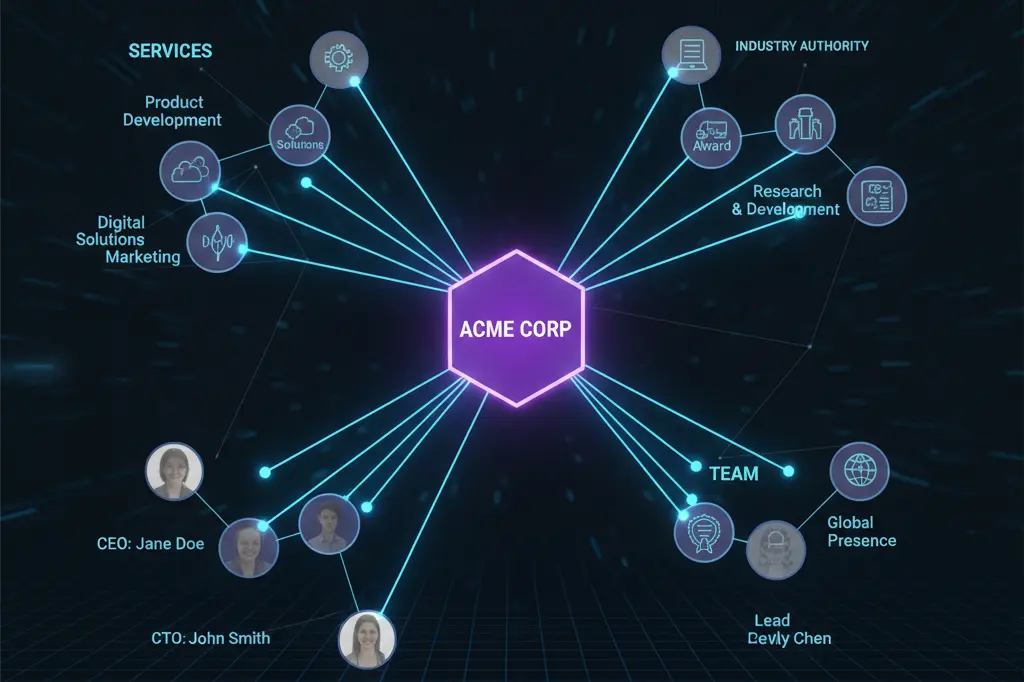
To win in AI search, you need a Brand Knowledge Graph containing:
- Who you are (clear identity)
- What you do (services and solutions)
- Why you’re credible (awards, certifications, case studies)
- How others confirm it (citations, mentions, reviews)
Without this structure, you’re invisible to AI.
Mapping Your Brand Entities
Let’s get practical.
Entity mapping is where knowledge graph optimisation begins. We start by identifying every entity connected to your brand:
Primary Entities:
- Your company
- Core services
- Leadership team
- Locations
- Industry categories
Their Attributes:
- Descriptions that AI can parse
- Awards and certifications
- Trust signals (reviews, testimonials)
- Unique value propositions
Then we connect them logically. Paradigm Media Networks → Offers → Entity SEO Services. Paradigm Media Networks → Is An → AI entity optimisation company.
This clarity is what separates brands that appear in AI overviews from those that don’t.
How LLMs Use Entities for Ranking and Citation
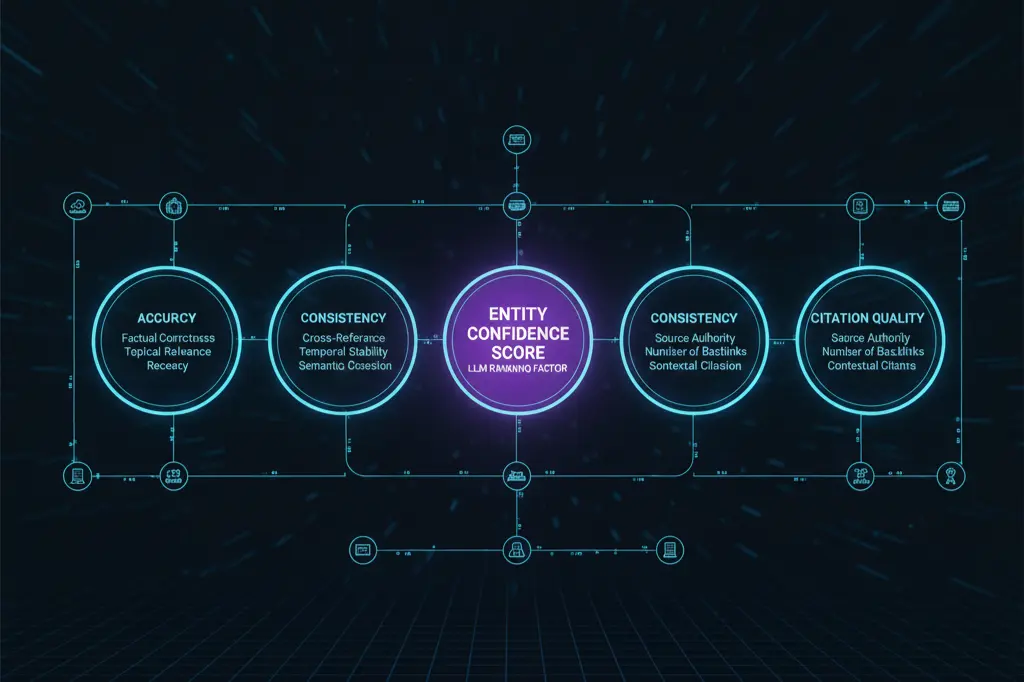
LLMs judge entities through a confidence lens.
They evaluate:
- Accuracy across sources
- Consistency in definitions
- Relationship strength
- External citation quality
- Overall confidence score
The higher your confidence score, the more you appear in AI Overviews, featured snippets, knowledge cards, and Perplexity citations.
What boosts entity trust? Author expertise. Mentions across authoritative sites. Schema consistency. Social verification. Strong internal linking. And earned coverage matters more than most brands realize: content distributed through earned media generates 325% more AI citations than owned-channel distribution alone.
Different AI engines also behave differently, which changes how you should prioritize. ChatGPT mentions brands in 99.3% of eCommerce responses, while Google AI Overview includes brand mentions in just 6.2% — so a strategy built only around Google will miss most of what’s happening on ChatGPT.
This is why working with a knowledge graph optimisation agency matters. We’ve built systems that strengthen every trust signal simultaneously.
Schema Markup for Stronger Entity Signals
Schema is your bridge to AI understanding.
Without schema markup, you’re speaking a language AI can’t fully comprehend. With it, you’re providing machine-readable signals about who you are and what you offer.
Essential Schema Types:
- Organization
- LocalBusiness
- Service
- Person
- Product
- FAQ
- Review
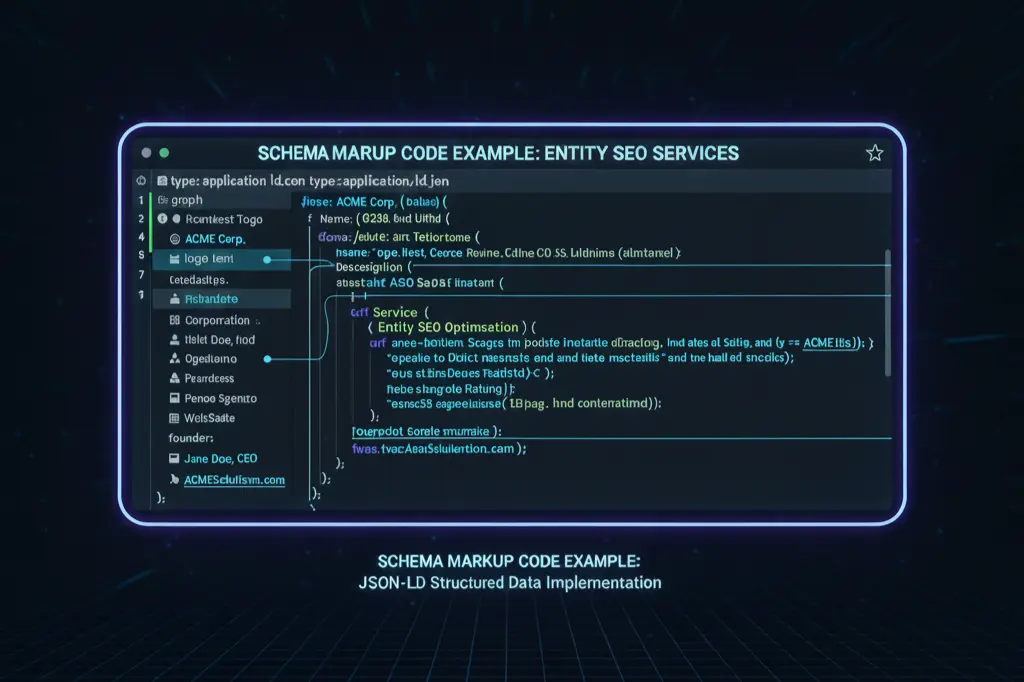
The correlation between schema and visibility is well documented: 72% of sites appearing on Google’s first page use schema markup, a strong signal that structured data and search performance move together.
We’ve implemented schema for hundreds of clients. The ones who do it right see improvements in how AI models interpret their brand identity and connect their website to external sources.
Schema implementation is one of the technical foundations for entity SEO that we prioritize in every optimization strategy.
For more details check our blog on LLM Technical SEO.
Entity SEO in Action
We applied this framework for Moving Hub, a USDOT-licensed US mover. Tightening entity consistency across the site, strengthening Organization and Service schema, and publishing answer-first guides helped the brand get named by five AI assistants, including ChatGPT, Perplexity and Gemini. The full method is in the Moving Hub case study.
See more of our client work on the Our Work page.
Designing Entity-Based Topic Clusters
Your content architecture needs to mirror your knowledge graph.
Traditional pillar pages aren’t enough. You need entity-based clusters where every piece of content reinforces your topical authority.
Example Structure:
Core Entity: LLM Entity SEO
Supporting Clusters:
- Entity relationship building
- Schema implementation for entities
- Knowledge graph construction
- AI search optimization strategies
- Citation building techniques
Each cluster strengthens your semantic footprint. Each internal link reinforces entity relationships.
When you’re creating content structured for LLMs, entity-based clusters ensure AI models understand the full depth of your expertise.
Entity Research and Tools Stack
Professional entity SEO services require sophisticated tools.
We use:
- Google Knowledge Graph API (entity discovery)
- Wikidata (relationship mapping)
- Schema.org Validator (implementation verification)
- InLinks (semantic analysis)
- MarketMuse (topical authority scoring)
- ChatGPT entity extraction (AI perspective)
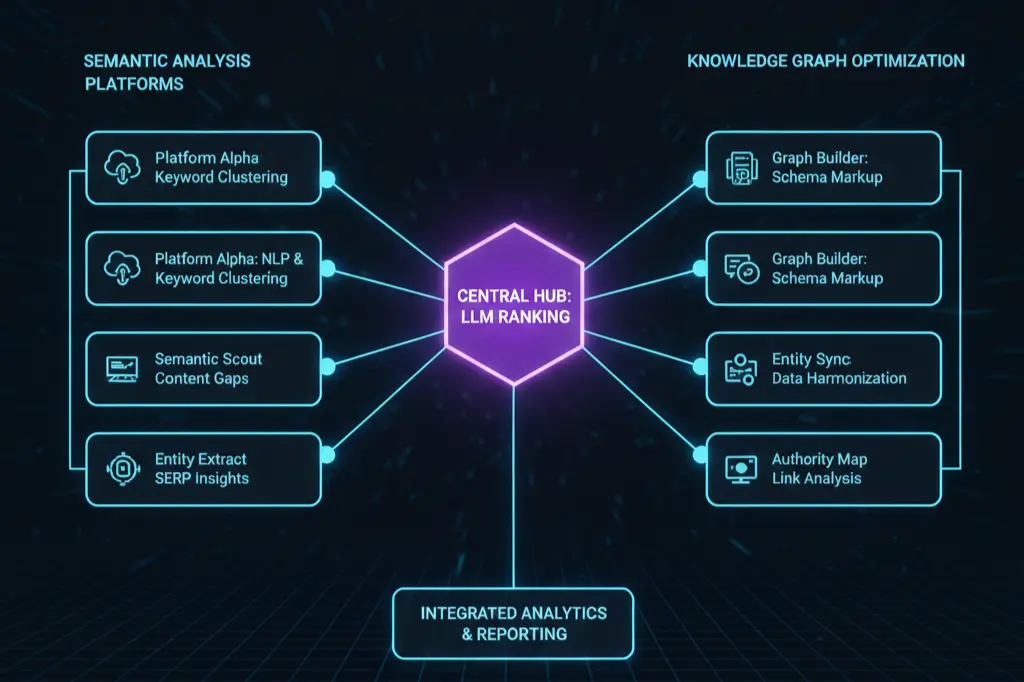
These tools help us identify entity gaps, refine relationships, and ensure consistency across the web. It’s not guesswork, it’s engineered precision.
Answer Engine Optimization (AEO): Making Your Brand the Cited Answer
Entity SEO and AEO are two sides of the same coin. While entity SEO builds the knowledge graph AI trusts, Answer Engine Optimization (AEO) is the discipline of structuring that content so tools like ChatGPT, Perplexity, and Google AI Overviews can lift it directly into a spoken or written answer.
Three things determine whether your content gets cited as the answer:
- Direct-answer formatting — the first 1-2 sentences under any question-style heading should answer it in plain language, before the elaboration.
- Extractable structure — bulleted attributes, numbered steps, and clearly labeled definitions are easier for LLMs to lift than long narrative paragraphs.
- Source consistency — the same facts about your brand (founding info, service list, locations) need to match word-for-word across your website, schema, and third-party listings. Any mismatch lowers your confidence score with the model.
Citations matter differently depending on the engine, too: Perplexity averages over 5 citations per answer but mentions any brand in only 1 out of 5 answers, so earning a citation there requires deeper topical authority, not just brand recognition.
At Paradigm Media Networks, we treat every FAQ block, definition, and stat as a potential AI answer candidate — not just page filler.
Generative Engine Optimization (GEO): Earning Visibility Inside AI-Generated Responses
Generative Engine Optimization (GEO) goes one step further than AEO. It’s not just about being extractable — it’s about being the source a generative model chooses to synthesize into a novel answer, even when your page isn’t the literal top search result.
GEO depends on signals AEO and entity SEO alone don’t cover:
- Citation density across the open web — mentions in press, directories, forums, and industry roundups that reinforce the same entity facts.
- Author and organizational credibility markers — a named author with a real bio, LinkedIn profile, and topical track record.
- Freshness and update signals — LLMs weight recently verified or updated content higher for fast-moving topics like AI search.
- Multi-platform consistency — your entity should say the same thing on your website, Google Business Profile, LinkedIn, and any schema markup.
This matters more than most brands assume: research presented at the International Public Relations Research Conference found 47% of AI citations come from journalistic sources, with 89%+ of cited links being earned rather than owned media. GEO is why entity work and technical SEO can no longer be separated — the model doesn’t rank your page, it evaluates your brand as a trustworthy source across the entire web.
Frequently Asked Questions
What exactly is LLM entity SEO?
It’s the strategic optimization of entities (your brand, services, people) and their relationships so AI search engines can understand, trust, and confidently rank your brand in search results and AI-generated responses.
Why does entity SEO matter more than traditional keyword SEO?
LLMs retrieve information based on entities and semantic meaning, not keyword matching. AI models validate facts through entity relationships and confidence scores — if your entities aren’t well-defined, you’re invisible to AI search.
How does schema markup improve my AI rankings?
Schema makes your brand’s information machine-readable and verifiable. It helps AI models understand your offerings, build accurate knowledge graphs, and connect your site to authoritative external sources — all critical for LLM citation.
How long before we see results from entity SEO?
Most brands see measurable improvements within 60-120 days, depending on current entity strength and citation quality. AI overview appearances and branded citations typically increase first.
Can we implement entity SEO ourselves or do we need an agency?
Entity SEO requires technical expertise in structured data, semantic search, knowledge graph construction, and AI model behavior. A specialized AI entity optimisation company can build comprehensive entity frameworks that individual efforts often miss. Entity work is step one of our GEO services, because AI engines cite brands they can resolve to a single entity.
What’s the difference between local SEO and entity SEO?
Local SEO focuses on geographic visibility. Entity SEO encompasses your entire semantic footprint and how AI understands your brand, services, expertise, and relationships across all contexts, not just location-based searches.
Key Takeaways
- Entities beat keywords. AI engines rank based on who and what you are, not the words on your page.
- Build a Brand Knowledge Graph. Define your identity, services, credibility signals, and external validation clearly and consistently.
- Schema is non-negotiable. 72% of first-page Google results use schema markup — it’s the machine-readable layer AI depends on.
- AEO and GEO are distinct disciplines. AEO gets you extracted as the answer; GEO gets you chosen as the trusted source behind a generated response.
- Earned media outweighs owned content. AI engines are structurally biased toward journalism and third-party validation over what you say about yourself.
- Different AI engines behave differently. ChatGPT, Perplexity, and Google AI Overviews each weigh brand mentions and citations in distinct ways — one-size-fits-all optimization doesn’t work.
- Consistency across the web is a ranking factor. Mismatched facts about your brand lower your AI confidence score.
Ready to Build Entity Authority That AI Can Trust?
The brands winning in AI search aren’t lucky. They’re strategic. They understand that visibility in 2026 isn’t about stuffing keywords, it’s about building entity relationships AI models can verify and trust. It’s about creating knowledge graphs that make your brand the obvious answer. We’ve helped companies like Moving Hub and others move their SEO strategy from keyword-focused to entity-optimized. See more results on our Our Work page.
Your competitors are either already doing this or they’re about to be. The question isn’t whether entity SEO matters, it’s whether you’ll be positioned when AI search becomes the dominant way people find solutions. Paradigm Media Networks specializes in entity-based optimization that gets brands cited, trusted, and ranked by AI search engines. We build comprehensive knowledge graphs, implement advanced schema markup, strengthen entity relationships across the web, and measure everything from AI overview appearances to semantic footprint growth.
We offer complete entity mapping and gap analysis, knowledge graph construction and optimization, advanced schema implementation across all entity types, entity-based content cluster development, citation building and authority reinforcement, plus ongoing measurement and governance.
Visit us at paradigmmedianetworks.com to discover how entity SEO can transform your AI search visibility. Stop optimizing for yesterday’s algorithms and start building entity authority for tomorrow’s AI-driven search landscape.
