

By Jahid Hussain, Founder, Paradigm Media Networks
Jahid Hussain is the Founder of Paradigm Media Networks, leading SEO, AEO, and GEO strategy for e-commerce, real estate, and wellness brands across the US and UK. He has 7 years of experience in growth marketing, SEO and performance marketing, has worked with multiple B2B firms, and holds an MBA in Marketing. Connect on LinkedIn.
Quick Answer
LLM technical SEO is the practice of structuring a website’s code, content, and metadata — semantic HTML, schema markup, entity clarity, and clean crawl paths — so AI systems like ChatGPT, Gemini, Perplexity, and Google AI Overviews can accurately read, summarize, and cite it. It works alongside traditional SEO rather than replacing it: traditional SEO earns rankings, LLM technical SEO earns citations. Google’s own AI Overviews now trigger on roughly 48% of all tracked search queries, so a site that isn’t AI-readable is increasingly invisible in a growing share of search results.
Key Takeaways
- LLM technical SEO optimizes for AI comprehension — semantic HTML, schema, and entity relationships — not just crawler indexing.
- Google AI Overviews now appear on about 48% of tracked queries, up 58% year-over-year, so absence from AI answers is a growing visibility gap.
- Ranking #1 organically does not guarantee AI Overview citation — only around 17% of AIO citations also rank in the organic top 10, which means AI-specific optimization is now a distinct discipline.
- The core levers are: site architecture, semantic HTML, schema/knowledge graph integration, multimodal optimization, crawlability, and AI-focused content indexing.
- Schema markup and clean crawl access (robots.txt permissions for OAI-SearchBot, PerplexityBot, ClaudeBot, Google-Extended) are prerequisites — without them, none of the content-level work matters.
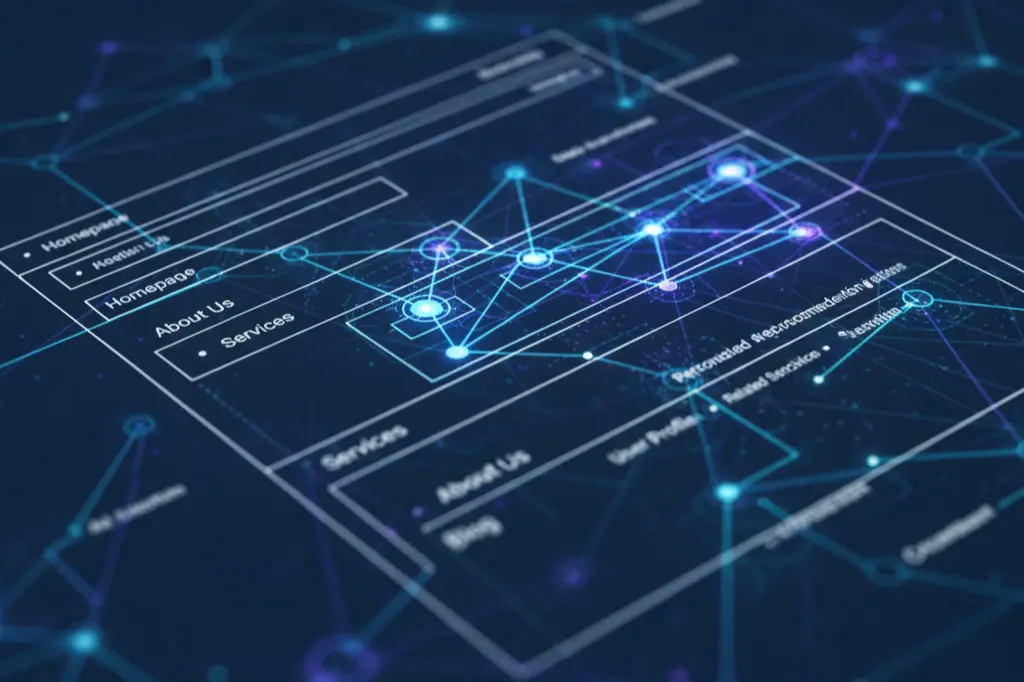
The digital landscape is shifting fast. AI search engines aren’t just crawling anymore — they’re reading, understanding, and interpreting content the way a person would. Google’s AI Overviews, ChatGPT Search, and Perplexity have all changed how visibility works. If your website isn’t structured for AI to understand, it’s effectively invisible in a growing share of searches.
At Paradigm Media Networks, we’ve worked with clients who had strong traditional SEO but weak AI visibility — content that ranked in classic search results but never surfaced in AI-generated answers. The gap usually comes down to one thing: LLM technical SEO wasn’t part of their strategy. See how our LLM SEO and GEO services put this into practice.
Your website needs to be AI-readable, not just crawler-friendly.
What Is LLM Technical SEO?
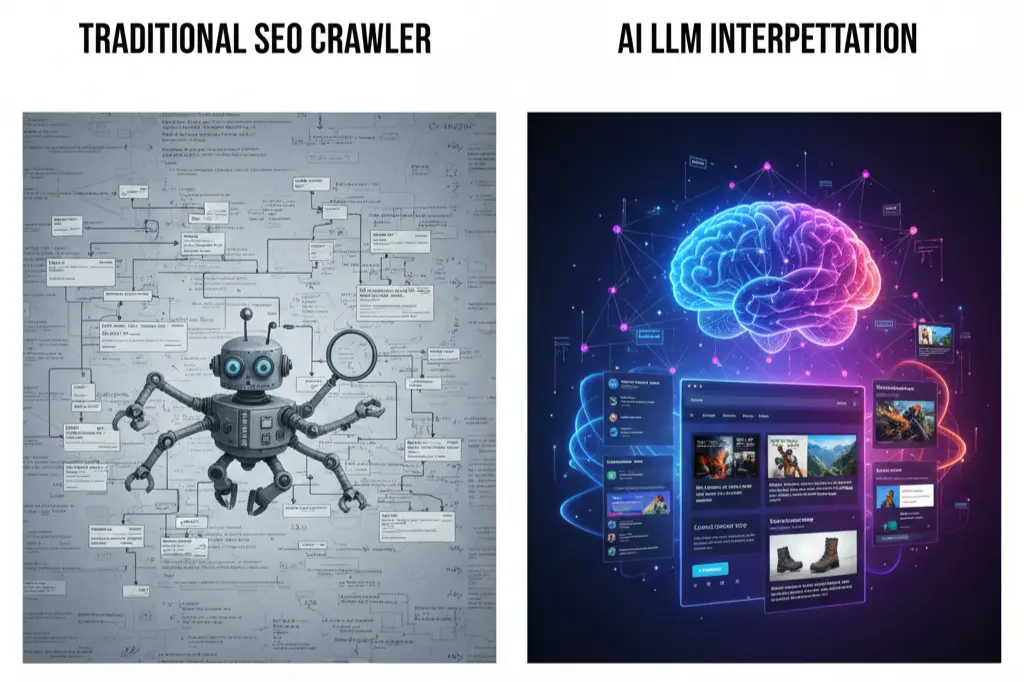
Traditional SEO was built for bots scanning pages for keywords. LLM technical SEO is built for AI systems that interpret context, relationships, and entities — the meaning behind your words, not just the words themselves.
It’s the discipline of optimizing a website so Large Language Models like ChatGPT, Gemini, and Perplexity can accurately interpret, summarize, and cite your content. It’s not about keyword density anymore — it’s about semantic clarity.
Core components include:
- AI-focused site architecture that makes sense to machines and humans
- Semantic HTML that conveys actual structural meaning
- Schema markup for structured understanding
- Multimodal optimization across text, images, and data
- Entity-based indexing that connects related content
- Knowledge graph alignment
Google AI Overviews grew 58% year-over-year and now trigger on approximately 48% of all tracked search queries, according to BrightEdge’s Generative Parser tracking. That growth isn’t evenly distributed — healthcare, education, and B2B technology queries see AI Overviews far more often than real estate or shopping queries — but the trajectory across nearly every category is upward. If AI search engines can’t understand your site, you don’t exist in their answers.
Want to go deeper? See our complete LLM SEO framework, or work through the LLM SEO audit checklist yourself.
Traditional SEO vs. LLM Technical SEO
| Factor | Traditional SEO | LLM Technical SEO |
|---|---|---|
| Optimizes for | Crawler bots, keyword matching | AI comprehension, context, entities |
| Success metric | Ranking position | Citation / inclusion in AI answers |
| Content structure | Keyword density | Semantic HTML, clear entity relationships |
| Discovery signal | Backlinks, page authority | Schema markup, knowledge graph alignment |
| Output | Blue link in search results | Direct answer or citation in an AI response |
AI-Focused Site Architecture
Your site architecture is either helping AI or confusing it — there’s no middle ground.
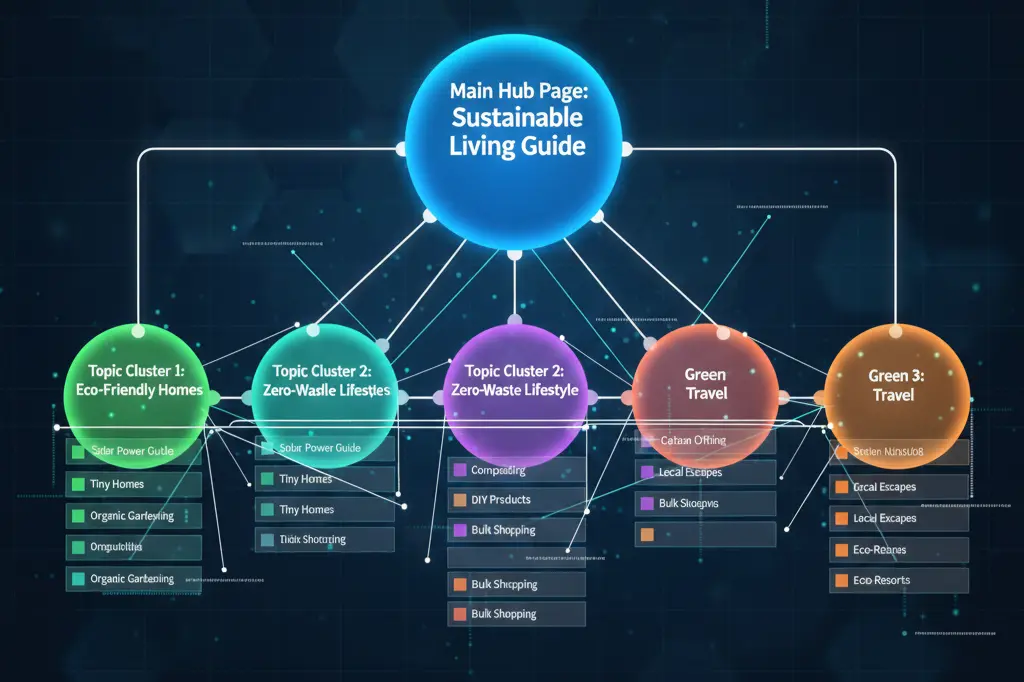
We’ve worked with businesses that had genuinely valuable content, but architecture that undermined it: pages buried several clicks deep, no logical topic clusters, internal links pointing everywhere and nowhere. AI models generate answers using content relationships. When architecture is weak, LLMs can’t connect your pages, and your expertise gets fragmented across search results — if it appears at all.
What we optimize:
- Logical topic clusters aligned with how AI searches for answers
- Clean, semantic URL structures
- Internal linking that builds contextual depth
- Entity-based navigation systems
- Zero structural noise
Think of it as building a map that AI can actually read, follow, and trust. For a deeper look at how architecture ties into entity clarity, see our guide to entity-based SEO for AI models.
Semantic HTML: The Structural Layer AI Depends On
Semantic HTML isn’t optional anymore — it’s a requirement for LLM technical SEO that actually works.
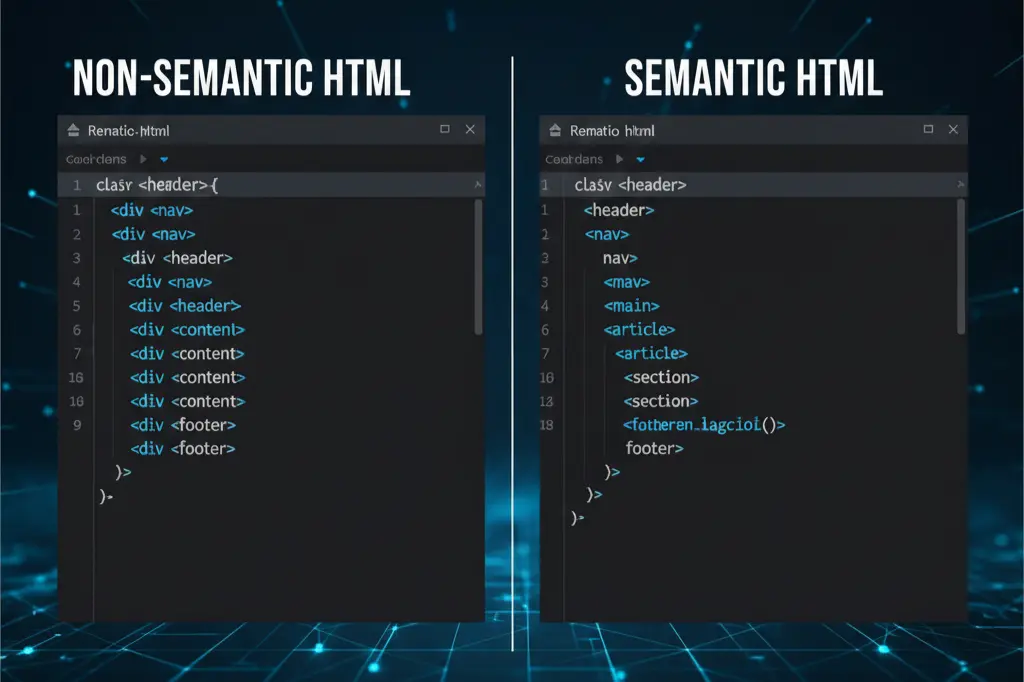
AI interprets content the way a human reader scans for structure and meaning. A page built entirely from generic <div> tags is like a document with no paragraphs or headings: the words are there, but the structure that makes them interpretable is missing.
Key semantic elements we implement:
- Proper
<header>,<main>,<footer>structure <article>,<section>,<aside>for content hierarchy- Clean
<h1>to<h6>heading flow <figure>and<figcaption>for image context- Descriptive attributes throughout
Non-semantic HTML is one of the most common reasons websites fail to appear in AI search. The code may look fine to a developer, but to AI, it reads as unstructured noise.
Schema & Knowledge Graph Integration
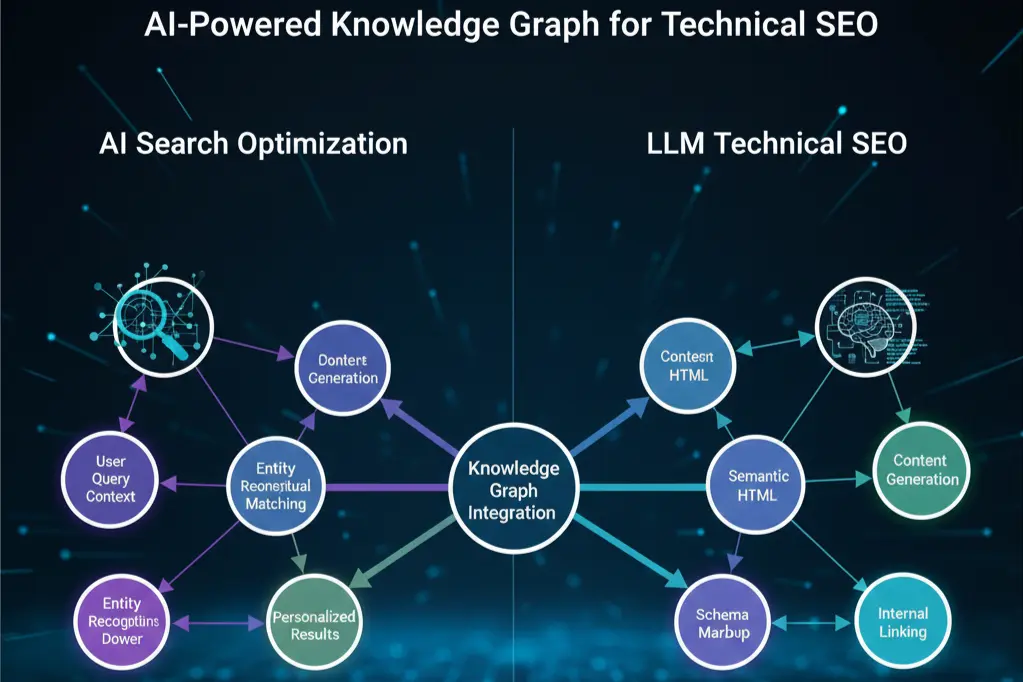
Schema markup is the language AI understands most precisely. Without it, your content is unstructured text with no explicit context. With it, AI can identify exactly what you offer, your expertise, and how your topics relate to one another.
Schema we implement for LLM technical SEO:
- Organization and brand schema
- Product and service schema
- How-to and FAQ schema
- Article and author schema for E-E-A-T
- Entity and topic relationship schema
Beyond markup, we connect your brand to Google’s Knowledge Graph and open entity databases — validating authority and linking your entities so AI systems can confirm: this brand has verifiable expertise here.
Only about 17% of sources cited in AI Overviews also rank in the organic top 10, which means schema and entity work is doing something ranking alone can’t — it’s a separate, necessary layer, not a nice-to-have.
Multimodal Optimization: Text, Images, and Data
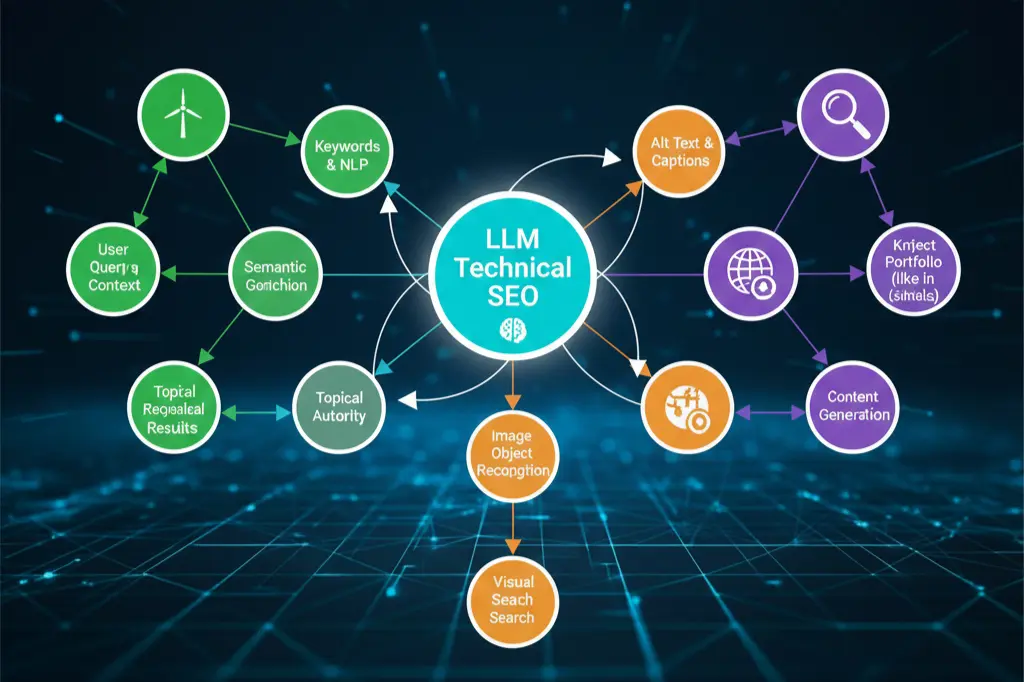
AI search is multimodal — text, images, tables, and charts are all analyzed together.
We’ve seen measurable improvements simply from optimizing images with proper context: alt text that describes content rather than stuffing keywords, EXIF data that reinforces relevance, and tables formatted so AI can extract data points cleanly.
Our multimodal optimization approach:
- Strategic alt text that adds context, not just keywords
- Image EXIF data enhancement
- JSON and CSV structured data clarity
- AI-readable tables and data visualizations
- Text-to-image context alignment
LLMs extract insights from everything on a page. Skipping visual optimization means leaving visibility on the table.
AI Crawlability: The Foundation Everything Else Depends On
Before AI can understand your content, it needs to access it. Fast load speeds, clean Core Web Vitals, proper sitemaps, and zero indexing issues are the technical foundation everything else is built on.
AI-search-centered technical improvements:
- Reduced crawl depth for faster discovery
- Improved entity distribution across pages
- Predictable URL semantics
- Zero orphan pages
- Clean canonical signals
- Error-free server responses
This is also where robots.txt matters directly: AI crawlers like OAI-SearchBot (ChatGPT search), PerplexityBot, ClaudeBot, and Google-Extended need explicit permission to access your content. GPTBot only collects OpenAI training data, so it is not the one that decides ChatGPT search visibility. A site can be perfectly optimized and still be invisible to AI if these crawlers are blocked. Our AI SEO services start with exactly this crawlability and rendering audit.
We’ve worked with sites that were technically broken — with significant portions unindexed by Google — and seen AI search visibility improve measurably within weeks of fixing crawlability issues.
LLM-Based Content Indexing
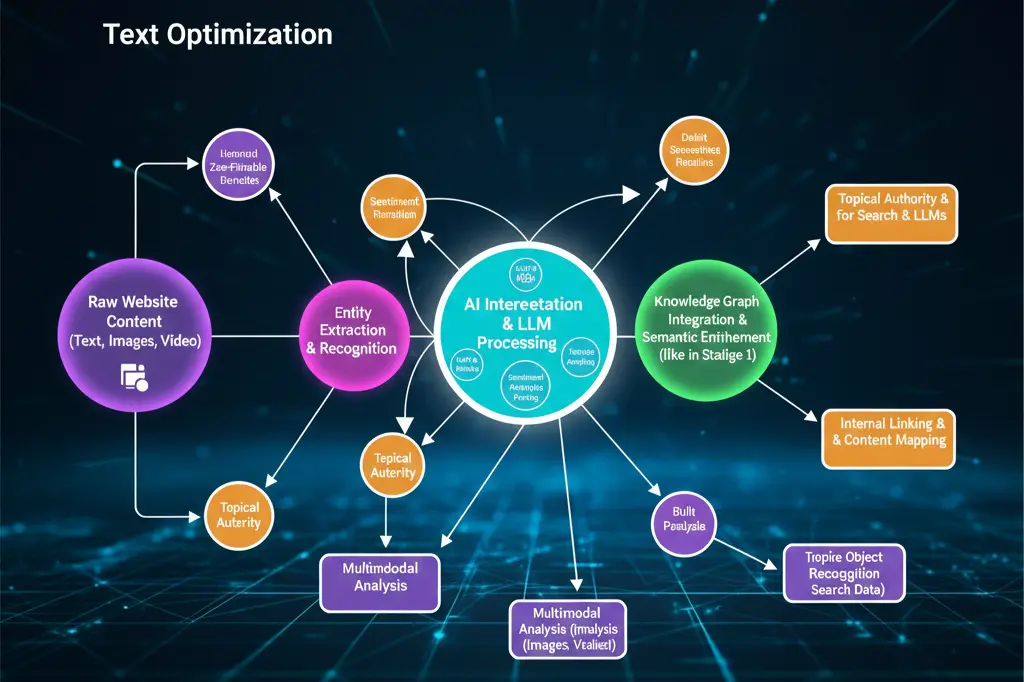
AI search engines index differently than traditional search — they interpret content, summarize it, and build understanding rather than simply matching keywords. Incorrect indexing means rankings can collapse even with strong content underneath. Technical access gets you retrieved; the page layout decides whether you are quoted, which is covered in our guide on how to structure content for LLMs.
Indexing techniques we apply:
- Entity-first content indexing
- Topic-layer mapping for AI models
- AI-focused content hierarchy
- Link graph reinforcement
- Summarization optimization
This ensures AI models understand your expertise, authority, relevance, and topical coverage accurately — the difference between being cited correctly and being misrepresented.
Real Results: How This Plays Out for Clients
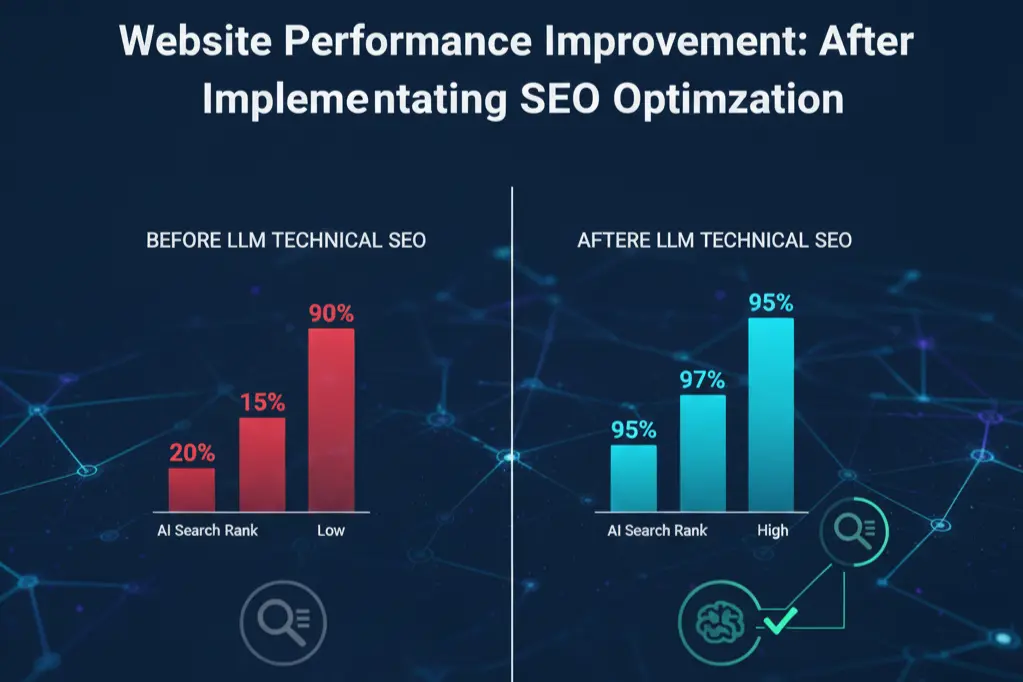
Structural fixes like these aren’t theoretical. For Moving Hub, a US mover, a technical rebuild of canonicals, duplicate URLs and schema came before any new content, and the site went on to earn about 2,460 AI citations in a 90-day window. You can see this and other client work in the Moving Hub case study and on our Our Work page.
Technical SEO Tools & AI Search Optimization
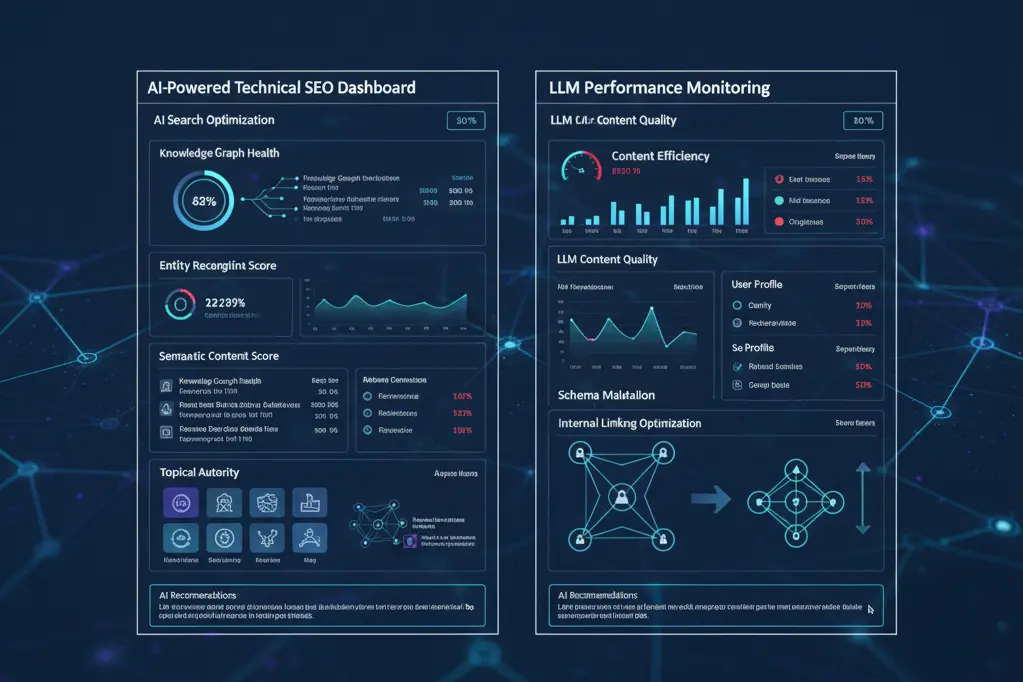
We use tools purpose-built for AI search optimization:
- LLM content evaluators
- Semantic HTML validators
- Knowledge graph mapping systems
- AI crawl emulators
- Schema testing engines
- Entity density analyzers
- Multimodal content scanners
LLM technical optimization packages include:
- AI search visibility setup
- Full LLM technical SEO overhaul
- Continuous AI crawl monitoring
- Entity growth and schema expansion
- E-E-A-T reinforcement systems
Whether you’re a startup or an enterprise, we scale these solutions to your needs.
Why Work With Paradigm Media Networks
The businesses winning in AI search invested in LLM technical optimization early — rebuilding architecture, implementing semantic HTML, and aligning with knowledge graphs before it became table stakes.
Why Paradigm Media Networks:
- Specialized expertise in AI search systems
- Proprietary LLM optimization frameworks
- Deep schema and knowledge graph engineering
- Proven results across industries (see Our Work)
- Future-ready website architecture
We help you build digital properties that AI search engines trust and users value.
FAQs
What’s the difference between traditional SEO and LLM technical SEO?
Traditional SEO optimizes for crawler bots scanning pages. LLM technical SEO optimizes for AI interpretation — meaning, context, and entity relationships. It’s the difference between being found and being understood.
Do all websites need LLM technical SEO?
Yes. AI Overviews now appear on roughly 48% of tracked search queries, and that share continues to grow. Without LLM technical optimization, content risks misinterpretation or exclusion from AI-generated answers. ALM Corp
How long does LLM technical SEO take to show results?
Most businesses see crawlability and structural improvements within 4–6 weeks. Fuller AI search visibility improvements typically appear within 2–3 months, depending on site complexity.
Is schema markup mandatory for AI search?
Not mandatory, but without it, you lose structured clarity that AI systems rely on. Only about 17% of sources cited in AI Overviews also rank in the organic top 10, suggesting schema and entity signals matter independently of ranking position.
Can Paradigm Media Networks handle enterprise websites?
Yes — we specialize in enterprise-level AI technical SEO and complex optimization projects, with scalability built into our frameworks.
What makes LLM technical SEO different from adding keywords?
Keywords tell search engines what topics you cover. LLM technical SEO ensures AI understands how you cover them — with what expertise, authority, relationships, and context. It’s depth over density.
How do I know if my website is AI-search ready?
Check three things: whether your pages use semantic HTML rather than generic <div> structures, whether Organization/Article/FAQ schema is implemented and validates in Google’s Rich Results Test, and whether your robots.txt allows AI crawlers like OAI-SearchBot, PerplexityBot, and Google-Extended. If any of these fail, AI engines likely can’t read or cite your content correctly.
What’s the difference between LLM technical SEO and GEO (Generative Engine Optimization)?
LLM technical SEO is the infrastructure layer — schema, semantic HTML, crawlability. GEO is the content and positioning layer — writing in a way that’s easy for AI to quote accurately. Both are needed: strong GEO content on a page without LLM technical SEO still won’t get crawled or understood correctly. The Google-side fixes overlap heavily with our technical SEO services.
Ready to Future-Proof Your Website?
Your website doesn’t just need optimization — it needs AI understanding. AI search isn’t coming; it’s already reshaping who gets visibility and who disappears.
Paradigm Media Networks builds websites that AI search engines trust and users value. See real examples of our work on the Our Work page, or schedule a call to discuss your specific needs.
Not sure where you stand? Get a free technical audit for LLM SEO to identify gaps in your current optimization.
