



Google Ads for moving companies makes money when you pay for booked moves, not clicks. The nearest 2026 benchmark, Home and Home Improvement, runs $8.33 a click, an 8.05% conversion rate and $90.92 a lead. Movers beat that by splitting local and interstate campaigns, blocking broker, truck rental and job searches, tracking calls through to booked jobs, and spending hardest from May to September. Judge the account on cost per booked move.
Key Takeaways:
- A $91 lead means little until you know how many leads book.
- Local and interstate moves need their own campaigns, budgets and landing pages.
- Blocking brokers, DIY renters and job seekers is usually the fastest saving.
- Feed booked jobs back into Google Ads, or bidding chases form fills.
- Use ads on routes your organic pages can’t reach yet.
Ask a mover why Google Ads doesn’t work and they’ll point at the bill. Look at what it paid for, though. One search for “cheap movers near me” can come from a family moving house, a broker looking to resell the job, someone pricing a rental truck, or a driver after work. Google charges the same for all four.
What Google Ads Costs a Moving Company in 2026
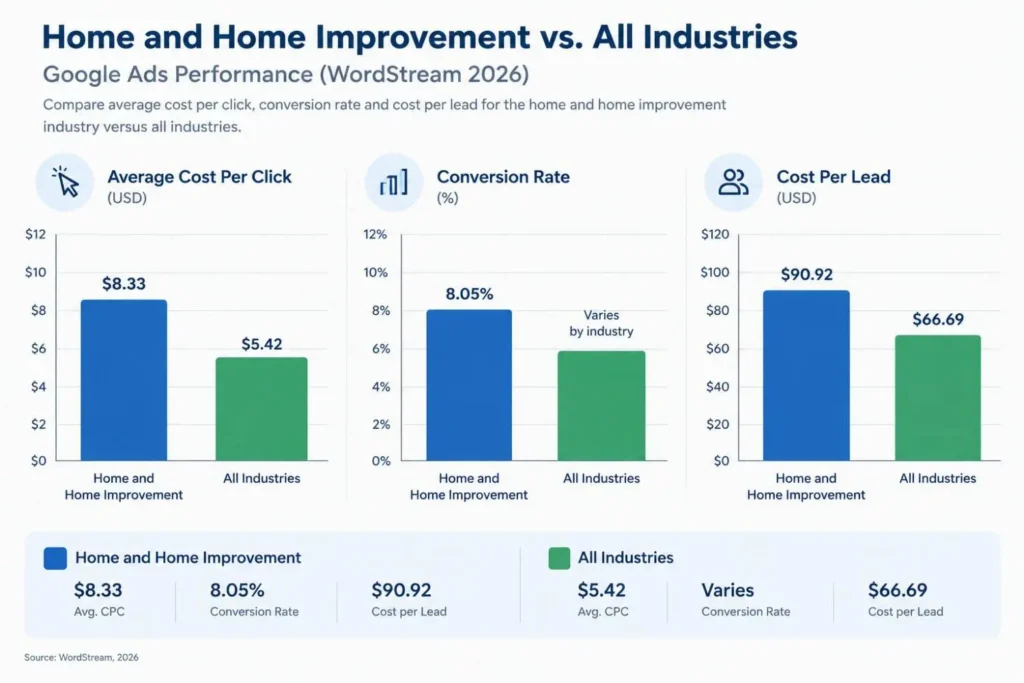
No big benchmark study has a moving category, so home services is the nearest stand-in. WordStream’s 2026 Google Ads benchmarks covered 13,474 US search campaigns from April 2025 to March 2026:
| Metric | Home and Home Improvement | All industries |
| Average cost per click | $8.33 | $5.42 |
| Conversion rate | 8.05% | Varies by industry |
| Cost per lead | $90.92 | $66.69 |
Some moving keywords run higher. Brokers bid on your terms too, and interstate jobs are worth enough that everyone pays more per click. Local searches cost less but bring more one-item jobs.
Before comparing your account, split 90 days of spend and leads by campaign type. A blended cost per lead hides a lot: cheap local leads can drag the average down while interstate costs double, and if interstate leads work more often at bigger job values, they may still be your best money.
Why Cost per Booked Move Beats Cost per Lead
Take two accounts, each spending $3,000 a month:
| Account A | Account B | |
| Cost per lead | $40 | $75 |
| Leads | 75 | 40 |
| Booking rate | 1 in 15 | 1 in 4 |
| Booked moves | 5 | 10 |
| Cost per booked move | $600 | $300 |
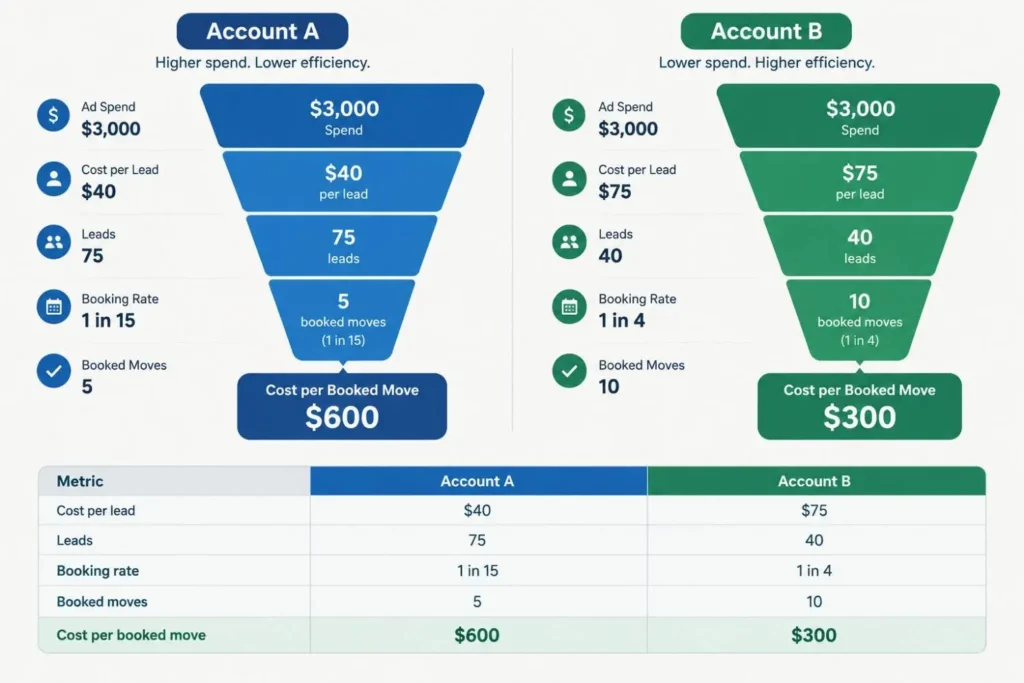
On the dashboard, Account A wins. In the bank, it loses. The difference is who clicked: brokers, out-of-area searchers, jobs you’d never take. For reference, Moving Hub, a long-distance mover we work with, booked roughly 10% of about 600 organic leads over three months.
Don’t know your cost per booked move? Get a free Google Ads audit for your moving company.
How to Set Up Google Ads for Moving Companies
1. Run local and interstate as separate campaigns
Local campaigns cover a tight radius around your yards, bid on “movers near me” type terms, and land on a page with crew sizes and hourly rates. Interstate campaigns target the origin city, bid on routes like “movers from Chicago to Denver”, and land on a page explaining estimates and showing your USDOT number. Give each its own budget, or cheap local clicks eat the money first.
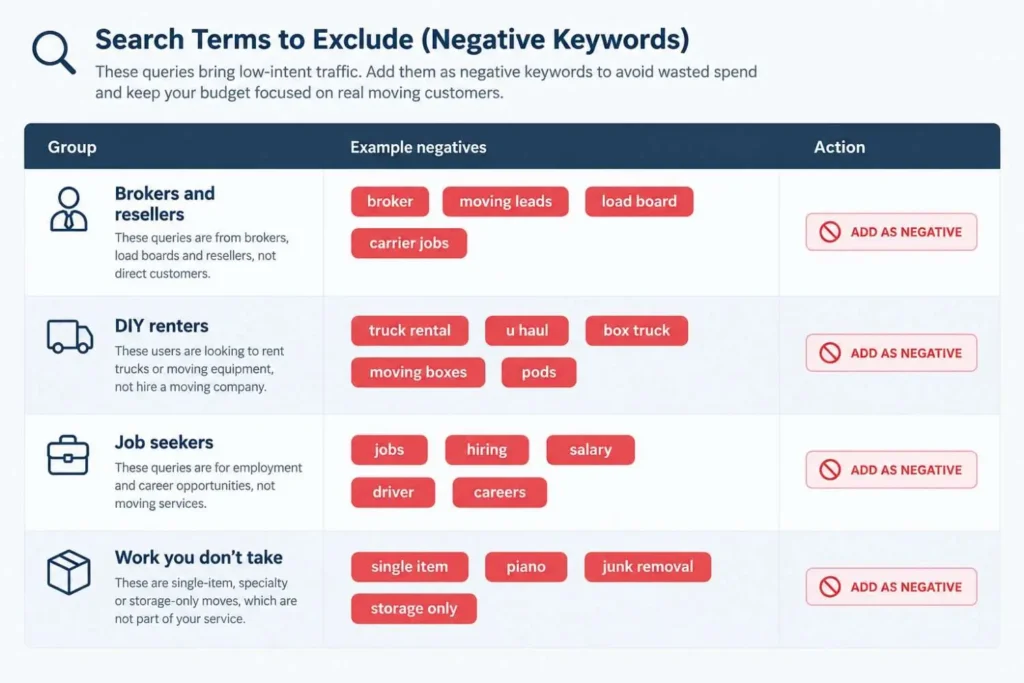
2. Shut out brokers, DIY renters and job seekers
The FMCSA is blunt about brokers: it describes one as a middleman with no authority to transport goods. They still click your ads and sell the lead on. Build one account-level negative list:
| Group | Example negatives |
| Brokers and resellers | broker, moving leads, load board, carrier jobs |
| DIY renters | truck rental, u haul, box truck, moving boxes, pods |
| Job seekers | jobs, hiring, salary, driver, careers |
| Work you don’t take | single item, piano, junk removal, storage only |
Only block “piano” or “storage only” if you don’t do that work. UK removal firms have the same leak, and one trade piece suggests blocking words like sofa and fridge. In peak season, check search terms weekly.
3. Count booked moves, not form fills
Most moves get booked by phone, so use call tracking with a minimum call length. Then send booked jobs from your CRM back into Google Ads as offline conversions with the job value. Skip that and Smart Bidding learns to find form fillers, who aren’t always payers.
4. Spend with the season
Demand peaks May to September, so most of the budget belongs there. Keep a smaller winter budget for interstate and corporate moves, which book further out.
5. Test Local Services Ads before ruling them in or out
Google lists moving services as a Local Services Ads category. You pay per lead, and the ads sit above search ads. They suit local moves better than interstate. Run them beside search for a peak month and keep whichever wins on cost per booked move, the same test we use in Local Services Ads vs Google Ads for HVAC firms.
How Much Should a Moving Company Spend on Google Ads?
Start from the jobs you want. At the $90.92 benchmark lead and one booking in four, each move costs about $364. Twenty extra moves a month means roughly $7,300. If your job margin can’t absorb $364, more budget just loses money faster.
Testing the channel? Size the first month by leads. Thirty at the benchmark price is about $2,700, enough to read booking rate and search term quality without betting the season.
Google Ads vs SEO for Moving Companies: Run Them as One System
Run by separate teams, paid and organic clashes. The ads team bids on routes you already rank first for. Both reports claim the same leads. And ad landing pages skip the cost questions AI Overviews and ChatGPT pull answers from.
Run together, ads cover routes your organic pages haven’t reached and back off as they climb. Search terms that book tell you which pages to build next in your SEO for moving companies plan. Moving Hub went from page three to the map pack in six months on organic pages alone, which is why moving company lead generation works best when ads fill gaps instead of bidding against your own rankings. Our moving company SEO and Google Ads program and Google Ads management work that way. Comparing agencies? See the best SEO companies for movers.
Frequently Asked Questions
How much do movers pay per lead on Google Ads?
The nearest 2026 benchmark is $90.92 a lead. Accounts leaking broker and rental searches pay more. Whether a price works depends on how many leads book.
Are Local Services Ads worth it for moving companies?
For local moves, often. You pay per lead. Test them against search for a peak month and keep the cheaper source of booked moves.
How much should a local moving company budget for Google Ads?
Multiply the moves you want by cost per booked move. Twenty at about $364 is roughly $7,300 a month, mostly spent May to September.
How do I stop moving brokers clicking my Google Ads?
Add broker, lead and load board terms as account-level negatives and check search terms weekly. Saying you run your own trucks also puts them off.
Should a moving company run Google Ads or SEO first?
Ads bring leads in weeks; SEO takes months but gets cheaper. Run both, with ads covering routes organic doesn’t rank for yet.
Where to Start This Week
Add up what last month’s search terms report spent on broker, rental and job searches. That’s your first saving. Then split local from interstate, connect your CRM, and judge the next 90 days on cost per booked move.
Get a Free Google Ads Audit for Your Moving Company
We’ll check your search terms, negatives, tracking and budget, and show where money leaks. Request your free audit or book a 30-minute call. Ready to turn marketing into a revenue system?
About the Author
Jahid Hussain | Founder, Paradigm Media Networks
Jahid Hussain founded Paradigm Media Networks to solve a problem he kept seeing: businesses spending across SEO, ads, and content that never talked to each other. He specialises in local SEO, organic growth systems, and integrated marketing strategies that connect search, paid media, and creative into one lead generation engine. Paradigm has taken clients from zero search visibility to six-figure monthly revenue pipelines, and has been featured in IANS, Eastern Herald, Sangri Times, and Dailyhunt. Jahid operates across the US, UK, UAE, and India, and writes from the standpoint of someone who has built and broken growth systems for real businesses, not from a slide deck.
