



SaaS keyword research is figuring out what software buyers type into Google, and now ChatGPT, between “we’ve got a problem” and “let’s book a demo,” then giving each search its own page. I sort every term into four tiers based on what the person is about to decide: problem, category, comparison or vendor. Comparison and vendor pages get built first.
Key Takeaways:
- Sort keywords by the decision behind them, then worry about volume.
- Comparison and vendor pages are what book demos, so they go to the front of the queue.
- One primary keyword per page, or your pages trip over each other.
Anyone running SaaS content knows this one. Sessions climb every month and the chart looks great. Then sales asks where the demos are. Usually the keyword list is the problem, because it was built around what people search often rather than what they search the week they’re ready to buy.
Why SaaS Keyword Research Works Differently
Nobody buys a CRM on impulse. They read up on the problem first. Weeks later they’re on a pricing page while finance asks awkward questions. Each stage sounds different in a search bar.
Two catches. Your best keywords barely register in tools. Ahrefs says almost 93% of the keywords in its U.S. database get fewer than 10 searches a month. And research has moved somewhere tools can’t look. In G2’s 2026 Buyer Behavior Report, eight in ten B2B buyers had used an AI chatbot for software recommendations in two years.
Which means the hunt isn’t for big keywords at all. It’s for the ones sitting right beside a purchase. (Our SaaS SEO guide has the rest.)
The Four Tiers of SaaS Keywords
The usual TOFU, MOFU and BOFU split lumps “which of these two tools?” in with “is this vendor worth the money?” Those are different readers. Split them and you get four tiers:
| Tier | Decision the searcher is about to make | Example (scheduling software) | Page type | Conversion goal |
| Problem | Is this worth fixing? | why do demo bookings no-show | Blog guide | Email signup, next article |
| Category | What kind of tool solves this? | sales scheduling software | Pillar or category page | Free tool, product tour |
| Comparison | Which option fits us? | calendly vs chili piper, calendly alternatives | Comparison or alternatives page | Shortlist, trial |
| Vendor | Is this vendor right, and at what cost? | chili piper pricing, chili piper hubspot integration | Pricing, integration, feature page | Demo or trial |
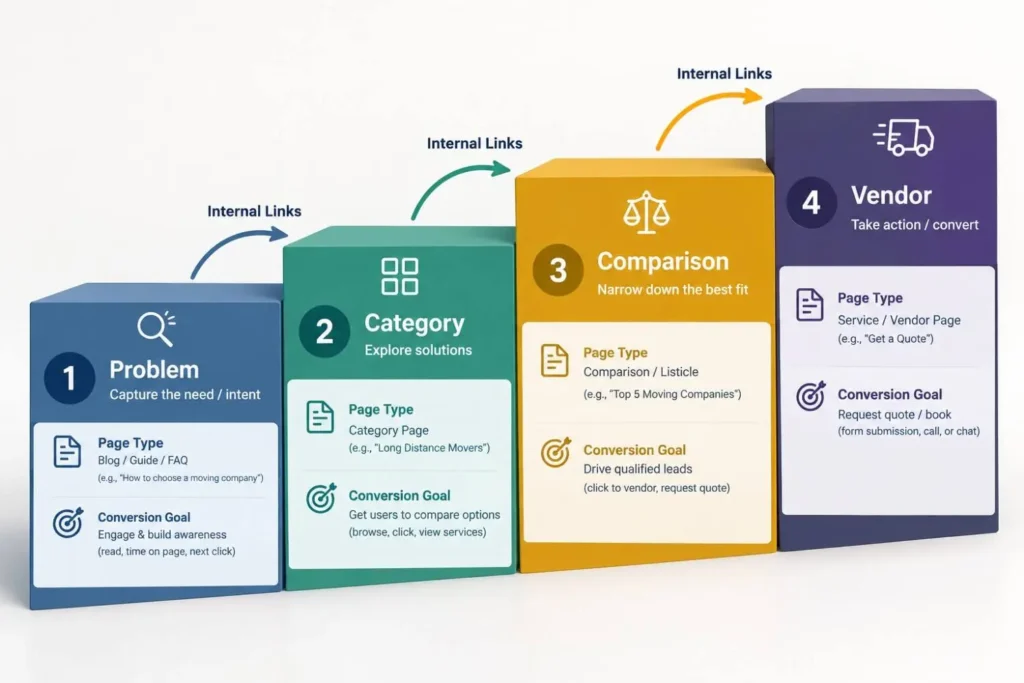
Those bottom two rows? That’s where your bottom of funnel SaaS keywords live. Whoever types them has stopped asking whether to buy and started asking what. I’d swap a 5,000-visit article that books nothing for a 150-visit comparison page with six demos on it.
Build those first. Problem and category content comes after, mostly as a way to send readers down toward them through internal links. Keep the comparisons fair, too; buyers smell a rigged one.
How to Find Keywords for SaaS in Six Steps
1. Start With Your Product, Not a Keyword Tool
Before any tool, write down what your product replaces and who signs the purchase order. Then list the competitors you keep losing to. Each of those names spins off a little cluster of “vs,” “alternatives” and “pricing” searches, and Google autocomplete will show you which ones people actually type, because its predictions reflect real searches.
2. See Which Pages Competitors Bothered to Build
In Ahrefs or Semrush, filter a competitor’s ranking URLs for “vs,” “alternative,” “pricing” and “integration.” That’s the list of bottom-tier terms they thought worth a page. Look at what’s missing.
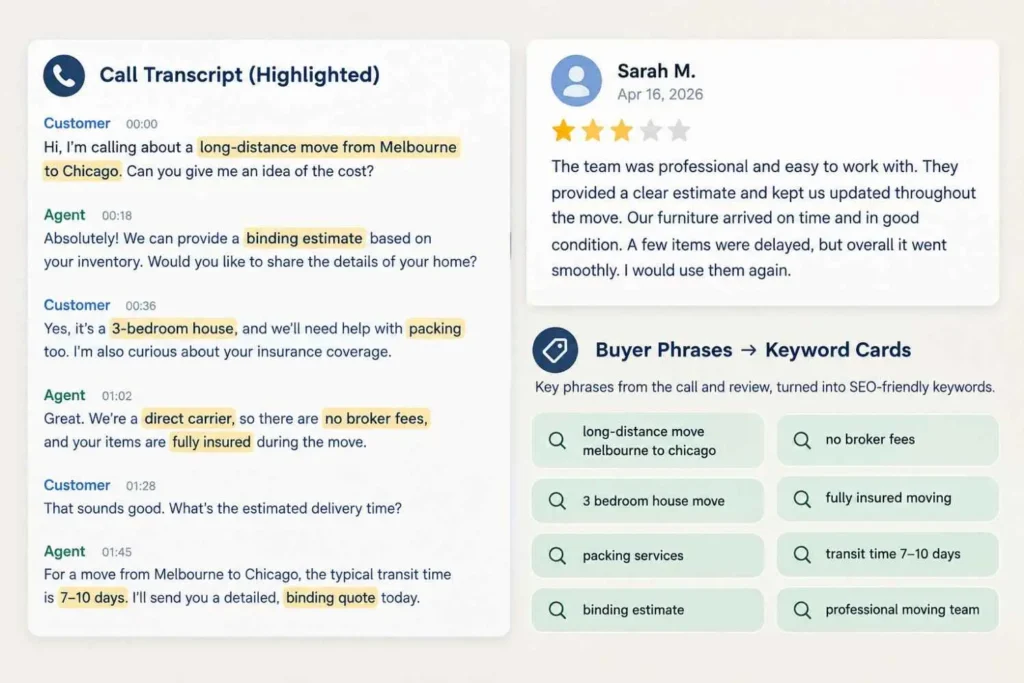
3. Borrow Words From Sales Calls and G2 Reviews
If I could keep one step of B2B SaaS keyword research, it’s this. Open your call transcripts and search for lines like “we’re currently using” or “the problem is.” Then read competitors’ three-star G2 and Capterra reviews. Three-star reviewers explain what’s annoying them.
You’ll pick up wording no tool hands you. Say scheduling-tool buyers keep asking for “round robin that respects time zones.” Probably zero volume, still a page worth writing.
4. Check the Numbers, but Don’t Trust a Zero
Some sales-call phrases will show zero volume. Don’t delete them yet. If a competitor bothered to rank a page for the same phrase, chances are the tool simply didn’t sample it.
5. Score the Tier Before the Volume
My scoring is deliberately simple: two numbers per keyword, multiplied.
- Tier value: Vendor 4, Comparison 3, Category 2, Problem 1.
- Winnability: 3 if sites your size rank on page one, 2 if it’s mixed, 1 if only big brands show up.
That puts “calendly alternatives for sales teams” at 3 × 3 = 9, and “what is lead routing” at 1 × 2 = 2. Build the 9 first and use volume only to break ties. Adjust the weights if you’re trial-led.
6. One Primary Keyword, One Page
One URL per primary keyword. Close variants go on that same page as secondary terms, and if that’s already gone wrong somewhere, a SaaS SEO audit will flag the cannibalized pages.
Want this mapped for your product? Book a free growth audit or grab a 30-minute call with our B2B SaaS SEO agency team.
Mining ChatGPT Prompts for Keywords Tools Can’t See
People write ChatGPT prompts like messages to a colleague: “what’s a good scheduling tool for a sales team on HubSpot that works across three time zones?” There’s a category in there. There’s an integration, plus a constraint. That’s potentially three pages from one sentence.
I’d write 20 to 30 prompts in the buyer language from step 3 and run them in ChatGPT, Perplexity and Google’s AI Mode. Note who gets named. Note which pages get cited. The follow-up questions the engine suggests are worth the most, since they often turn into your next comparison keywords. Our guide to LLM keyword research goes deeper.
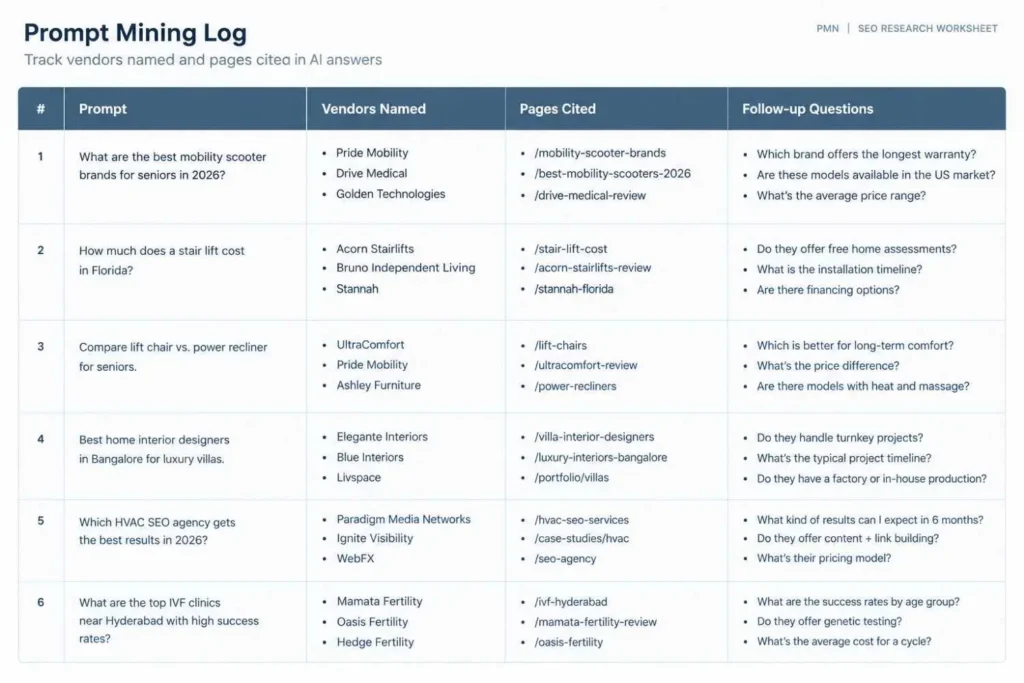
Answers change daily, and a page per rewording can run into Google’s scaled content policies. See where you show up with our free AI Visibility Checker; our SaaS AI search citations research shows what earns mentions. For bigger gaps, our generative engine optimization services can help.
What Goes in the SaaS Keyword Map Template
The SaaS keyword research template is one sheet, a row per keyword, with these columns:
- Keyword and its source
- Tier
- Volume and difficulty, keeping the zero-volume rows
- Tier value, winnability and priority score
- Target URL, whether it exists yet or not
- Page type and conversion goal
- Internal links to and from other tiers
- Status and owner
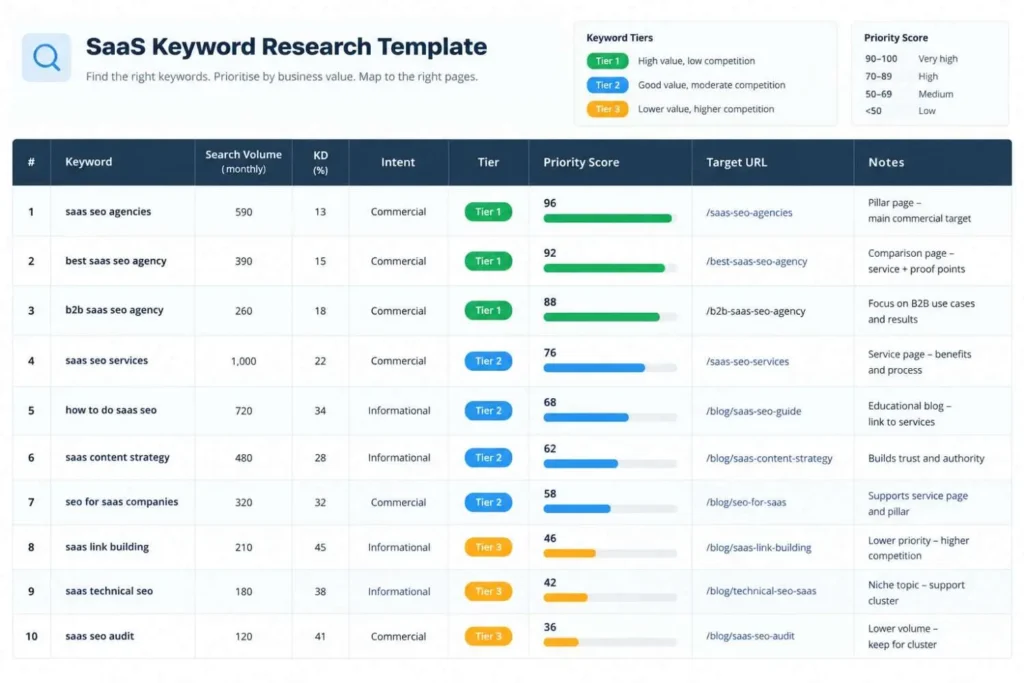
Sort by priority score. Most of next quarter’s calendar is now sitting in the top rows. For volume data, our SEO tools, free and paid roundup, have options.
Where Keyword Research Breaks When Channels Run Separately
Split SEO and paid into different teams and content loses its best input, the Google Ads search terms report showing which queries became demos.
Put them in one room and it changes. Paid finds out what converts; SEO builds pages for whatever does, and paid can then ease off wherever organic is already carrying the load. Suppose “meeting scheduler with Salesforce routing” converts well above the account average. That’s an integration page waiting to happen, and once it ranks, bids can come down.
How to Tell If Your Keyword Research Worked
Rankings mean the page is visible. That’s it. Whether you picked the right keyword is a separate question. After roughly 90 days I’d look at demos or trials per page, grouped by tier, and whether the comparison and vendor terms have cracked the top three. Once a month, rerun the same buyer prompts and count how often you’re named.
One cheap trick: a free-text “How did you hear about us?” field on the demo form. You’ll see buyers write “ChatGPT” in it long before analytics notices anything.
Frequently Asked Questions
What is SaaS keyword research?
It’s finding what software buyers search on the way to a purchase and giving each search its own page.
What are the bottom of funnel SaaS keywords?
They’re comparison and vendor searches such as “X vs Y,” “X alternatives,” “X pricing” and “X integration with Y.” These convert best.
Which tools are best for SaaS keyword research?
Ahrefs or Semrush, with Search Console alongside. Honestly though, the best material is free. It’s in your sales calls, your competitors’ G2 reviews and the prompts buyers type into AI tools.
Should I target keywords that show zero search volume?
Often, yes. If real buyers use the phrase and a competitor has ranked a page for it, that’s a better signal than a tool which under-samples long-tail B2B searches.
How should a new SaaS site with low authority choose keywords?
Pick comparison and vendor terms where small sites already reach page one.
Your First Step
This week, take your top three competitors, pull every “vs,” “alternatives” and “pricing” term around them, and score each one. The top ten rows are next quarter’s plan.
Get the SaaS Keyword Map Template
The free SaaS keyword map template has every column above set up already. If you’d rather someone else did the digging, Paradigm Media Networks is a full-stack growth agency, not a siloed vendor.
About the Author
Jahid Hussain | Founder, Paradigm Media Networks
Jahid Hussain founded Paradigm Media Networks to solve a problem he kept seeing: businesses spending across SEO, ads, and content that never talked to each other. He specialises in local SEO, organic growth systems, and integrated marketing strategies that connect search, paid media, and creative into one lead generation engine. Paradigm has taken clients from zero search visibility to six-figure monthly revenue pipelines, and has been featured in IANS, Eastern Herald, Sangri Times, and Dailyhunt. Jahid operates across the US, UK, UAE, and India, and writes from the standpoint of someone who has built and broken growth systems for real businesses, not from a slide deck.
