


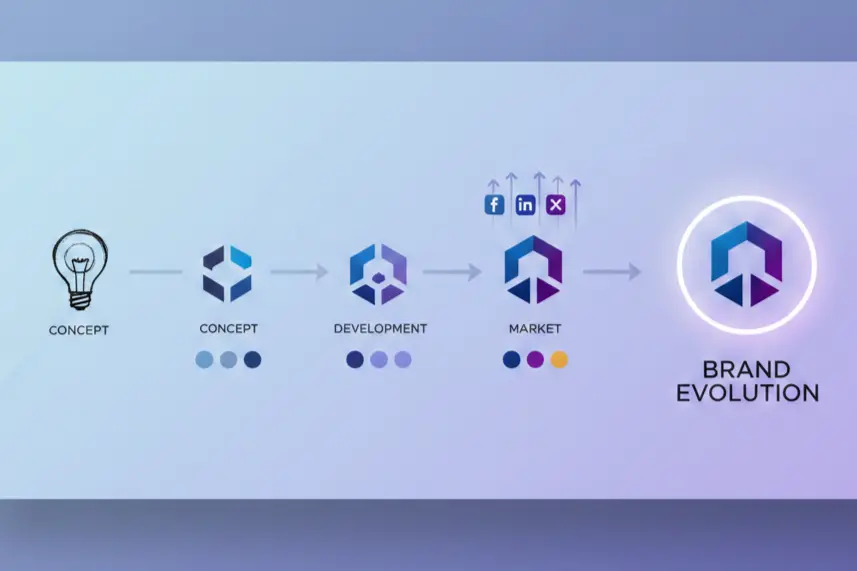
Written by Jahid Hussain, Founder & Strategist, Paradigm Media Networks. Jahid has led brand strategy and positioning work for businesses across the US and UK. View our work →
Quick Answer: Brand strategy is essential for business growth because it creates consistency across every customer touchpoint — website, social media, sales, and customer service — which builds trust faster, lowers marketing costs, supports premium pricing, and improves search visibility. Businesses without a defined brand strategy tend to see higher customer acquisition costs and weaker loyalty because inconsistent messaging erodes trust before a sale ever happens.
Key Takeaways
- Brand strategy is the foundation; marketing is how you communicate it. One without the other underperforms.
- Consistent branding is linked to a 10–33% revenue increase, according to Marq (formerly Lucidpress)’s State of Brand Consistency Report.
- Trust in brands is rising relative to institutions — Edelman’s 2025 Trust Barometer found consumers now trust the brands they use more than government, media, or NGOs.
- Every strong brand rests on five elements: purpose, positioning, voice, visual identity, and customer perception.
- A brand strategy typically takes 4–8 weeks to define and 90 days to fully implement across all channels.
- Brand consistency doesn’t just help Google rankings — it increasingly shapes how AI platforms like ChatGPT and AI Overviews describe and recommend your business.
Here’s the truth nobody tells you: customers don’t remember what you sell. They remember how you made them feel.
In 2026, the digital noise is louder than ever. Everyone’s shouting about their product. Everyone’s running ads. Everyone’s competing on price. But the businesses winning right now are the ones who communicate with clarity, consistency, and confidence. That’s brand strategy in action.
The pattern is always the same: the ones who took branding seriously didn’t just survive, they thrived. See the full case studies →

What Is Brand Strategy? (Beyond the Definition)
Let’s skip the textbook stuff. A brand strategy is honestly just the answer to a few hard questions about your business.
Who are you? Not “we sell software.” Who are you really? What do you stand for? What problems do you solve that nobody else solves the same way?
Who do you serve? (This matters more than you think.)
Why should they pick you over everyone else?
How do you want people to feel when they think about you?
Brand development is what happens when you actually answer those questions and build them into everything you do: your website, your social posts, your customer service, your pricing. Everything.
Brand strategy and marketing then work together. Strategy is the blueprint. Marketing is the megaphone.
Why Every Business Needs a Strong Brand Strategy
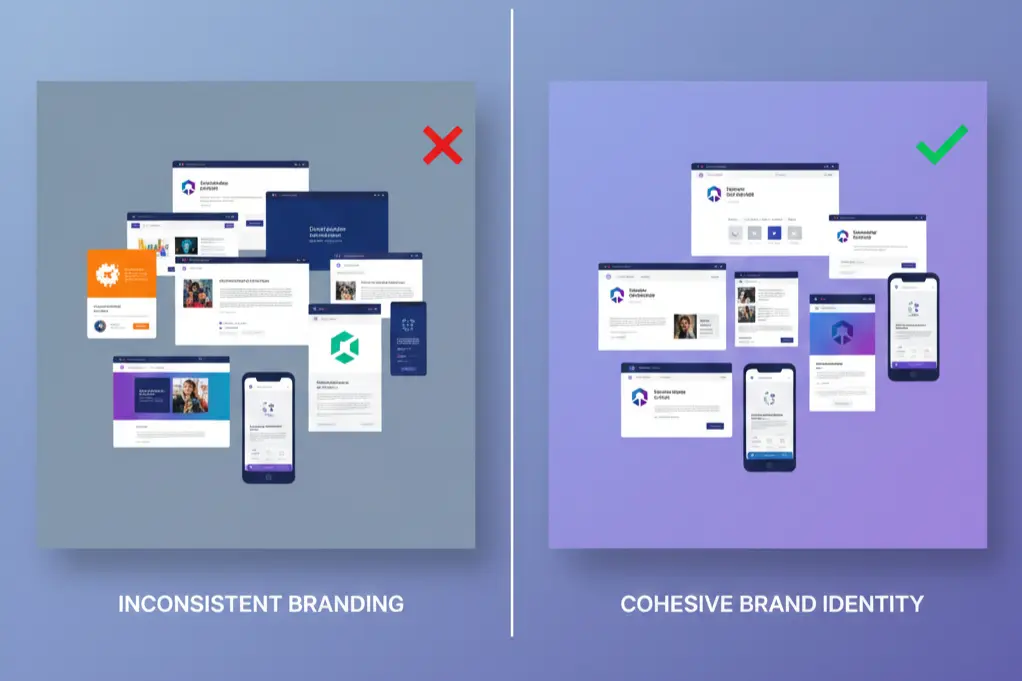
Here’s what happens without one: inconsistency. And inconsistency kills trust.
You post one thing on Instagram. Your website says something different. Your email sounds like a robot wrote it. Your customer service rep answers the phone in a completely different tone than your social content.
Customers notice. They remember the wrong things. They trust you less. They shop around more.
The data backs this up. Marq’s State of Brand Consistency Report found that companies presenting their brand consistently across all touchpoints see revenue increase by 10–33%, based on a survey of over 400 brand management professionals. Separately, Edelman’s 2025 Trust Barometer found that 80% of consumers now trust the brands they use more than they trust government, media, or NGOs — which means your brand consistency is doing trust-building work that institutions increasingly can’t.
Businesses with a real brand strategy tend to see:
- Higher customer loyalty and repeat purchase rates
- Lower marketing waste from disconnected, off-brand campaigns
- Better search visibility (Google rewards branded authority)
- Stronger pricing power
- Faster, more predictable scaling
Digital branding isn’t a luxury anymore. It’s how you survive.
The 5 Core Elements That Make Brands Unforgettable
Every strong brand strategy has these building blocks. Miss one, and something feels off.
1. Brand Purpose (Your “Why”)
This isn’t about making money — that’s obvious. Your purpose is the bigger reason you exist. It’s what gets your team excited. It’s what customers emotionally connect to.
A company selling water bottles doesn’t just “sell bottles.” Maybe their purpose is eliminating single-use plastic. That’s brand development in motion.
2. Brand Positioning
Where do you stand in the market? What makes you different?
Are you the premium choice? The affordable choice? The innovative choice? The trusted, reliable choice?
This one decision shapes everything about your brand strategy and marketing.
3. Brand Voice & Messaging
How do you sound? Professional and formal? Friendly and casual? Bold and irreverent?
Consistency here is everything. Your voice shows up in your copy, your social media branding, your customer conversations.
4. Visual Identity
Logo, colors, fonts, imagery style. This is social media branding gold because visuals are what people remember first.
5. Customer Perception
Here’s the reality check: your brand isn’t what you think it is. It’s what customers believe it is.
The gap between those two? That’s where your work begins.
Brand Strategy vs. Marketing: What’s the Difference?
| Brand Strategy | Marketing | |
|---|---|---|
| Defines | Who you are and what you stand for | How you promote what you offer |
| Timeframe | Long-term, foundational | Short-to-mid-term, campaign-based |
| Changes | Rarely (every 3–5 years) | Frequently (per campaign or quarter) |
| Without it | Marketing feels random and disconnected | Strategy stays invisible with no reach |
| Owned by | Leadership and founders | Marketing team or agency |
Here’s where a lot of businesses mess up: they skip strategy and jump straight to marketing.
Brand strategy says: “Here’s who we are and what we stand for.”
Brand strategy and marketing together says: “Here’s who we are, AND here’s how we’re going to tell people about it in ways they actually care about.”
When these two work together, your ads cost less, your conversions go up, and your customers stick around longer. When they’re disconnected, you’re throwing money at ads that feel misaligned, customers get confused, and growth stalls. When organic reach plateaus, Meta Ads management turns your best-performing posts into a predictable lead channel.
Brand Development: From Strategy to Real Results
Brand development is where strategy becomes reality. You’ve answered the hard questions — now you’re actually building something.
This means:
- Crafting messaging that shows up consistently everywhere
- Designing visual systems that feel right
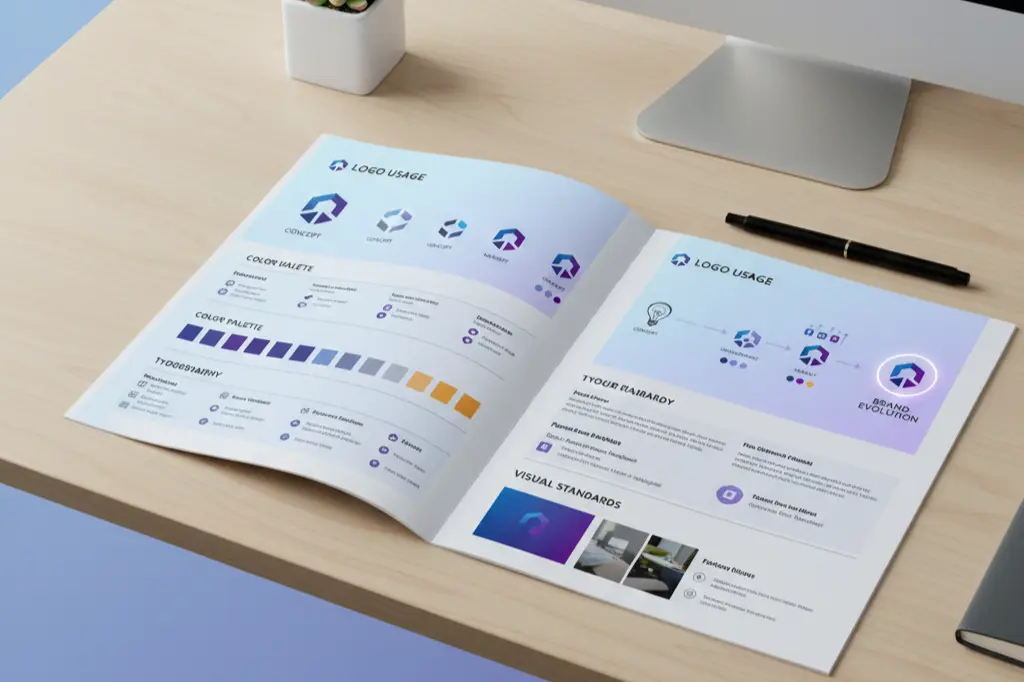
- Building brand guidelines so everyone’s on the same page
- Training your team to represent the brand correctly
- Making sure every customer touchpoint hits the same notes
Digital Branding: Your Always-On Brand Presence
Your business now lives online. That’s just reality.
Digital branding means your brand shows up the same way everywhere:
- Your website (first impression)
- Google Business Profile (local trust)
- Content marketing (authority building)
- Email (direct relationship)
- SEO presence (being found in searches)
When you nail digital branding, something changes: customers find you, trust you faster, and remember you. Consistency plus clarity equals authority — and authority is what both search engines and AI answer platforms are increasingly built to detect and reward.
Social Media Branding: Where First Impressions Happen
Your social media branding is probably where customers meet you first.
Someone sees a post. One post. They decide in seconds whether you’re worth following — whether you’re worth trusting.
Effective social media branding means:
- Your visuals are instantly recognizable
- Your messaging is clear and consistent
- Your posts feel authentic, not salesy
- You’re showing up regularly (consistency wins)
- You’re actually engaging with people
Brand strategy for growth on social happens when you stop thinking “let’s post content” and start thinking “let’s build community.”
Your Step-by-Step Roadmap to Building a Winning Brand
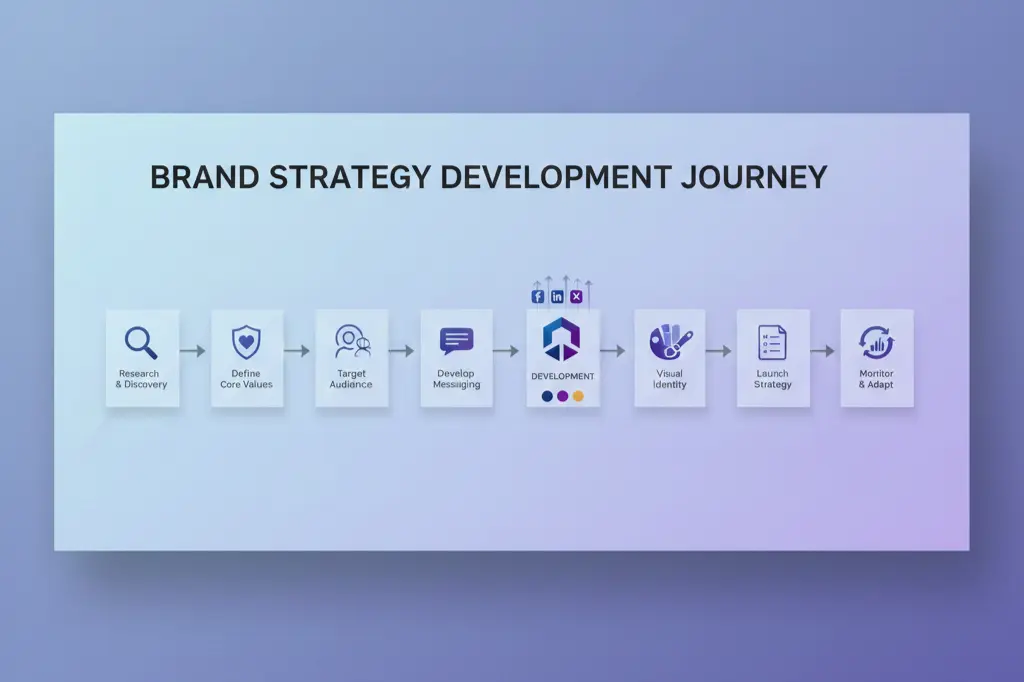
Ready to actually do this? Here’s the path we walk businesses through.
Step 1: Audit where you are now. What’s working? What’s not? How do customers actually perceive you right now?
Step 2: Get clear on who you’re serving — their pain points, their goals, what keeps them up at night.
Step 3: Define your purpose — the real reason you exist, not “make profit.”
Step 4: Figure out your unique position. What are you better at or different about?
Step 5: Craft your message. How do you talk about yourself in a way that lands?
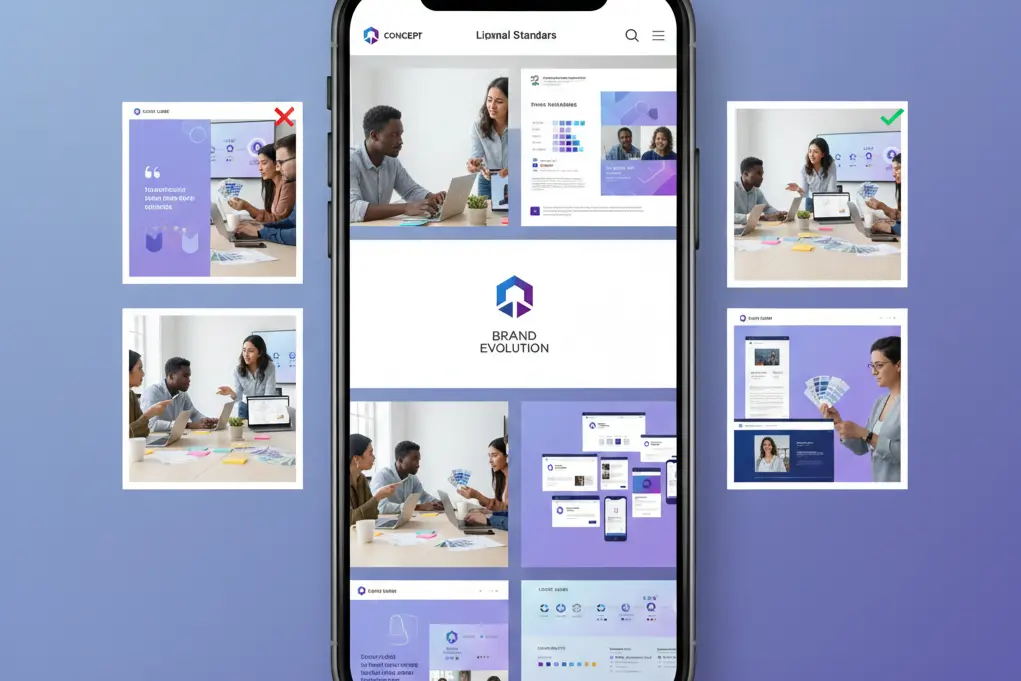
Step 6: Build your visual identity — colors, fonts, imagery, style.
Step 7: Roll it out everywhere — website, social, email, content, ads. All aligned.
Step 8: Stay consistent. Use a brand guide. Train your team. Measure what’s working.
Real Results: What We’ve Seen Happen
See the ChildFund India case study →
That’s what happens when brand development connects with social media branding and digital branding. It’s not magic. It’s strategy working.
Why Brand Consistency Also Improves AI Search Visibility
Brand strategy isn’t just a Google ranking factor anymore. It directly affects how AI platforms like ChatGPT, Perplexity, and Google’s AI Overviews represent your business when people ask about your industry.
Consistent, well-documented brand messaging gives these systems clear signals about who you are and what you’re known for, which makes it more likely they’ll cite or recommend you. This is the foundation of Generative Engine Optimization (GEO), and it starts with the same clarity that makes traditional brand strategy work — a consistent story, told the same way, everywhere your business shows up online.
The Costly Mistakes Most Businesses Make
We see these patterns over and over:
Mistake #1: No consistent voice. You sound different on every platform. Customers get confused.
Mistake #2: Copying competitors instead of finding your own identity.
Mistake #3: Ignoring your actual customers. You’re building a brand for people who don’t exist.
Mistake #4: Weak positioning. You’re trying to be everything to everyone — which means you’re nothing to anyone.
Mistake #5: Skipping brand strategy and marketing alignment. You’re running ads that don’t match your actual brand identity.
Avoid these, and you’ll be ahead of most of your competition.
Your Next Move: Getting Started Today
Building a powerful brand strategy doesn’t have to be overwhelming. It starts with getting clear on who you are and what you stand for.
But it’s easy to get lost in your own business — you’re too close to it. That’s why we exist.
At Paradigm Media Networks, we help businesses build brand strategies that actually work. We handle the strategy, build the visual identity, align your digital branding across every platform, and make sure your social media branding converts.
Ready to build a brand people remember? Book a free brand strategy consultation with our team today.
Frequently Asked Questions About Brand Strategy
What exactly is brand strategy, and why do small businesses need it?
Brand strategy is the foundation that defines your identity, value, and how you communicate with customers. Small businesses need it because it levels the playing field — when you’re clear about who you are and what you stand for, you compete on differentiation, not just price.
How long does it actually take to develop a real brand strategy?
Typically, a solid brand strategy takes 4–8 weeks to define, depending on how complex your business is. The real work isn’t the strategy itself — it’s the execution and consistency afterward. We usually recommend a 90-day implementation phase to make sure everything’s aligned.
Can brand strategy actually improve my search rankings?
Yes. Google rewards brand authority and consistency, and AI platforms increasingly do the same. When your digital branding is strong and your messaging is clear across the web, search engines and AI answer tools take notice — brand consistency creates the kind of focused, aligned content both systems are built to reward.
What’s the difference between brand strategy and marketing?
Brand strategy is who you are. Brand strategy and marketing together is who you are plus how you tell people about it. Strategy without marketing is invisible. Marketing without strategy feels random and disconnected. They have to work together.
Is social media branding different from overall brand strategy?
Social media branding is a part of your overall brand strategy — it’s how your brand shows up specifically on social platforms. But if your brand identity isn’t clear, your social presence won’t have impact either. Strategy comes first; everything else, including social, follows from it.
How do I know if my brand strategy is actually working?
You’ll see it in the numbers: more customers asking about you, higher website traffic, better email open rates, stronger social engagement, and faster sales cycles. But you’ll also feel it — your brand starts to feel like a real thing instead of just a website and a logo.
Ready to Transform Your Brand?
We’ve helped businesses across the US and UK build brands that stand out, attract the right customers, and grow sustainably. See our work → or book a free strategy call →
