



By Jahid Hussain, Paradigm Media Networks
About the author: Jahid Hussain leads brand strategy and digital growth at Paradigm Media Networks, where he has guided identity and positioning work for businesses across the US, UK, UAE, and India — from early-stage startups to enterprise platforms. His work sits at the intersection of brand strategy, SEO, and conversion-focused design.
Quick Answer: Brand identity is the complete system of visual and verbal elements — logo, color palette, typography, voice, messaging, and personality — that makes a business instantly recognizable and consistently experienced across every customer touchpoint. Building a strong one in 2025 requires six steps: define your core essence, establish strategic positioning, build a visual system, document your voice, enforce cross-channel consistency, and continuously measure and refine. Businesses that do this well see measurably higher trust, retention, and conversion rates than those that treat branding as decoration.
Key Takeaways
- Brand identity ≠ branding. Identity is the tangible system you create (logo, colors, voice); branding is the perception customers experience over time.
- Consistent brand presentation across channels is linked to a revenue increase of up to 23%, according to Lucidpress’s State of Brand Consistency Report.
- A strong identity is built on six components: visual design, voice, personality, audience positioning, emotional value, and cross-channel consistency.
- The most common failure isn’t bad design — it’s inconsistency and lack of documented brand guidelines.
- In the era of AI search and zero-click results, a clear brand identity also strengthens entity recognition and citation likelihood in AI Overviews, ChatGPT, and Perplexity — not just traditional SERPs.
- DIY branding can work for very early-stage businesses, but professional identity development typically pays back through improved conversion rates and customer lifetime value.
In today’s digital landscape, standing out isn’t just about having a well-designed logo. It’s about creating something people remember and trust. Your brand identity is the force that pulls customers in and keeps them coming back.
Customers don’t just buy products anymore. They buy stories, feelings, and brands that reflect who they are — or who they want to be.
What Is Brand Identity? A Simple Definition for Businesses
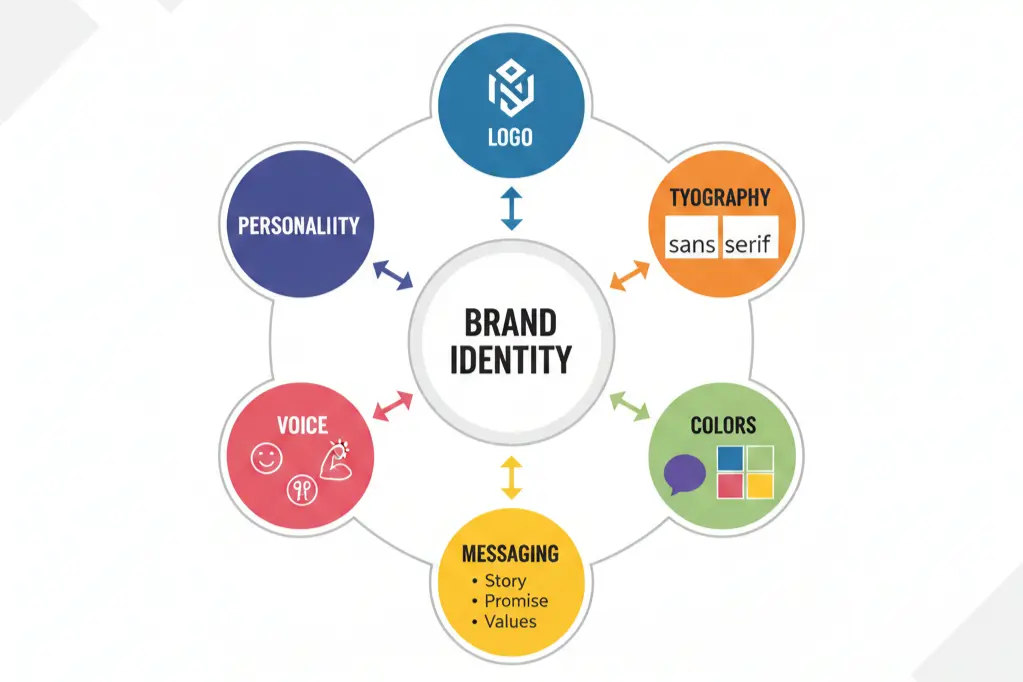
Your brand identity is the complete package of visual, verbal, and emotional elements that make your business instantly recognizable. Think of it as your business’s personality translated into design and words.
It includes:
- Your logo and visual symbols
- Typography choices
- Color palette
- Brand voice and tone
- Messaging frameworks
- Brand personality traits
- The entire customer experience
Branding and brand identity work together, but your brand identity specifically refers to the tangible stuff — what people see, read, and interact with daily.
Why Brand Identity Matters in 2025
The marketplace is louder and more crowded than ever, and consumers are more selective. They want brands that stand for something real.
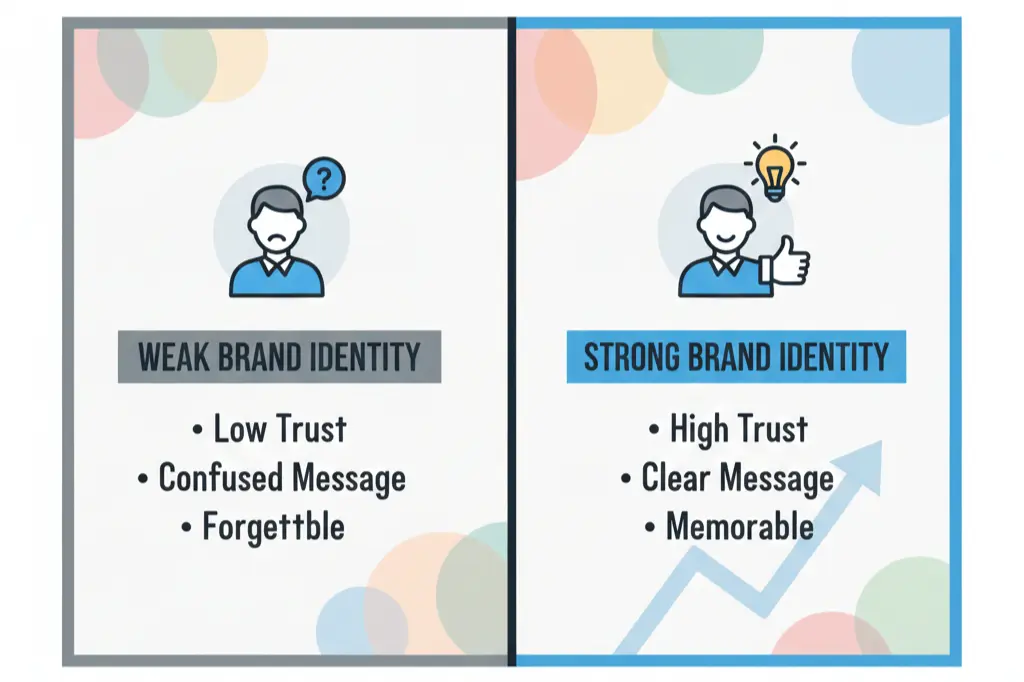
A strong brand identity gives you:
- Instant recognition in crowded markets
- Faster trust-building with new customers
- Customer loyalty that sticks
- Premium positioning without always needing premium pricing
- Better conversion rates across every channel
- Stronger SEO and entity signals through consistent brand mentions
The data backs this up. According to Lucidpress’s State of Brand Consistency Report, companies that maintain consistent branding across all platforms can see revenue increases of up to 23%. Separate research from Edelman’s Trust Barometer has consistently found that trust is now one of the strongest purchase drivers — often outweighing price — particularly in services and B2B categories.
In the age of AI search and zero-click results, your brand identity has become your digital handshake. First impressions now happen in milliseconds, often before a user ever lands on your website.
Key Elements of a Strong Brand Identity
Building a memorable identity isn’t about copying what’s trendy — it’s about strategic authenticity.
Visual Identity Design
Your visuals create instant perception. Colors trigger emotions — blue builds trust, red creates urgency, green suggests growth. Your logo becomes your signature, and typography sets the tone before a single word is read. Across every market we’ve worked in, the same pattern holds: simplicity wins.
Brand Voice & Messaging
This is how you talk to your audience — conversational or formal, bold or gentle, playful or serious. Brands that sound human connect faster than brands that sound like a press release.
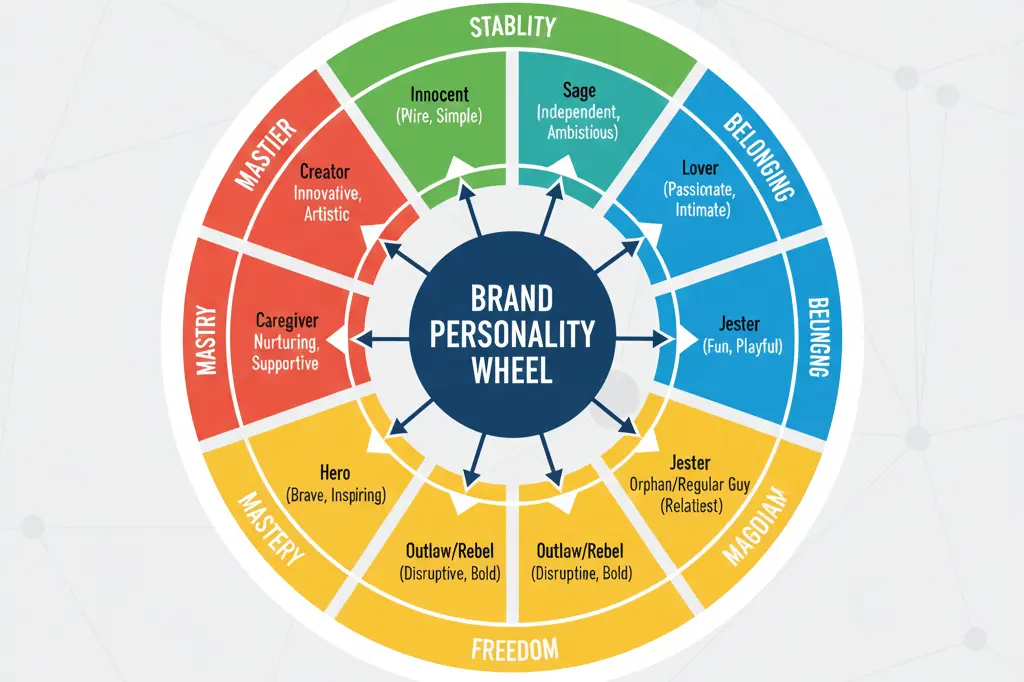
Brand Personality
If your brand walked into a room, who would it be? The confident leader, the helpful friend, or the innovative rebel? Personality isn’t decoration — it’s differentiation.
Audience Positioning
Great brand identity is never created in isolation. It’s shaped by understanding your audience’s deepest pain points, desires, and aspirations. Positioning isn’t about what you say you are — it’s about what your customers feel you are.
Emotional Value
People forget facts. They remember feelings. Your brand identity should trigger emotional responses — comfort, excitement, inspiration, trust — because that’s what creates loyalty that lasts.
How a Branding & Marketing Agency Builds Brand Identity
A professional branding agency doesn’t just design pretty things — it builds systems that work. Here’s the process:
- Discovery & Research — Understanding your market, competitors, and customer psychology.
- Strategic Foundation — Defining positioning, value proposition, and core messaging pillars before any design happens.
- Visual Identity Creation — Logo concepts, color psychology mapping, and typography hierarchy, with every element serving a purpose.
- Messaging Architecture — Documenting your tagline, voice guidelines, and communication frameworks.
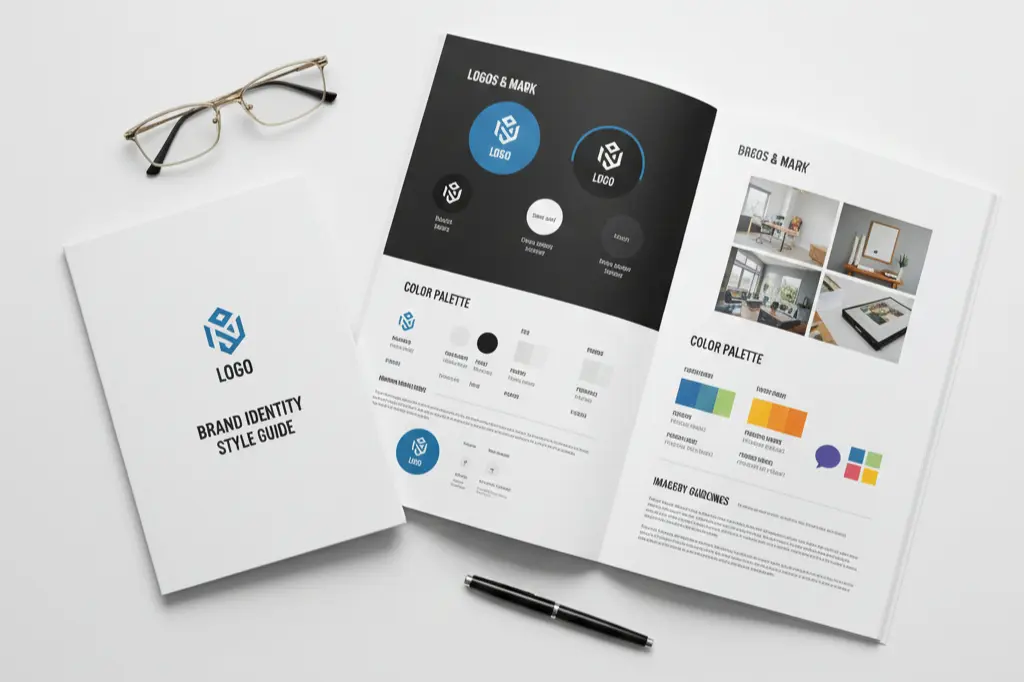
- Brand Guidelines Development — Building a comprehensive style guide so your identity stays consistent across every touchpoint.
- Implementation & Testing — Deploying the identity and refining it based on real-world performance, not just a static PDF handoff.
At Paradigm Media Networks, we’ve applied this process across hundreds of brands — because the best brand identity work combines art with science. You can see examples of this process in action in our ChildFund India case study.

Brand Identity vs. Branding: What’s the Difference?
People mix these up constantly, so let’s clarify with a direct comparison.
| Brand Identity | Branding | |
|---|---|---|
| What it is | The tangible assets: logo, colors, fonts, voice | The ongoing perception customers form over time |
| Nature | Tactical — designed and documented | Strategic — built continuously |
| Who controls it | Your team or agency | Shaped by every customer experience |
| Timeframe | Created once, refreshed periodically | Never “finished” |
| Example | Your logo, color palette, tagline | How a customer describes you to a friend |
In short: your brand identity is what you create. Your branding is what customers experience over time. One is tactical, the other is strategic — and you need both.
A Step-by-Step Brand Identity Framework
Here’s the proven framework we use to build brand identities that actually work.
Step 1: Define Your Core Essence
Start with brutal clarity. What do you stand for? Who do you serve? What transformation do you promise? No fluff — just truth.
Step 2: Build Strategic Positioning
Clear differentiation creates a stronger identity. Map your unique value against competitors to find your white space. See our Brand Strategy Guide for a deeper walkthrough of this step.
Step 3: Develop Visual Systems
Every color choice should have psychology behind it. Every font selection should serve both readability and emotion.
Step 4: Craft Your Voice
Your communication tone becomes your digital personality. Document it so everyone on your team sounds like the same brand.
Step 5: Ensure Cross-Channel Consistency
Your identity must align across:
- Website design and copy
- Social media presence
- Advertising creative
- Email communications
- Sales collateral
- Customer service interactions
Inconsistency kills trust — fast.
Step 6: Deploy and Optimize
Brand identity evolves with your business. Refine it based on user feedback, marketing performance, and market shifts — it’s a living system, not a one-time deliverable.
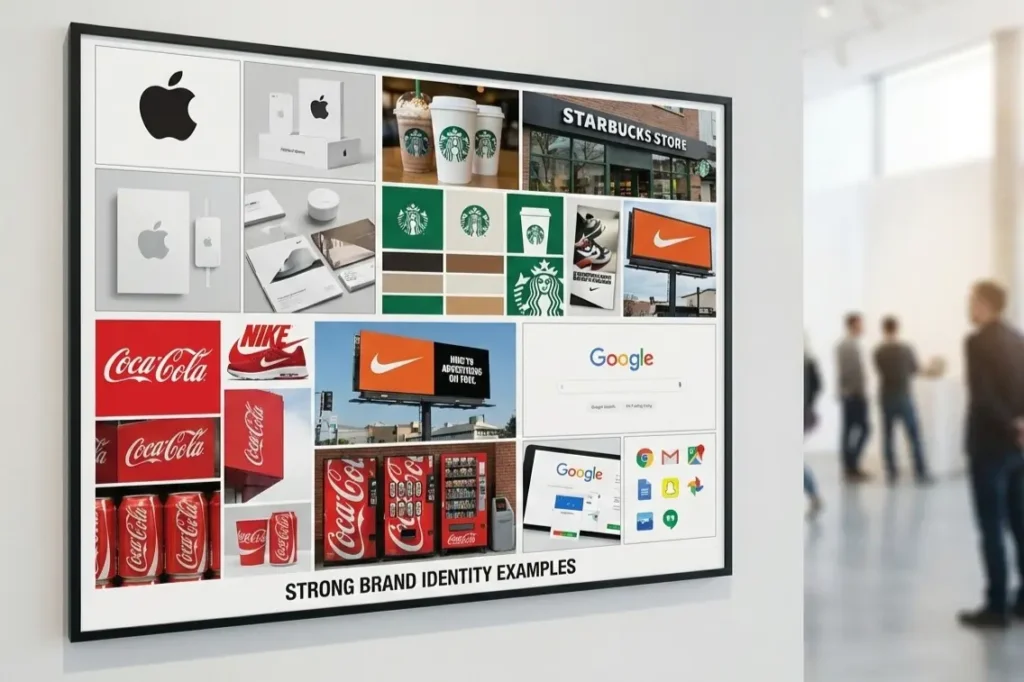
Real-World Patterns in Powerful Brand Identities
Across the identity work we’ve done for clients in the US, UK, and India, one pattern shows up again and again in the brands that get it right:
- Minimalist tech brands tend to sell status through simplicity — a restrained visual system signals premium quality before a single word of copy is read.
- Athletic and lifestyle brands build identities around motion and action, so every touchpoint feels motivational rather than static.
- Fast-moving consumer brands succeed when their identity mirrors trend-forward thinking while staying aspirational yet accessible.
The common thread is consistency across every customer touchpoint — that’s what creates brand equity over time. You can explore how this plays out for real client projects in our ChildFund India case study.
Common Mistakes Businesses Make With Brand Identity
We’ve seen these errors tank otherwise strong businesses:
- Copying competitors instead of differentiating
- Inconsistent visuals across platforms
- No documented guidelines, leading to brand chaos
- Changing identity too frequently, confusing customers
- Ignoring audience psychology in design decisions
- Prioritizing aesthetics over strategy
The biggest mistake of all? Thinking brand identity is just about looking good. It’s not decoration — it’s strategic communication.
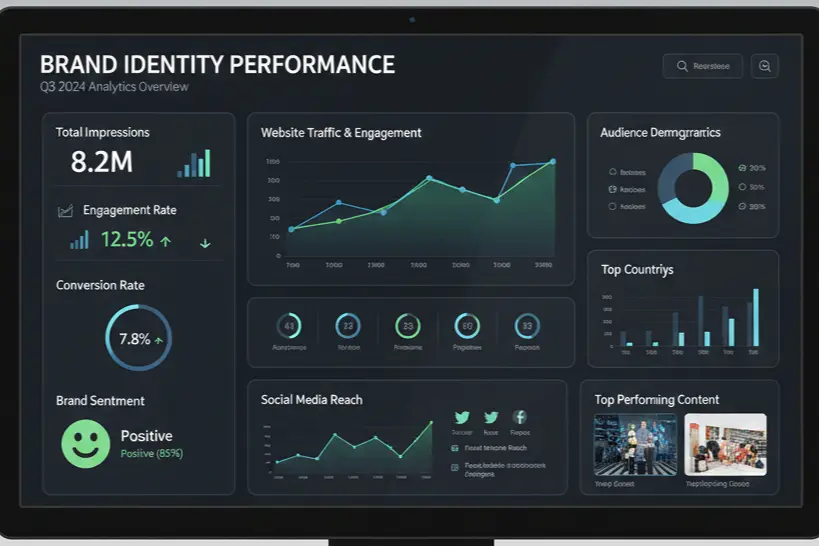
How to Measure Brand Identity Success
How do you know if your brand identity is actually working? Track these metrics:
- Brand recall rates in customer surveys
- Website engagement (time on site, pages per session)
- Conversion rate improvements across funnels
- Social media engagement and follower growth
- Customer retention and repeat purchase rates
- Search visibility and entity recognition in SERPs and AI-generated answers
Brand identity isn’t just seen — it’s felt, experienced, and measured.
Why Professional Brand Identity Services Matter
DIY branding has its limits. Here’s why partnering with a dedicated brand identity team accelerates growth:
- Cross-market expertise — We’ve built identities for brands across the US, UK, UAE, and India, where the principles stay the same (clarity, consistency, connection) even as execution shifts.
- Research-driven strategy — We analyze market data, competitor positioning, and audience psychology before designing anything.
- Creative execution that converts — Beautiful design that doesn’t drive business results is just art. We build identities that look great and perform.
- Full-stack integration — From strategy to design to implementation, we handle the complete identity ecosystem.
See real examples of this work in our ChildFund India case study.
Frequently Asked Questions
How long does it take to develop a complete brand identity?
Typically 3–6 weeks, depending on research depth, revision rounds, and implementation scope. Rushed projects tend to compromise quality.
What’s the difference between a logo and a brand identity?
A logo is one component. Brand identity encompasses your entire visual system, voice, messaging, and customer experience design.
What are the core elements of brand identity?
The core elements are: visual identity (logo, color, typography), brand voice and messaging, brand personality, audience positioning, and emotional value — all deployed consistently across every customer touchpoint.
Can small businesses benefit from professional brand identity services?
Yes. A strong brand identity helps small businesses compete against larger players by creating memorable differentiation and building trust faster than an unbranded competitor can.
Can I build a brand identity on a limited budget?
To a point. Tools like Canva can produce basic visual assets cheaply, but they don’t replace strategic positioning research, competitor analysis, or messaging architecture — the parts of identity work that actually drive differentiation. Most businesses outgrow DIY branding quickly once they scale marketing spend. When organic reach plateaus, Meta Ads management turns your best-performing posts into a predictable lead channel.
What comes first: brand strategy or brand identity?
Brand strategy. Positioning, audience understanding, and core messaging should be locked down before any visual design begins — otherwise you’re designing without a foundation to design against.
Does brand identity impact search engine rankings?
Yes. Consistent brand identity strengthens entity signals, increases user trust metrics, and builds brand authority — all recognized ranking factors in modern SEO, and increasingly relevant to how AI platforms select sources to cite.
Can you redesign an existing brand identity without losing customer recognition?
Yes. Strategic brand refreshes maintain core recognition elements while modernizing outdated aspects. We’ve evolved dozens of established brands this way — see examples in our ChildFund India case study.
How much should businesses invest in brand identity development?
Investment scales with business size and goals. Professional brand identity services typically range from mid-four to five figures, with ROI driven by improved conversion rates and customer lifetime value.
Conclusion
Your brand identity isn’t just about looking professional — it’s about creating an emotional connection that turns strangers into customers and customers into advocates.
In 2025’s crowded marketplace, brands with clear, consistent, compelling identities win. They attract better customers, command higher prices, and build loyalty that lasts.
At Paradigm Media Networks, we’ve spent years refining the art and science of brand identity that drives measurable business results — helping brands across the US, UK, UAE, and India sharpen their positioning, find their voice, and stand out in their markets.
Ready to Build a Brand Identity That Stands Out?
Your competitors are already investing in theirs. The question isn’t whether you need a strong brand identity — it’s whether you’re ready to claim your position in the market.
Book a free 30-minute strategy call — we’ll look at your current brand and positioning, flag the biggest gaps, and show you exactly what we’d do to fix them. No fluff, no pitch decks, just a real plan.
Or explore how we’ve helped other businesses transform their identity on our Our Work page.
