



By Jahid Hussain, Founder, Paradigm Media Networks — 10+ years in performance marketing and social strategy across US and UK markets. Connect on LinkedIn. Last updated: 03-08-2026
Quick Answer: Social media marketing (SMM) is the strategic use of platforms like Facebook, Instagram, LinkedIn, X, and YouTube to build brand awareness, engage target audiences, and drive measurable business outcomes through a mix of organic content and paid advertising. Social platforms now drive over 60% of product discovery, ahead of traditional search, according to Sprout Social’s 2026 statistics report. Effective SMM typically requires a monthly investment of $2,000–$3,000 for combined management and ad spend, with organic strategies showing measurable traction in 3–6 months and paid campaigns generating leads within days.
Key Takeaways:
- Social platforms now drive more product discovery than traditional search, making social media marketing a core acquisition channel, not an optional extra.
- LinkedIn is the dominant B2B lead generation platform; Instagram and Facebook lead for B2C engagement and ROI.
- Short-form video consistently outperforms other content formats for engagement and reach.
- Organic and paid social media are complementary, not competing — organic builds the foundation, paid accelerates it.
- A results-focused agency reports on revenue and lead metrics, not follower counts alone.
- Effective social media marketing typically requires $2,000–$3,000/month minimum, with organic results building over 3–6 months.
Social media isn’t just where people scroll anymore. It’s where buying decisions happen, trust gets built, and revenue flows. Every brand today competes in a digital arena where attention is currency and engagement drives growth.
We’ve seen businesses transform their growth trajectory with the right strategy — and we’ve watched others burn budget with zero return. The difference is almost always strategic execution, not effort.
This guide breaks down exactly what social media marketing is, why it matters in 2026, which platforms fit which business model, and how to evaluate an agency if you’re ready to outsource it.
What Is Social Media Marketing?
This social media marketing guide starts with clarity.
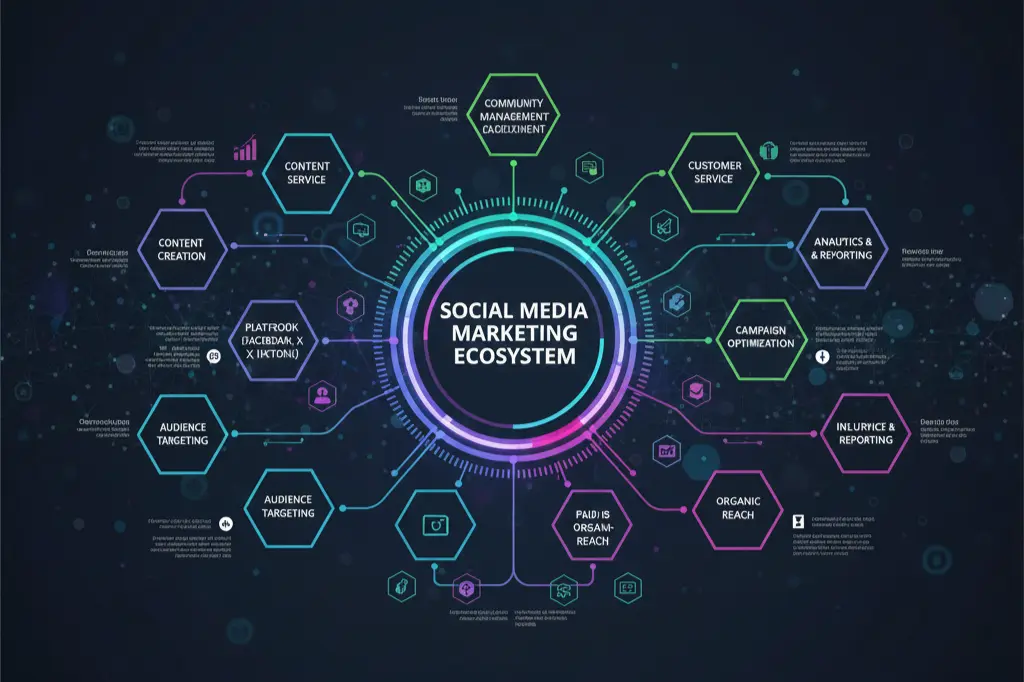
Social media marketing is the strategic use of platforms like Facebook, Instagram, LinkedIn, and YouTube to connect brands with their target audience, build meaningful relationships, and drive measurable business outcomes.
But here’s what most people miss: it’s not about posting graphics three times a week. Professional social media marketing services combine audience science, creative storytelling, and conversion optimization into a single system.
That includes:
- Audience segmentation and behavioral analysis
- Content engineered to stop the scroll
- Ad campaigns built around ROI, not reach
- Community engagement that turns followers into advocates
- Performance tracking that reveals what’s actually working
A legitimate social media marketing company doesn’t just manage your accounts — it architects your entire social presence around business goals.
Why Social Media Marketing Matters Today
Social platforms aren’t “nice to have” anymore — they’re decision engines.
Consider this: social platforms like TikTok, Instagram, and YouTube now account for over 60% of product discovery, surpassing Google search, according to Sprout Social’s 2026 data. And per HubSpot’s 2026 State of Marketing report, 89% of B2B marketers now use LinkedIn for lead generation, with 62% saying it produces leads effectively.
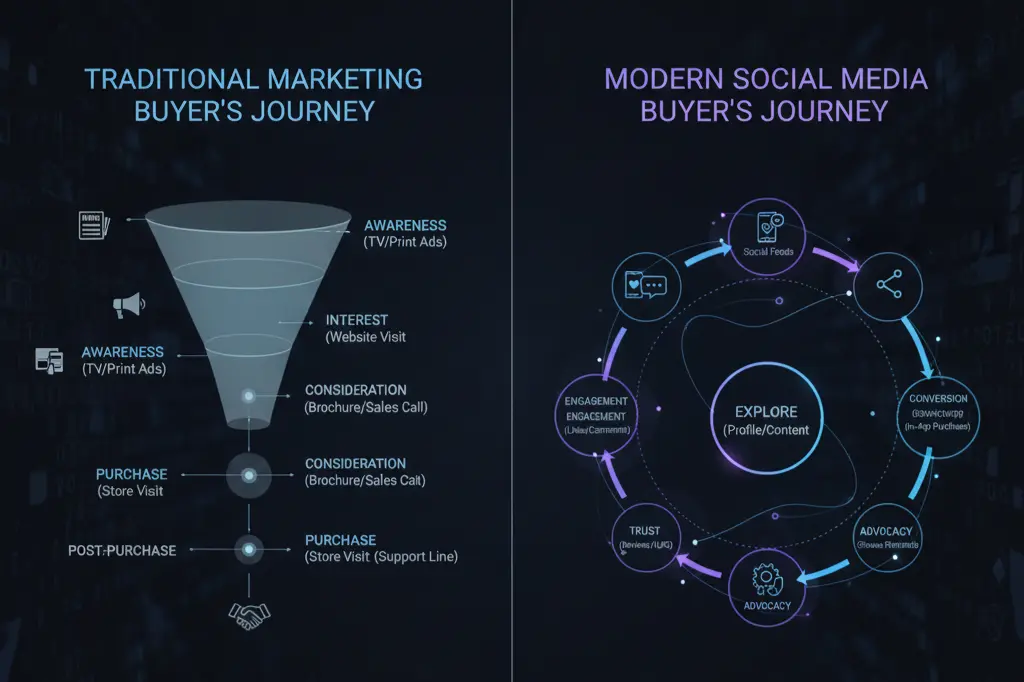
The buying journey has fundamentally shifted. Understanding the tangible impact of social media on business performance helps you decide where to invest your marketing budget with confidence.
People trust content, consistency, and community more than they trust ads. When you partner with a social media marketing agency, you’re not buying post scheduling — you’re gaining the expertise to build that trust at scale.
Your competitors are already there, telling their story and capturing the attention of your would-be customers.
Impact of Social Media Marketing on Businesses
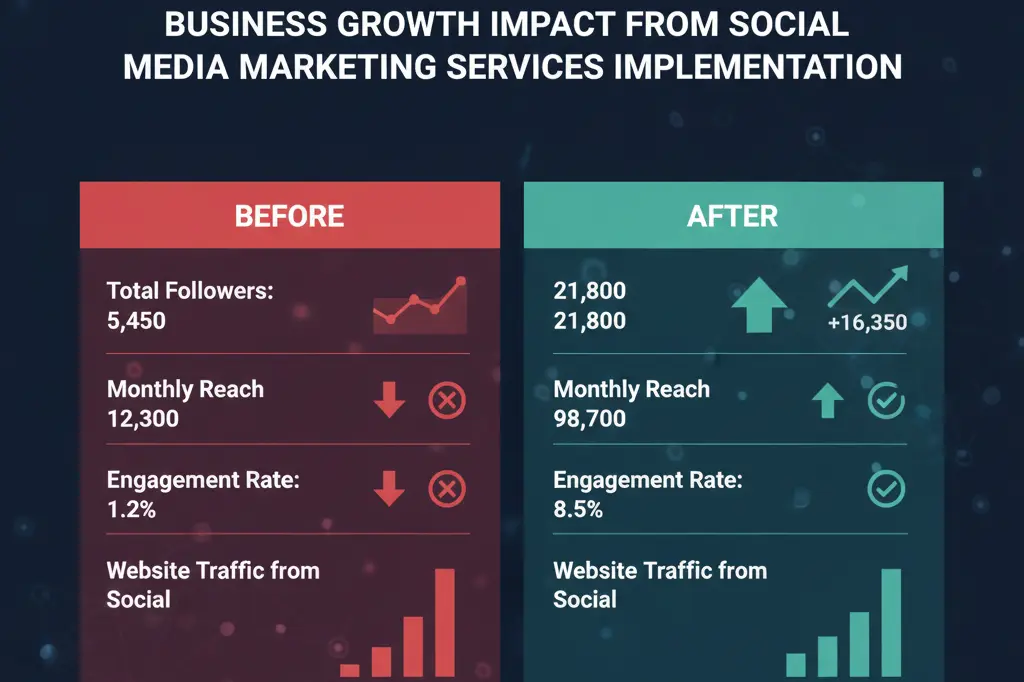
The impact of professional social media marketing shows up directly in the numbers when it’s executed well.
Case Study: Satair — Organic Traffic Growth Through Brand Consistency Satair partnered with Paradigm Media Networks to strengthen brand consistency across its digital presence. Through a coordinated content and SEO strategy, Satair lifted organic traffic significantly within six months and now holds a dominant position in its UK market niche. Read the full breakdown on our Our Work page.
Beyond individual case studies, the broader industry data backs this up. According to Sprout Social’s 2026 Content Strategy Report, brands that prioritize human-generated content over generic or AI-only content see materially stronger audience trust and engagement. And per Hootsuite’s 2026 Social Trends report, short-form video is now driving the highest engagement of any content format, while brands ignoring video risk losing algorithmic visibility altogether.
Strong social presence compounds. It builds brand recall, predictable website traffic, and pre-qualified leads who arrive already trusting your brand story.
Key Benefits of Social Media Marketing
Brand Authority That Compounds
Consistent, valuable content positions you as the industry expert — not through claims, but through demonstrated knowledge. When you hire a social media marketing agency, you’re building an authority asset that appreciates over time.
Direct Customer Access
No gatekeepers, no intermediaries. You speak directly to your audience, answer questions in real time, and turn conversations into conversions.
Cost Efficiency That Scales
Social media marketing solutions generally deliver lower customer acquisition costs with sharper targeting than traditional advertising. Discover more in our detailed breakdown of key benefits driving business growth through social platforms.
Data Intelligence
Every interaction generates insight — what content resonates, which messages drive clicks, which segments convert. That intelligence powers smarter decisions across your entire marketing stack.
Competitive Advantage
While competitors are still figuring out social, early movers are already winning attention and capturing market share.
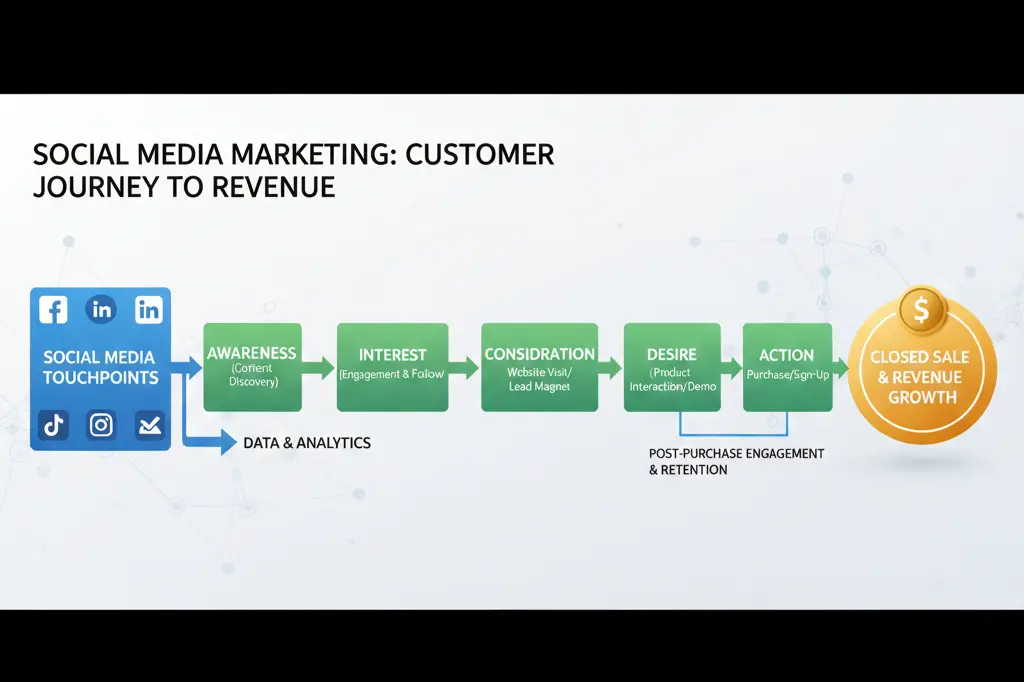
How Social Media Marketing Drives Revenue
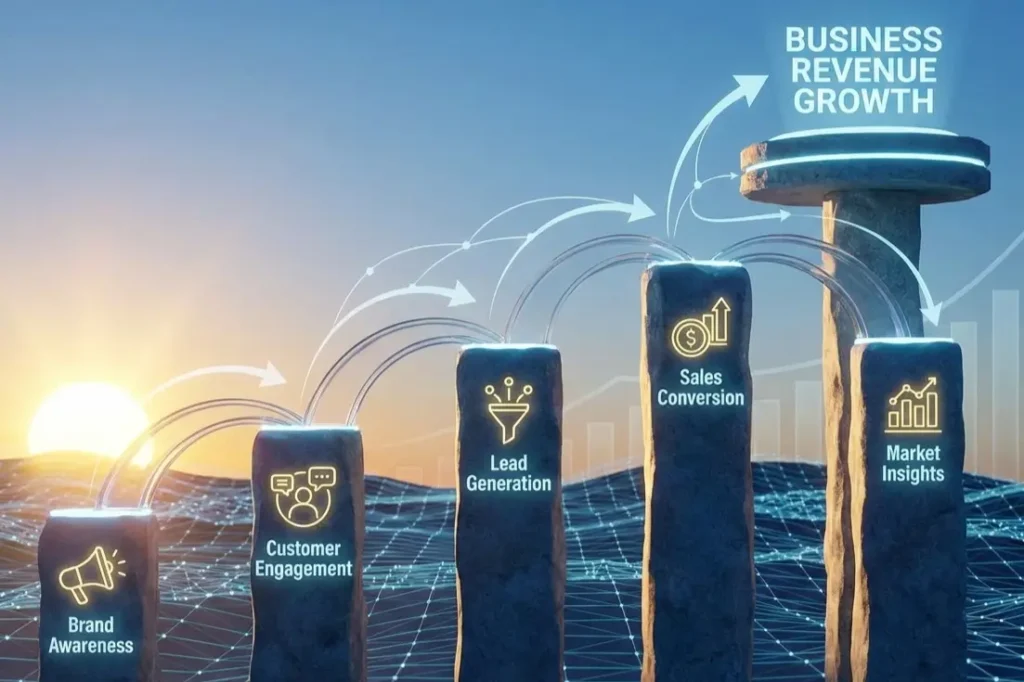
Revenue-focused social media operates on a clear conversion pathway, not vanity metrics.
Stage One — Awareness: Strategic content attracts your ideal customer profile, not random followers.
Stage Two — Consideration: Educational content, video testimonials, and case studies build credibility and differentiate your solution.
Stage Three — Conversion: Calls-to-action, lead magnets, and retargeting campaigns turn engaged audiences into paying customers.
Stage Four — Retention: Community engagement and continued value delivery turn customers into repeat buyers and advocates.
The mechanics behind this:
- Funnel-mapped content calendars
- Pixel-based audience retargeting
- Lead scoring integration with CRM
- Conversion-optimized landing pages
- Multi-touch attribution tracking
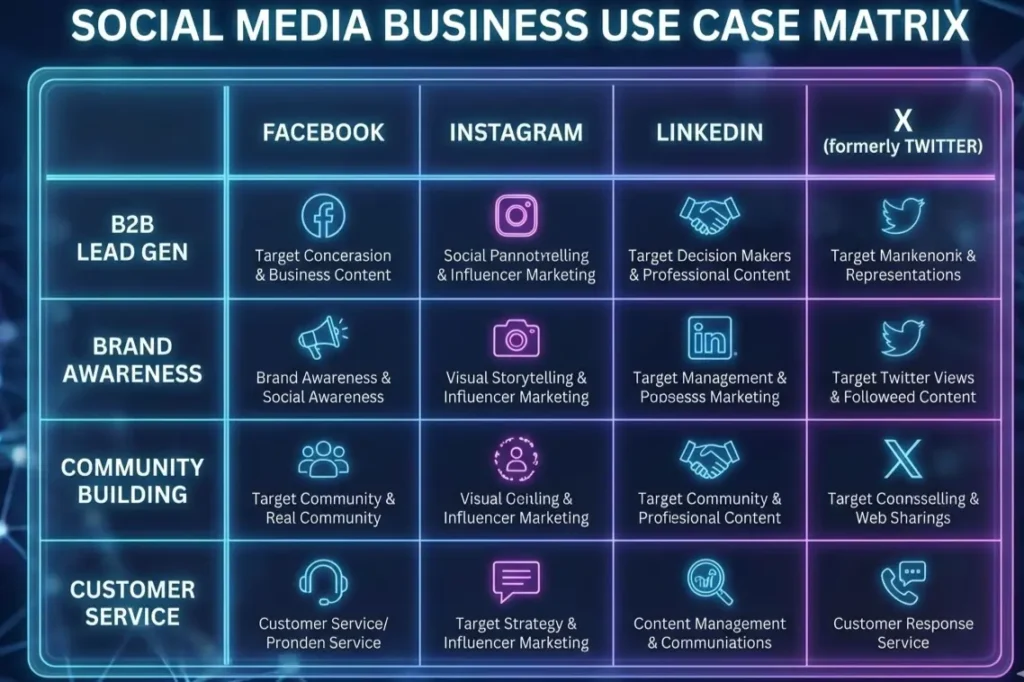
Platforms Explained: Facebook, Instagram, LinkedIn, X & YouTube
Different platforms serve different purposes — matching the right one to your business model matters more than being everywhere at once.
| Platform | Best For | Content Type | Buyer Intent |
|---|---|---|---|
| Facebook & Instagram | B2C brands, visual storytelling, community | Reels, carousels, stories | Medium |
| B2B, professional services, decision-makers | Articles, case studies, thought leadership | High | |
| X (Twitter) | Real-time industry conversation, brand voice | Short-form text, threads | Low–Medium |
| YouTube | Education, tutorials, long-form authority content | Long-form video | High |
Facebook & Instagram: The Community Builders
Best for B2C brands and lifestyle content. Instagram dominates with younger demographics; Facebook’s targeting capabilities remain strong for conversion campaigns. When organic reach plateaus, Meta Ads management turns your best-performing posts into a predictable lead channel.
LinkedIn: The B2B Powerhouse
If you sell to businesses, LinkedIn is close to non-negotiable. Per HubSpot’s lead generation data, LinkedIn is significantly more effective for B2B lead generation than Facebook or X, and content lifespan runs far longer than on faster-moving platforms.
X (Twitter): The Real-Time Voice
Industry conversations happen here in real time. It’s where thought leaders establish voice and companies demonstrate responsiveness.
YouTube: The Education Engine
Long-form video that educates, demonstrates, and converts — and ranks directly in Google search, creating compounding returns over time.
A strategic social media marketing agency doesn’t scatter effort across every platform — it identifies where your audience actually engages and concentrates there.
How to Build Your Social Media Marketing Strategy (Step-by-Step)
- Define your target audience and buyer personas — know exactly who you’re trying to reach before creating anything.
- Audit competitor social presence — identify content gaps and platform opportunities.
- Choose 2–3 priority platforms rather than spreading effort across all five.
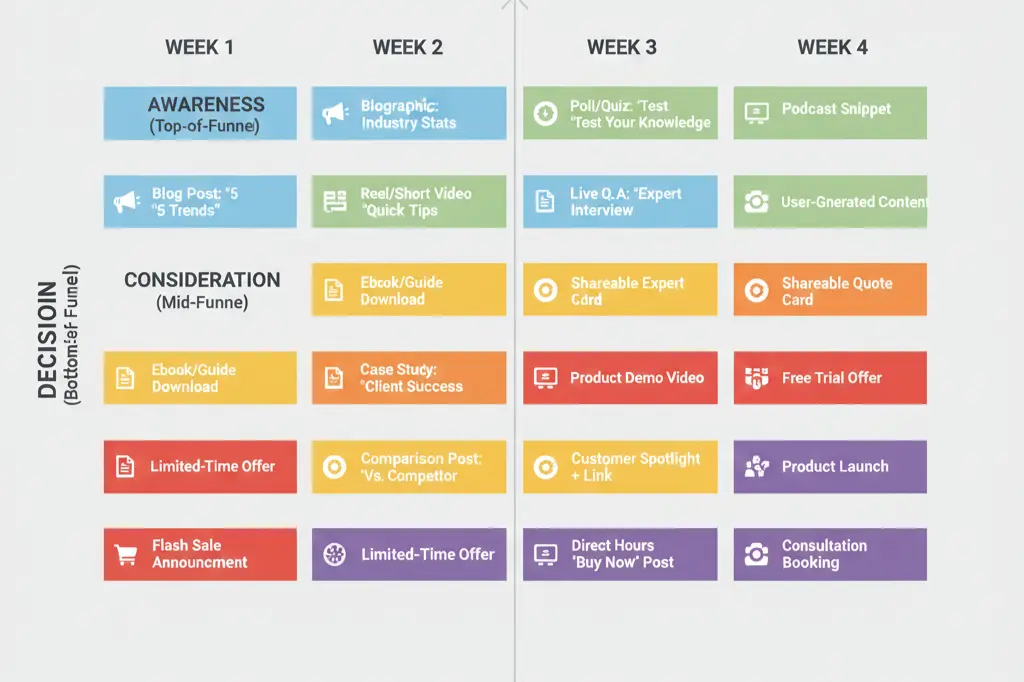
- Build a 90-day content calendar mapped to awareness, consideration, and conversion stages.
- Set up tracking — UTM parameters, pixel installation, and CRM integration — before launch, not after.
- Launch organic content alongside a modest paid test budget to validate what converts.
- Review performance monthly and reallocate budget toward what’s actually working.
Social Media Marketing Strategies That Work
Content Calendar Engineering
Map content to buying stages, seasonal trends, and audience behavior. Every post should serve a strategic purpose: awareness, consideration, or conversion.
Short-Form Video Dominance
According to Hootsuite’s 2026 statistics, short-form video consistently delivers the strongest engagement and recall across platforms. Brands ignoring video lose visibility in platform algorithms.
Influencer Partnerships That Convert
Micro-influencers often deliver stronger ROI than celebrity partnerships. Strategic collaboration means partnering with voices your exact target audience already trusts.
User-Generated Content Amplification
Your customers create your best marketing assets. Featuring their stories and reviews builds authenticity that branded content alone can’t match. The content that works organically becomes your best paid-social creative — this is how our performance creative team builds it.
Community-First Engagement
Responding to comments and starting conversations signals to both algorithms and humans that your brand is genuinely present. Engagement compounds engagement.
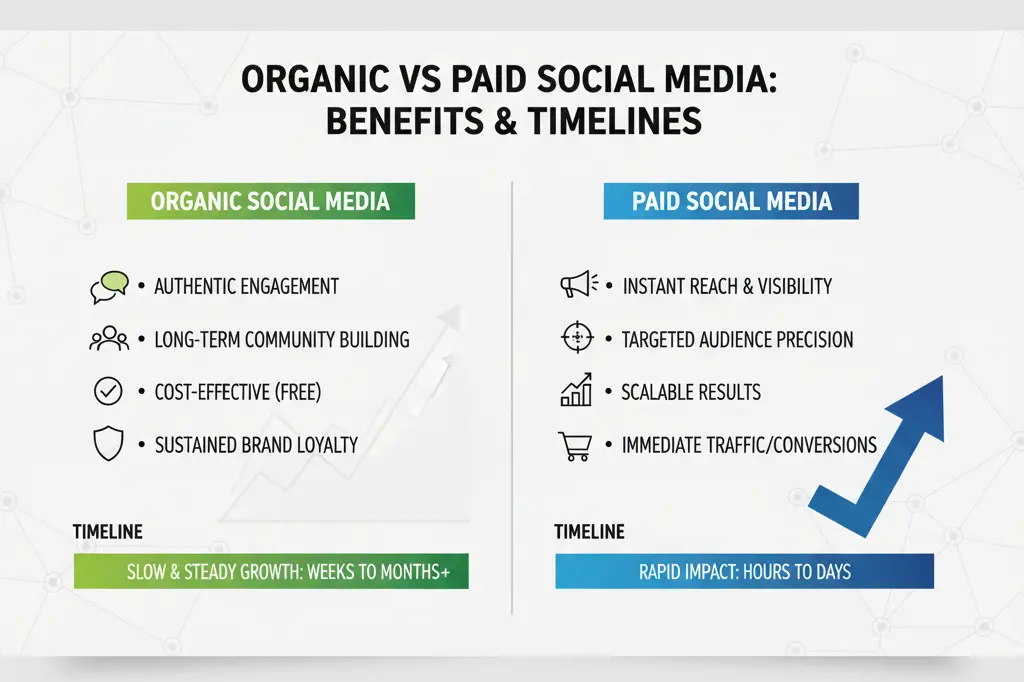
Paid vs Organic Social Media Marketing
Both approaches are essential — the question is how you sequence them.
Organic Social Media: The Long Game
Organic content builds lasting brand equity, establishes thought leadership, and nurtures relationships paid ads alone can’t buy.
Benefits: Builds authentic community · Establishes brand authority · Generates compounding returns · Creates owned audience assets
Paid Social Media: The Accelerator
Paid campaigns put your message in front of exactly who needs to see it, with measurable, immediate ROI.
Benefits: Instant reach and visibility · Granular audience targeting · Scalable lead generation · Retargeting capability
The best social media marketing company doesn’t choose one over the other — organic builds the foundation, paid amplifies what’s already working.
Choosing the Right Social Media Marketing Agency
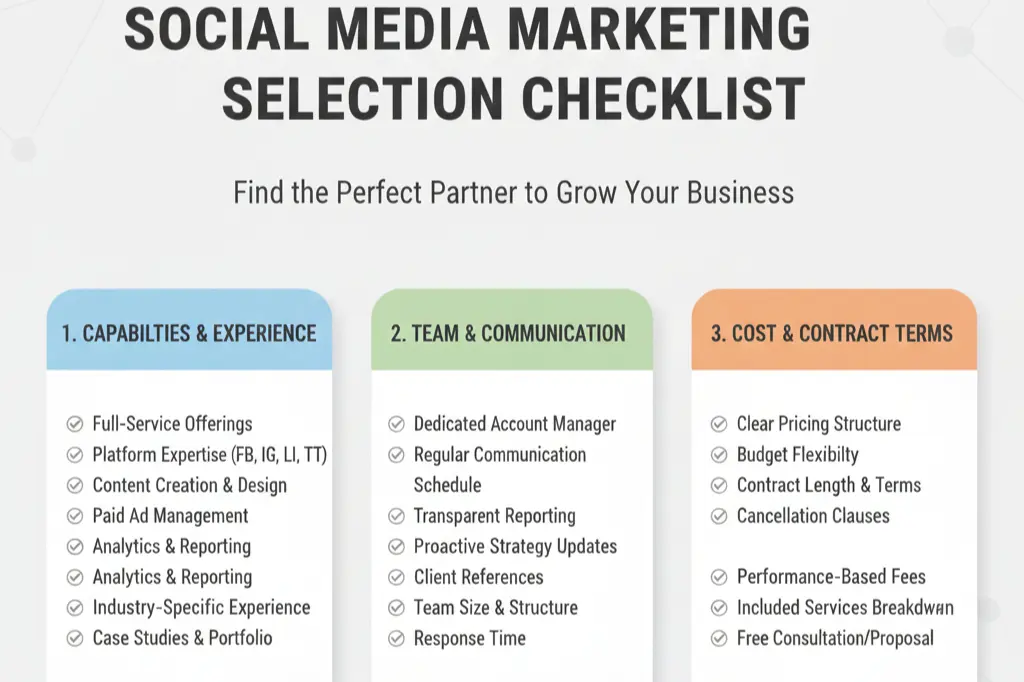
This decision affects everything that follows. Before you hire a social media marketing agency, evaluate these factors:
Proven Track Record
Case studies matter more than promises. Look for documented, revenue-linked results in your industry — not just follower growth.
Strategic Approach
Agencies that lead with strategy, not just creative, ask about your revenue goals and competitive positioning before they discuss content.
Transparent Reporting
Monthly reports should clearly connect social media effort to business outcomes — traffic, leads, conversions, ROI.
Industry Expertise
Experience in your sector means understanding your audience and avoiding expensive, generic mistakes.
Certified Professionals
Platform certifications and continuous education signal a team that evolves as the platforms do.
Red flags to avoid: agencies promising overnight results · focus solely on follower counts · no clear reporting structure · cookie-cutter strategies · poor communication
Career & Business Opportunities in Social Media Marketing
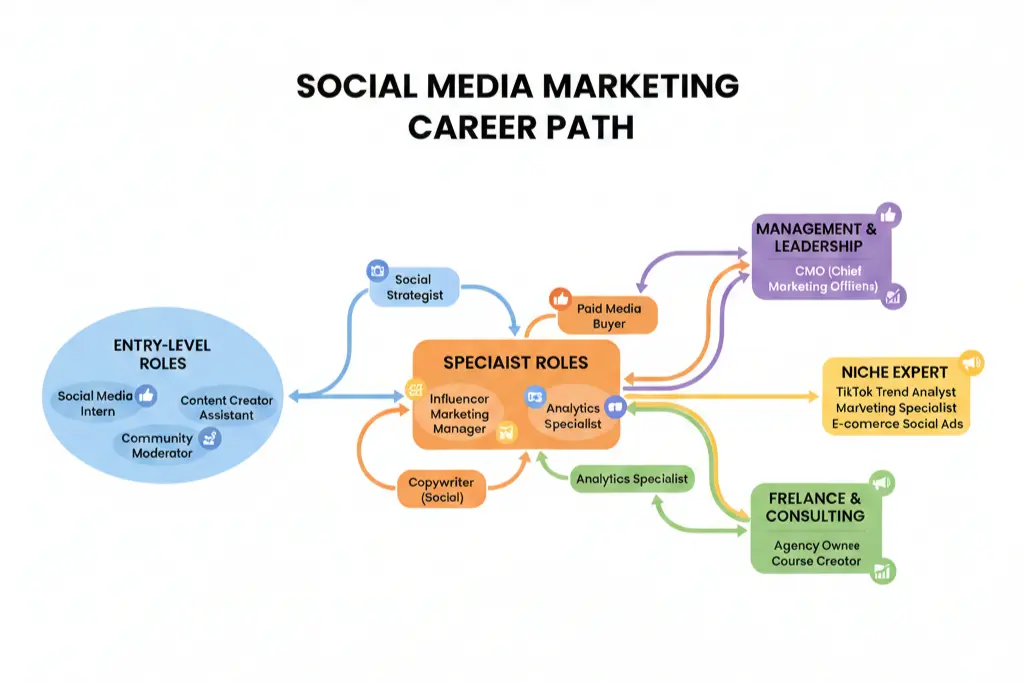
The social media marketing industry creates real, expanding opportunity. Career paths include brand strategists, performance marketers, content creators, analytics specialists, and community managers.
Whether you want to build a career in social media marketing or launch your own marketing agency, demand continues to outpace supply. Entrepreneurs interested in starting a digital marketing company will find this market ripe with potential.
How Paradigm Media Networks Helps Brands Grow
At Paradigm Media Networks, our reputation is built on results that matter — revenue growth, qualified leads, measurable ROI, not likes and follows.
Deep Research Foundation — Before creating a single post, we analyze your audience behavior, competitive landscape, and market positioning.
Platform-Specific Expertise — Each social network requires different content and optimization; we tailor our approach to where your audience actually engages.
Creative Excellence — Our content stops scrolls, sparks conversations, and drives action across video, design, and copy.
Performance Optimization — We test, measure, and refine continuously. Nothing stays static.
Advanced Analytics — You’ll know exactly how social media impacts your bottom line, with reporting that connects every dollar spent to outcomes achieved.
See how this played out for real clients on our Our Work page.

Ready to transform your social presence from expense to revenue driver? Visit us at paradigmmedianetworks.com and discover how the right social media marketing partner changes everything.
Frequently Asked Questions
How quickly can we expect results from social media marketing?
Organic growth typically shows momentum within three to six months as content compounds and algorithms recognize consistency. Paid campaigns can generate leads within days of launch. Timeline depends on your goals, industry, and competitive landscape.
Does social media marketing actually work for B2B companies?
Yes. According to HubSpot’s 2026 marketing data, 89% of B2B marketers use LinkedIn for lead generation, and 62% report it produces leads effectively. The key is platform selection and content aligned with longer B2B sales cycles.
Should we manage social media internally or outsource it?
Most businesses benefit from outsourcing to a professional social media management provider. Internal teams often lack specialized expertise and struggle to keep pace with constant platform changes. Agencies bring proven strategy, creative resources, and performance optimization.
What’s the minimum budget needed for effective social media marketing?
Effective strategies typically start around $2,000–$3,000 monthly for combined management and ad spend. This allows for consistent content creation, community management, and modest paid amplification.
How do we measure social media marketing ROI?
ROI measurement tracks social media’s contribution to revenue through cost per lead, customer acquisition cost, conversion rate, and attributed revenue. A professional agency implements tracking infrastructure that proves financial impact, not just engagement metrics.
Which social media platforms should our business prioritize?
It depends on where your audience actually engages. B2B companies typically prioritize LinkedIn. E-commerce brands lean into Instagram and Facebook. Professional services often combine LinkedIn and YouTube.
Transform Your Social Media Into a Revenue Engine
The difference between social media as an expense and social media as a growth engine comes down to strategy, expertise, and execution.
Paradigm Media Networks doesn’t just manage social accounts — we architect growth systems that turn followers into customers. Every day you wait, competitors capture more of the market your ideal customers are discovering solutions in.
Visit Paradigm Media Networks at paradigmmedianetworks.com today and book a free strategy consultation to see exactly how strategic social media marketing can accelerate your growth.
