


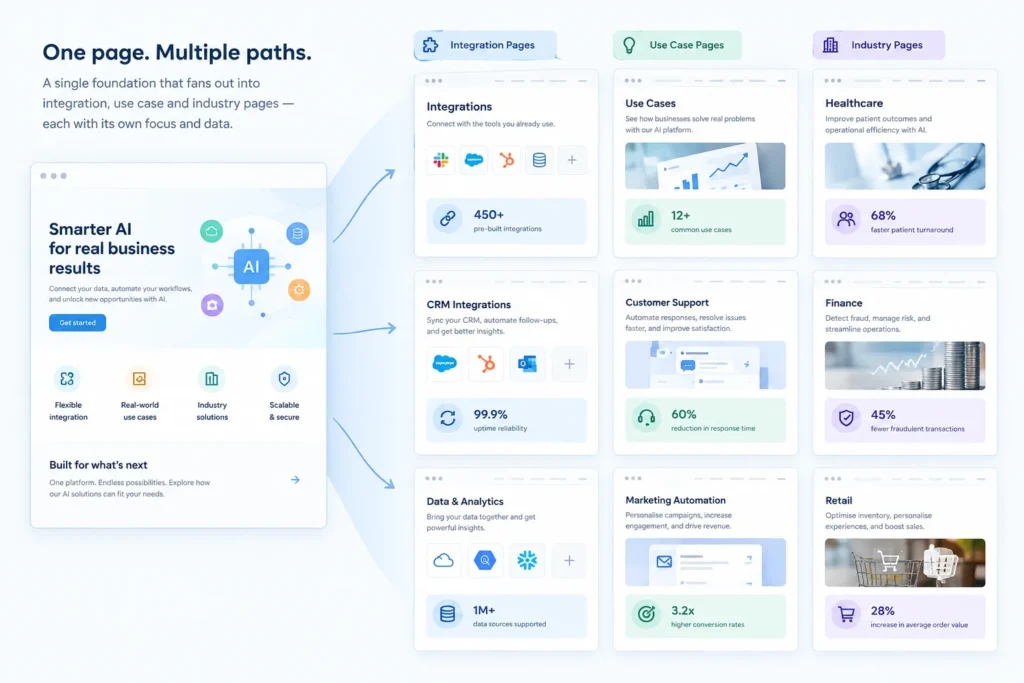
Programmatic SEO for SaaS is when you build lots of commercial pages, say for integrations, use cases or industries, off one template and a spreadsheet of data, with each page aimed at a single buyer search. It only pays off if each page says something the others don’t. Swap just the keyword and you’re flirting with Google’s scaled content abuse policy. Get the data right first, then publish in small batches.
Key Takeaways:
- Your dataset decides whether a page set should exist. The template is the quick bit.
- A page that repeats its siblings with a new keyword shouldn’t go live.
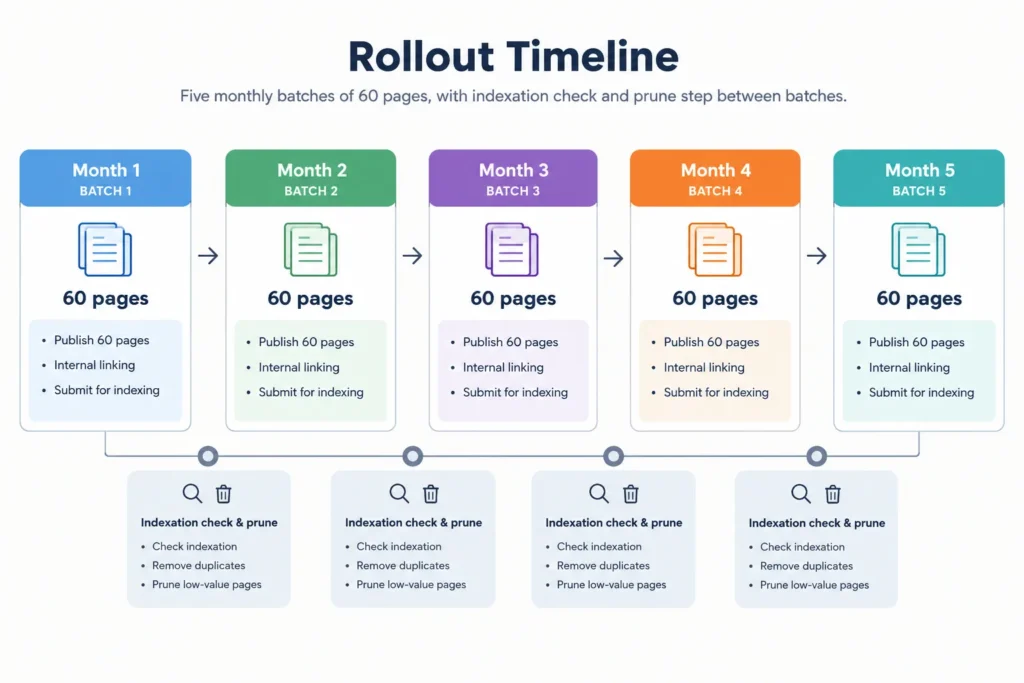
- Ship a batch a month, and look at how much got indexed before you ship the next.
You’ve probably found a competitor with an integration page for every tool you’ve heard of. It’s tempting to copy that with a page generator. Plenty of teams do, then find Google indexed a fraction of it.
What Programmatic SEO for SaaS Actually Means
In practice you spot a search people keep making with one word changed, like “[product] + [tool] integration”, hook it up to a database and put out a page for each row. Most people point to Zapier here: each “connect X with Y” page lists the triggers and actions for that exact pair.
Someone searching “attendance software for manufacturing” is usually comparing tools already, which is why these pages belong in the commercial tier of your SaaS keyword research rather than on the blog calendar.
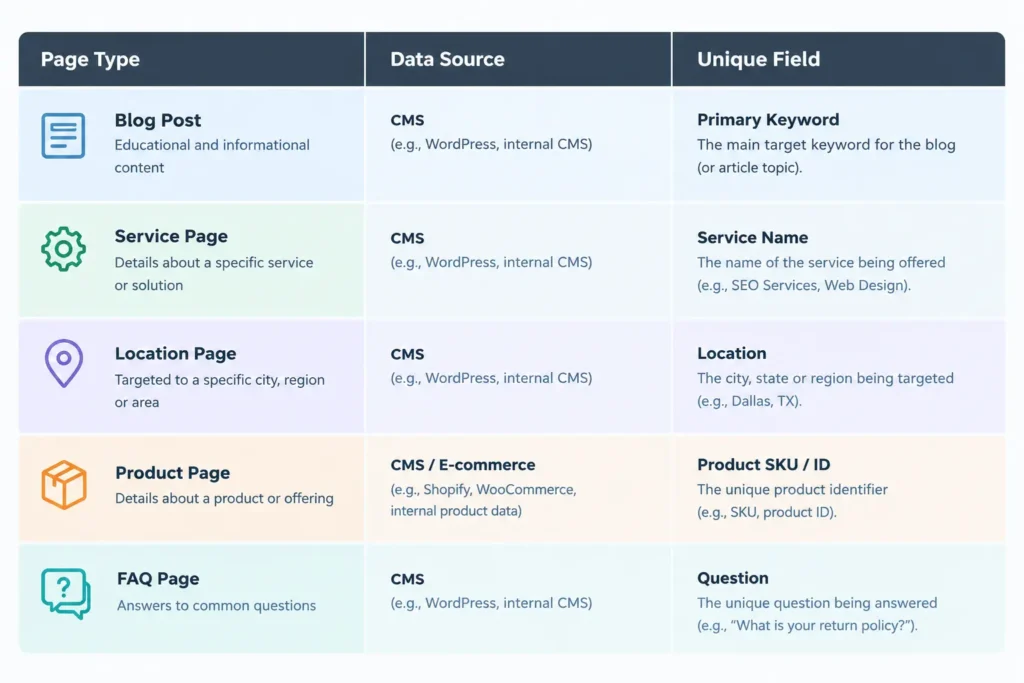
Which SaaS Page Types Suit a Programmatic Build
| Page type | Where the data comes from | What must be unique per page |
| Integration pages | Product docs, API, partner listings | Real sync fields, setup steps, limits |
| Use case pages | Product modules, support tickets | The workflow and the feature that handles it |
| Industry pages | Customer data, sales notes | Compliance, terminology, pricing logic for that sector |
| Role pages | Sales calls, onboarding data | The tasks that role does daily |
| Comparison and alternatives | Public pricing, reviews, feature audits | Verified differences, dated |
If you’re starting from zero, do integration pages first, since the data’s sitting in your docs. Industry pages go wrong most often, because teams know little about a sector beyond its name.
The HR Tech Build: 300 Pages at 60 a Month
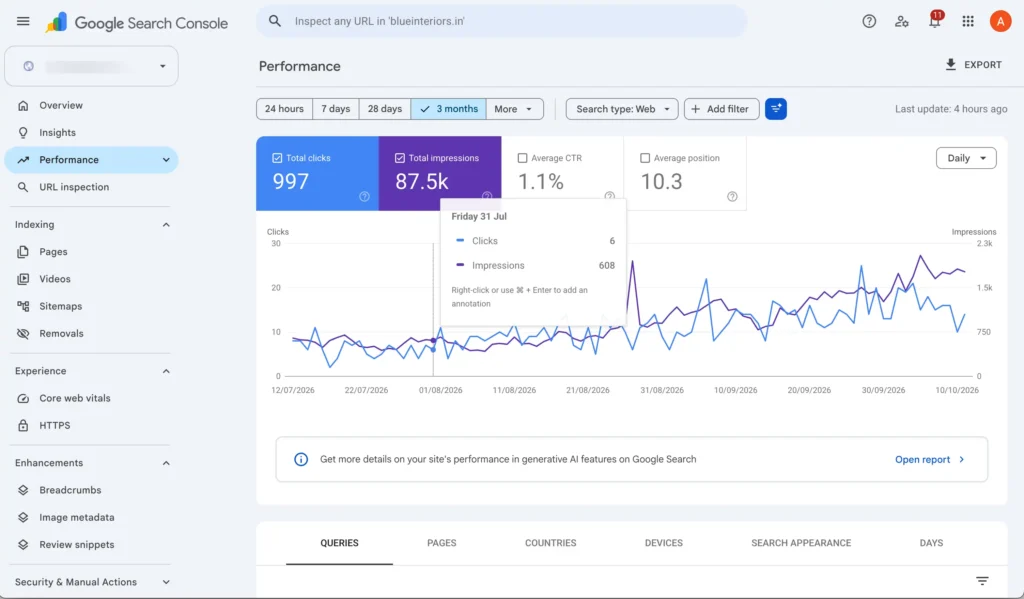
From December 2025 to April 2026 we ran programmatic SEO for an HR tech and workforce management SaaS. It started at roughly 234 organic clicks a month, an average position of 24, and no programmatic pages.
We built the plan around the product itself. Attendance, payroll, workforce management and canteen systems each became a page family, so every page described something the software actually does. We published 300 commercial pages at 60 a month, refreshed 180 old pages in March and regrouped the site into pillars and clusters.
Five months in, the pages had 180K+ Search Console impressions and 7,350 Bing AI citations (373 in January, 2,990 in April). The client got 15+ ICP-matched leads, including three demos in March, with no ad spend. Every one of those leads landed on a commercial page; the blog didn’t produce any. The canteen management page alone hit 53,187 impressions at position 3.89. Full numbers: our B2B SaaS SEO agency page.
Anatomy of a Programmatic SaaS Page
A template that holds up usually has six parts:
- A two- or three-sentence answer block.
- Proof unique to this row: sync fields, a workflow, an industry rule.
- A spec or comparison table from the dataset.
- Shared product context, kept short.
- Links to the pillar and two or three siblings.
- A demo or trial CTA.
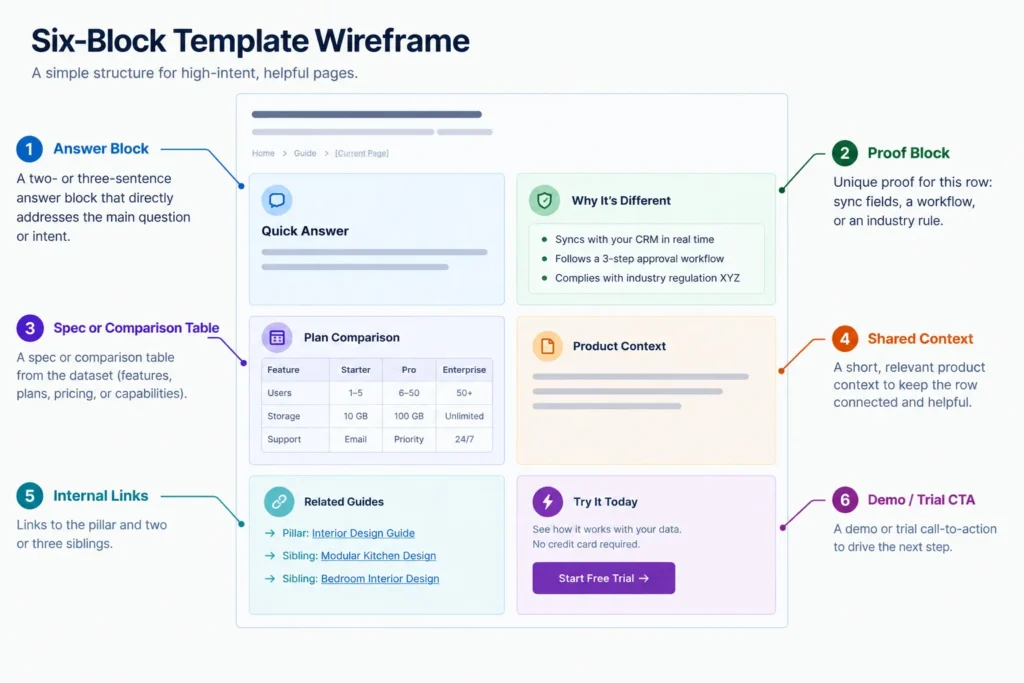
Parts 2 and 3 carry the page. If you’ve got nothing to put in them for a row, leave that page out, however nice the template looks. Crawl problems show up fast at that scale, so go through our SaaS technical SEO checklist first.
Planning a page set like this? Grab a scoping call with us and we’ll go through your data and tell you which templates it can carry.
The Uniqueness Test That Decides What Ships
Before anyone builds a template, write three random rows out by hand. Would a buyer learn anything on one that isn’t on the others? If only the keyword changed, kill the set.
Take integration pages for an HR tool as an example. One page lists which employee fields sync with a payroll system and how often; the next lists different fields and a different limit. That set passes. If both just promise “easy two-way sync”, it doesn’t.
Look for at least one detail a buyer would actually weigh up: cost, setup or a compliance rule. Changing the city name doesn’t count. Roughly half the body copy, plus that detail, should differ from the nearest page. “[category] software for [city]” nearly always fails, unless pricing or support honestly varies by city.
The hard bit is ending up with fewer pages than planned. If you’ve got real data for 120 rows out of 300, you publish 120.
Staying Clear of Scaled Content Abuse
Google describes scaled content abuse as publishing many pages mainly to manipulate rankings rather than help people. Nothing in that policy rules out templates. Google’s problem is with pages that have nothing in them.
It’s worth going slower than you’d like. Sixty pages a month let us see how each family indexed before the next batch went out. Prune as you go. Google says duplicate and low-value URLs eat into crawl budget, so merge thin siblings and drop pages with no impressions. Link every page to and from its pillar, too.
Why these pages now matter in AI search
The Bing citations above landed on pages with a clear answer block and specific data. To see whether ChatGPT mentions you, try our free AI visibility checker, or see our GEO services.
What breaks when SEO runs alone
An SEO team on its own can publish 300 pages but usually can’t fix the page that isn’t converting, or tell the paid team which pages now rank so bids can drop.
When You Shouldn’t Do Programmatic SEO
Hold off if the keyword is the only data you’ve got, or if your core product and comparison pages don’t rank yet. These pages need authority from the rest of the site. Start with our SaaS SEO guide.
Frequently Asked Questions
What is programmatic SEO for SaaS?
Building commercial pages from a template and a dataset, each aimed at one buyer search with data no other page has.
Is programmatic SEO considered spam by Google?
No, not by itself. Google’s spam policy targets pages made mainly to game rankings, template or not.
How long does programmatic SEO take to show results?
On our HR tech build, leads came in month three and demos in month four. You’ll normally notice impressions creep up before rankings move, and pipeline comes after that.
Does programmatic SEO still work after Google’s recent updates?
It still works when the pages have real data behind them. The updates went after sites full of near-copies.
How many programmatic pages should a SaaS launch at once?
Start small per template and grow once indexation looks healthy.
Your First Step
List every integration, module and industry you could describe with at least one fact unique to it. That list is the honest size of your first page set.
Scope Your Programmatic SEO Build
If you want someone to look over your data and say which templates are worth building, drop us a line. Paradigm Media Networks: SEO, GEO & Ads, Engineered for the AI Era.
About the Author
Jahid Hussain | Founder, Paradigm Media Networks
Jahid Hussain founded Paradigm Media Networks to solve a problem he kept seeing: businesses spending across SEO, ads, and content that never talked to each other. He specialises in local SEO, organic growth systems, and integrated marketing strategies that connect search, paid media, and creative into one lead generation engine. Paradigm has taken clients from zero search visibility to six-figure monthly revenue pipelines, and has been featured in IANS, Eastern Herald, Sangri Times, and Dailyhunt. Jahid operates across the US, UK, UAE, and India, and writes from the standpoint of someone who has built and broken growth systems for real businesses, not from a slide deck.
