



By Jahid Hussain, Founder, Paradigm Media Networks
Quick Answer
CMS website development builds websites on platforms like WordPress, Webflow, or headless systems (Contentful, Strapi, Sanity) that separate content from code — so your team can update pages, publish blogs, and launch campaigns without waiting on a developer. <cite index=”10-1″>WordPress alone powers roughly 42.5% of all websites globally and 59.9% of the sites that use any detectable CMS</cite>, making it the default choice for most growing businesses. A standard CMS build typically takes 4–10 weeks and costs $2,000–$12,000+ depending on complexity, with ongoing hosting and maintenance running $120–$700/month.
Key Takeaways
- CMS separates content from code, letting non-technical teams manage pages, blogs, and pricing without developer dependency.
- <cite index=”10-1″>WordPress powers ~42.5% of all websites and nearly 60% of the CMS market</cite> — the safest default for most businesses, but not the only option.
- Headless CMS (Contentful, Strapi, Sanity) is worth the added complexity only when you need multi-channel content delivery (web + app + display) or maximum performance.
- SEO isn’t automatic — CMS platforms provide the technical foundation (clean URLs, schema support, Core Web Vitals optimization), but rankings still depend on how it’s implemented.
- Budget realistically: $2,000–$5,000 for a small business site, $5,000–$12,000 for custom design with integrations, $12,000+ for enterprise or headless builds.
- Migration is low-risk when done correctly — domain authority and existing rankings can be preserved during a CMS migration.
The digital landscape moves fast. Your website shouldn’t hold you back.
We’ve seen countless businesses trapped by rigid websites — waiting days for simple updates, paying developers for minor tweaks, watching competitors launch faster. It’s frustrating. And it’s completely avoidable. Content management systems changed that. They put control back where it belongs: in your hands.
What Is CMS Website Development?
CMS website development builds websites on platforms that separate content from code. Simple as that.
Think of it like this: a traditional hand-coded website is like a printed book — want to change a sentence? Reprint the whole thing. A Content Management System is more like a word processor: edit what you need, publish instantly.
We’re talking about real independence here. Your marketing team updates landing pages. Your sales team refreshes pricing. Your content creator publishes blogs. No coding required.
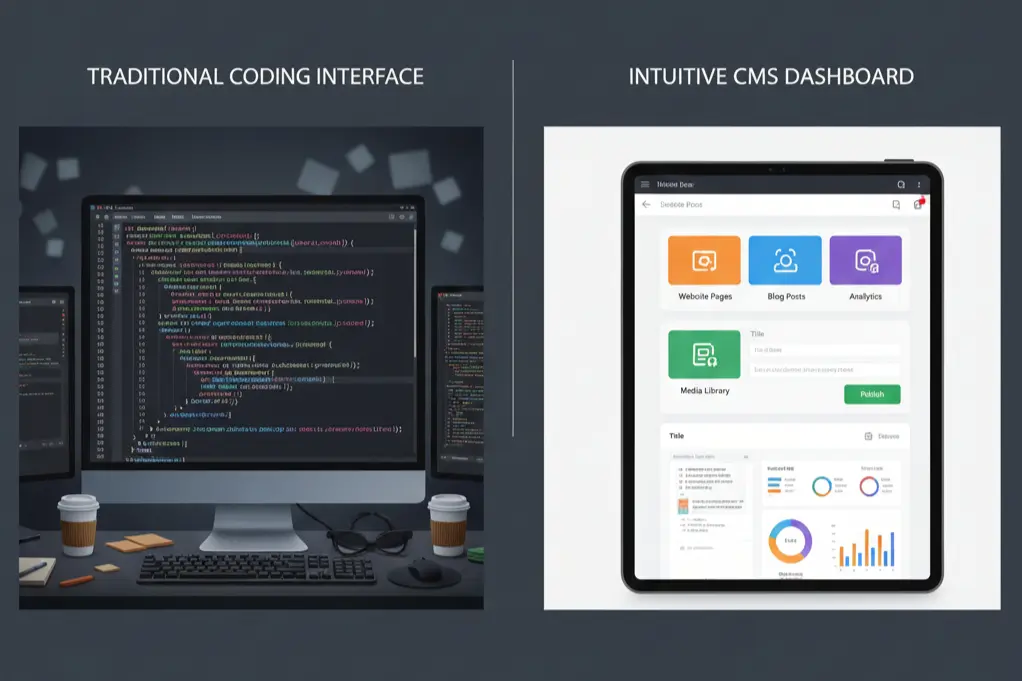
This matters because speed wins in business. When you can respond to market changes immediately, you stay ahead. among websites globally, WordPress alone now accounts for roughly 42.5% of all sites on the internet (source: W3Techs) — a strong signal of just how far CMS adoption has come. Most of the modern web runs on some form of CMS. There’s a reason for that.
Benefits of CMS-Based Websites
Let’s get practical about why businesses choose CMS website development services.
Scalability Without the Headache
Your business grows. Your website should too — without rebuilding everything.
We’ve helped companies go from 10 pages to 500 pages without breaking a sweat. New products? Add pages. New locations? Build them out. The infrastructure handles it.
Content Control That Actually Works
Here’s what we hear constantly: “We can’t update our own website.”
That ends with a CMS. Your team owns the content — update text, swap images, publish blogs, all from an intuitive dashboard. Zero developer dependency for routine changes.

Launch Campaigns Faster
Black Friday sale starting tomorrow? Limited-time offer? New service launch? With WordPress website development or a modern CMS, you’re live in minutes, not days.
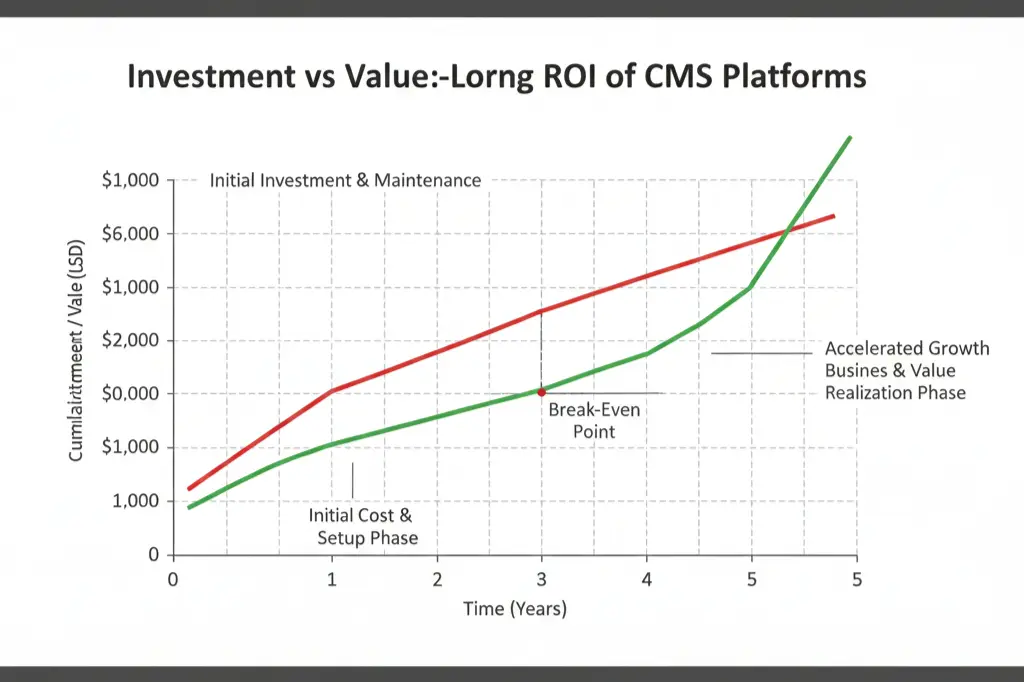
A Better Long-Term Investment
Custom-coded websites can look cheaper upfront. Then you pay a developer for every single change, and those costs compound. CMS platforms flip that equation: a slightly higher initial investment for dramatically lower ongoing costs, since your team handles routine updates in-house instead of billing hours for text and image swaps.
Built for Search Engines
Google rewards well-structured content: clean URLs, proper heading hierarchy, mobile responsiveness, fast loading times. Modern CMS platforms deliver this by default. This is why companies search for a CMS development company that understands both the technology and the marketing behind it.
Popular CMS Platforms Explained
Not all content management systems are created equal. Here’s how the major options compare:
| Platform | Best For | Editing Ease | SEO Flexibility | Typical Cost Range |
|---|---|---|---|---|
| WordPress | Business sites, blogs, lead gen, service businesses | High — built for non-technical teams | Excellent (Yoast, RankMath, schema plugins) | $2,000–$12,000+ |
| Headless CMS (Contentful, Strapi, Sanity) | Multi-channel brands needing web + app + display delivery | Moderate — needs developer support for frontend | Excellent, but requires manual technical setup | $12,000+ |
| Shopify | Ecommerce and product-led businesses | High | Good, ecommerce-optimized | $2,000–$10,000+ |
| Drupal | Enterprise, government, universities with complex requirements | Low–Moderate — steeper learning curve | Excellent for large, complex sites | $15,000+ |
| Webflow | Design-focused teams wanting visual control | High for design, moderate for content ops | Good | $3,000–$10,000 |
WordPress Website Development
WordPress powers approximately 42.5% of all websites globally, and among sites using any detectable CMS, its share rises to 59.9% — meaning it’s used on more sites than every other CMS platform combined (source: W3Techs). That’s not an accident.
WordPress website development dominates because it balances power with usability. Your marketing team can handle daily updates. Developers can build complex functionality when needed.
Perfect for:
- Business websites with regular content updates
- Blogs and content marketing platforms
- Lead generation sites
- Service-based businesses
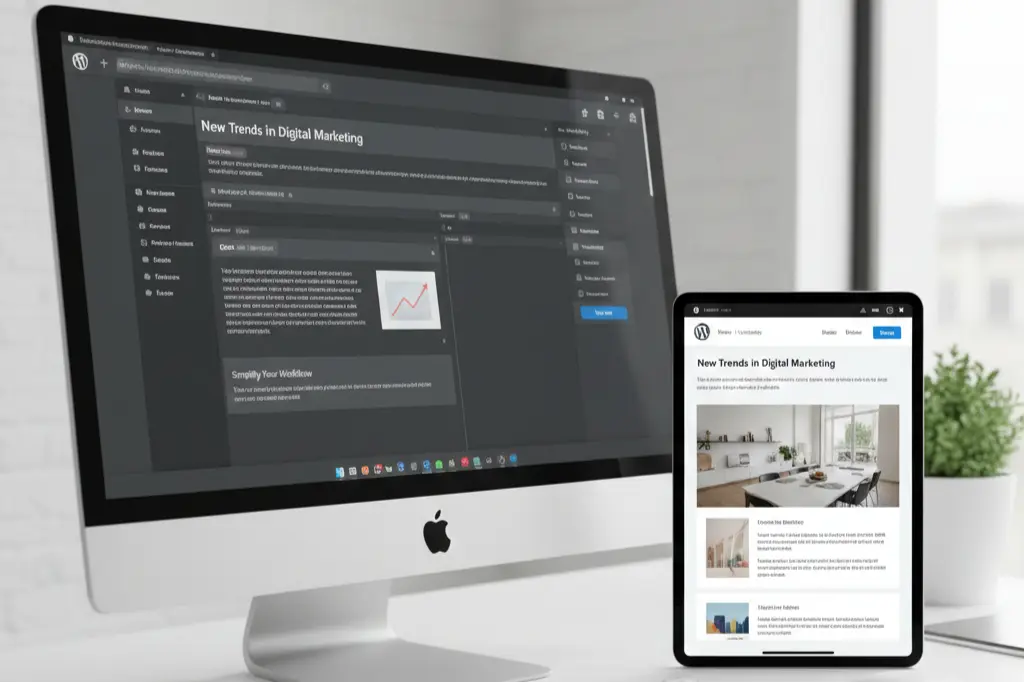
The plugin ecosystem means you’re never stuck. Need a booking system? There’s a plugin. Want advanced SEO tools? Multiple options. Integration with your CRM? Done. We’ve built hundreds of WordPress sites — the platform scales beautifully from startup to enterprise.
Headless CMS Development
Headless CMS development separates your content backend from your frontend presentation. Sounds technical, but the benefit is simple: your content lives in one place and publishes everywhere — website, mobile app, smart displays, wherever your customers are.
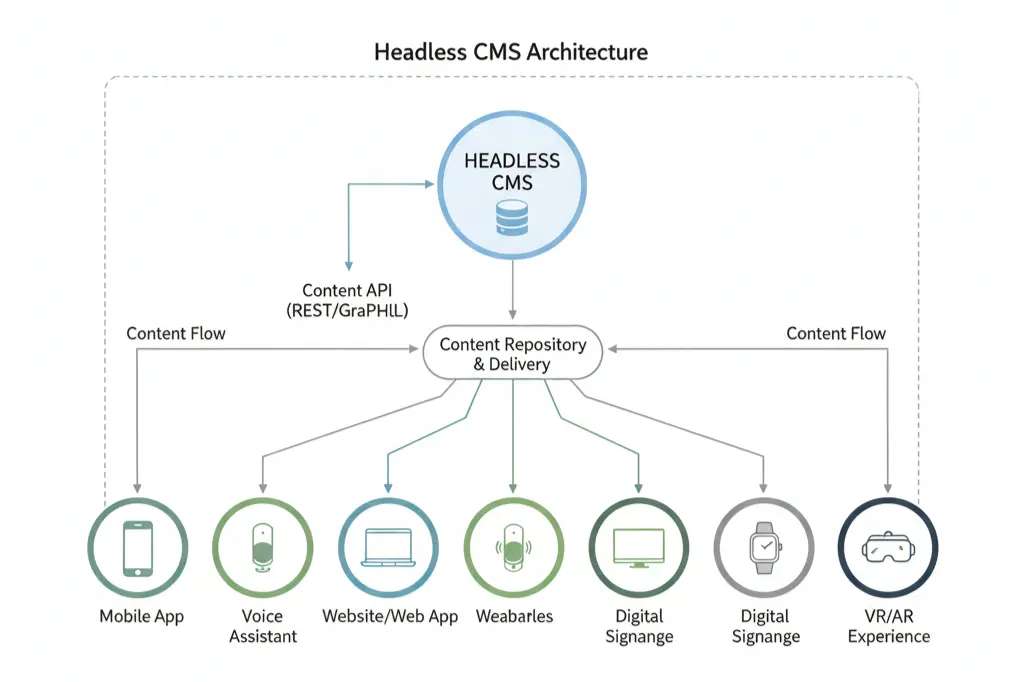
Ideal when you need:
- Lightning-fast performance
- Content delivery across multiple channels
- Ultimate design flexibility
- Future-proof architecture
Popular platforms include Contentful, Strapi, and Sanity. We’ve worked with all of them.
Other Platform Options
Shopify owns the ecommerce space — if you’re selling products, it’s hard to beat. Drupal handles enterprise complexity like a champ: government sites, universities, large organizations with intricate requirements. Webflow attracts design-focused teams who want visual control without sacrificing power.
Choosing the best CMS for business websites depends entirely on your specific needs. There’s no universal “best” — only best for you.
CMS vs Custom Development
This question comes up constantly. Let’s settle it.
When CMS wins:
- You update content frequently
- You need to launch and iterate quickly
- Budget efficiency matters
- Your team wants independence
- SEO performance is critical
When custom development makes sense:
- You’re building something truly unique
- Your workflows are highly proprietary
- Integration complexity is extreme
- You have significant in-house development resources
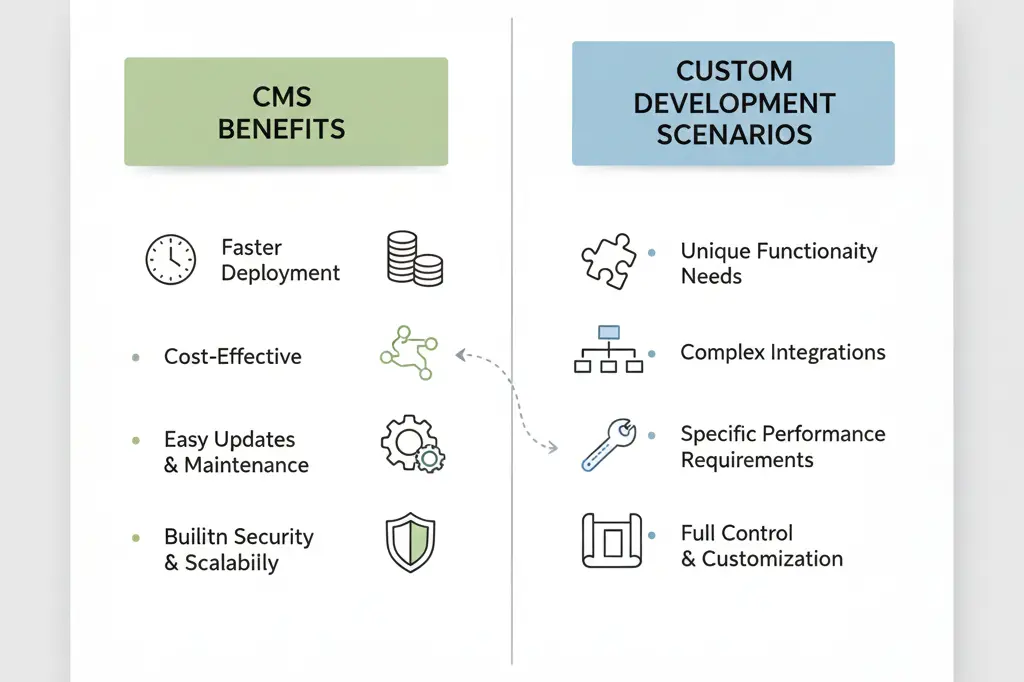
For most businesses, CMS is the smarter choice. Custom-coded projects often take 6–12 months where a well-scoped CMS solution could launch in 6–8 weeks.
Explore our complete approach to website development for businesses to understand which solution fits your needs.
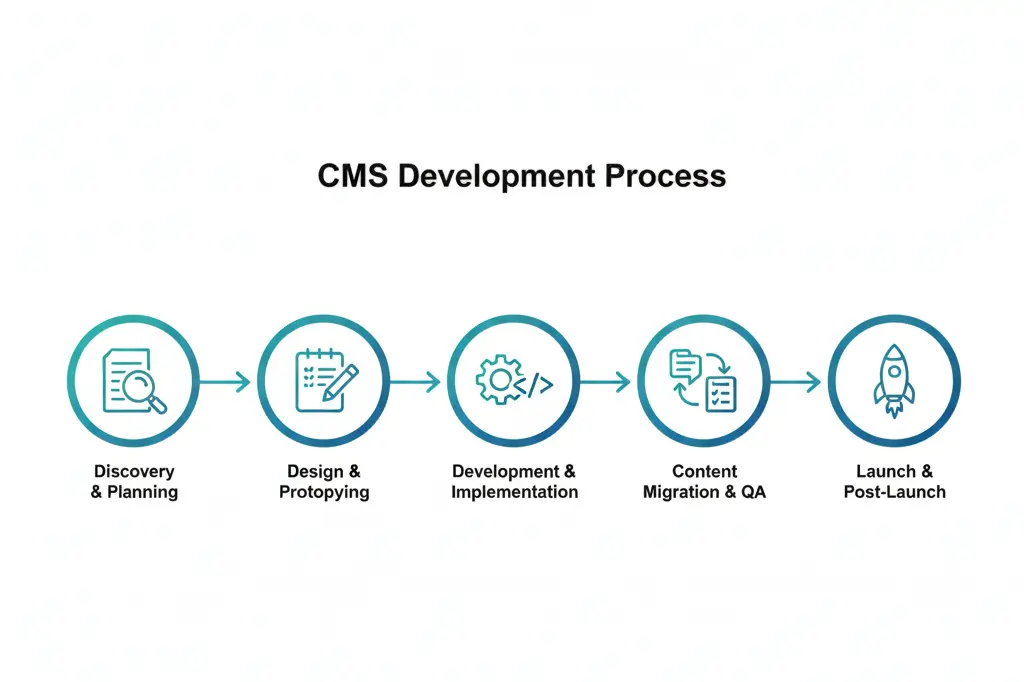
CMS Website Development Process
Here’s how we approach every CMS website development project at Paradigm Media Networks.
Discovery Changes Everything
We start by understanding your business — not just what you do, but where you’re headed. Your growth plans shape platform selection, architecture decisions, everything. Who’s your audience? What actions do they need to take? What content will you create? These answers drive smart decisions.
Platform Selection Strategy
WordPress, headless, or hybrid — we recommend based on your actual requirements, not our preferences or what’s trendy. Scalability needs, performance requirements, team technical skills, and budget reality all guide platform choice.

Design That Converts
Pretty websites don’t pay bills. Websites that convert visitors into customers do. We design with user behavior in mind: clear calls-to-action, intuitive navigation, mobile-first approach. Every element serves a purpose.
Development and Integration
Building the CMS is where technical expertise meets business strategy — custom themes, API integrations, marketing tool connections. Security isn’t optional. Performance isn’t negotiable. We build sites that are fast and secure from day one.
SEO Foundation
What’s the point of a great website nobody finds? We structure every site for search success: proper heading hierarchy, clean URLs, schema markup, internal linking strategy. The SEO benefits of a CMS only materialize with proper implementation.
Testing and Launch
Cross-browser testing. Mobile responsiveness checks. Speed optimization. Security scanning. We don’t launch until everything performs flawlessly.
Ongoing Support
Launch day isn’t the finish line — it’s the starting line. We provide training, maintenance, and optimization support to keep your site performing.
Learn more about our CMS website maintenance services to keep your platform secure, fast, and up to date.
SEO Benefits of CMS Websites
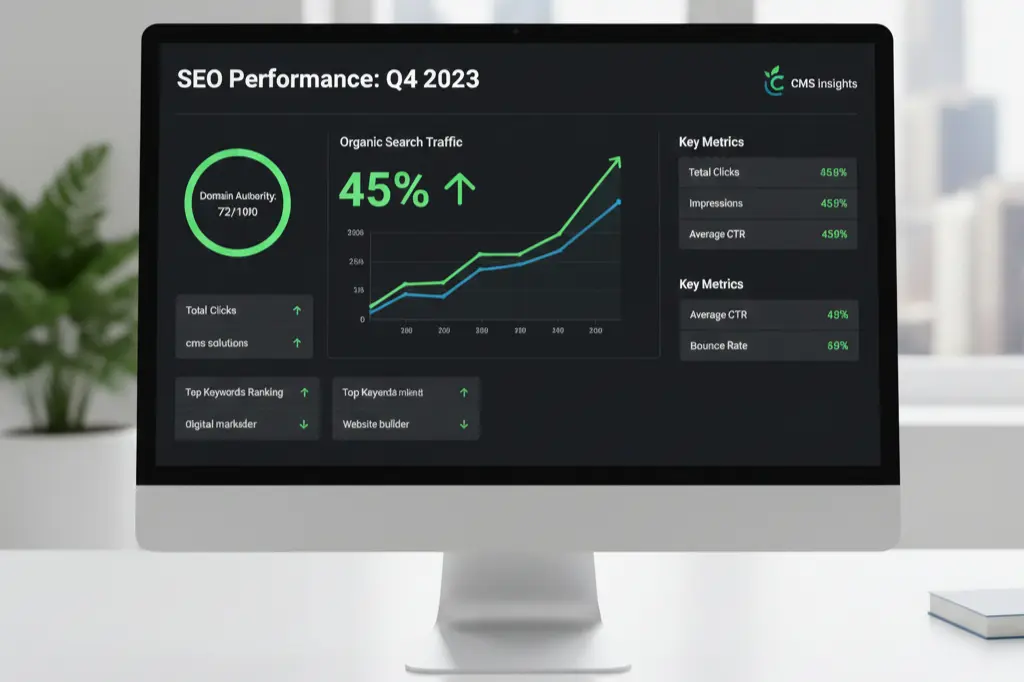
Let’s talk about what really matters: getting found online. Modern CMS platforms are SEO-capable by design — but only if you use them right.
Content Velocity Drives Rankings
Google rewards fresh, relevant content. With a CMS, you can publish consistently — blogs, updates, new pages — without technical barriers. That content velocity matters, a lot.
Technical SEO Built-In
Clean URL structures, editable metadata, mobile responsiveness, fast loading times, image optimization, structured data support. CMS website development handles the technical foundation so you can focus on creating value for your audience.
Scalable Internal Linking
As your site grows, internal linking becomes crucial. CMS platforms make it manageable even with hundreds or thousands of pages — search engines understand your site structure better, and users find related content faster.
Core Web Vitals Compliance
Google’s Core Web Vitals measure real user experience: loading speed, interactivity, visual stability. Modern CMS platforms are built to support strong Core Web Vitals performance when configured properly — proper caching, image compression, and minimal render-blocking code all play a role.
This is why businesses specifically search for “hire CMS website developers” who understand both code and search strategy.
Want to maximize your organic visibility? Check out our guide to SEO-friendly CMS websites for advanced optimization strategies.
Real Results: CMS Development in Action
AM Aesthetics London, a UK aesthetics clinic, needed a site that matched its in-clinic experience and could handle complex treatment bookings. Our team rebuilt the site on a CMS foundation with a custom booking flow, and online enquiries rose after launch. See the AM Aesthetics London case study.
This is the practical difference a properly built CMS makes: it’s not just about who can edit a page, it’s about whether your site actually performs for the people trying to find you.
See more real client work on our Our Work page.
CMS Website Development Cost Overview
Let’s address the elephant in the room: CMS website development cost.
What Drives Pricing?
- Platform complexity – WordPress costs less than enterprise headless systems
- Design requirements – Custom design versus template adaptation
- Feature scope – Basic brochure site versus complex integrations
- Content volume – 10 pages versus 100 pages
- Integrations – CRM connections, marketing automation, payment systems
Real-World Investment Ranges
- Small business site with standard features: $2,000 – $5,000
- Growing business with custom design and integrations: $5,000 – $12,000
- Enterprise or headless CMS development: $12,000+
Think ROI, Not Just Cost
A $3,000 website that brings in 50 qualified leads monthly is a bargain. A $10,000 website that sits idle is expensive at any price. We focus on building growth platforms — websites that actively drive business results.
Why Paradigm Media Networks
We’re not just developers. We’re growth partners.
Technical Excellence Meets Business Understanding
We’ve built everything from simple WordPress sites to complex headless architectures. But technical skill isn’t enough — we understand your business goals, and every technical decision supports your growth strategy.

Proven CMS Expertise
A track record of successful CMS website development projects across industries — including aesthetics (AM Aesthetics London), EdTech (Tychr) and non-profits (ChildFund India). WordPress specialists, headless CMS experts, and SEO strategists working as one team.
Long-Term Partnership Approach
Website launch is just the beginning. We provide training, support, and optimization for as long as you need it. Our clients stay with us because we deliver results, consistently.
Transparent Process
No surprises. No hidden costs. No technical jargon designed to confuse. You’ll always know where your project stands and why we’re recommending specific approaches.
Ready to build something that scales? Explore our full services.
Frequently Asked Questions
What exactly is CMS website development?
CMS website development creates websites using content management systems that let you update content without coding knowledge. It separates your content from code, giving you control over text, images, and pages through an intuitive dashboard — edit pages, publish blogs, update products, all without calling a developer every time.
Which CMS platform is best for business websites?
WordPress website development works brilliantly for most businesses — it balances ease of use with powerful functionality. For high-performance needs or multi-platform content delivery, headless CMS development offers superior speed and flexibility. The best choice depends on your specific requirements, team capabilities, and growth plans.
Does CMS help with SEO performance?
Yes. CMS platforms support clean URLs, editable metadata, mobile responsiveness, and fast loading times — all critical ranking factors. The real advantage is that you can publish fresh content consistently without technical barriers, and modern CMS tools integrate with analytics and SEO plugins to track performance.
How long does building a CMS website take?
Most projects complete in 4–10 weeks, depending on complexity. A straightforward business site with standard features takes about 4–6 weeks. More complex builds with custom integrations and extensive content take 8–10 weeks. Headless CMS projects typically need 10–12 weeks given the additional architecture complexity.
Can my website scale as my business grows?
That’s the entire point of CMS website development. Add new pages, sections, features, or even entire business divisions without rebuilding. We’ve helped businesses scale from 20 pages to 500+ pages on the same platform.
What’s the ongoing cost after launch?
Hosting typically runs $20–200 monthly depending on traffic and performance needs. Maintenance and updates typically cost $100–500 monthly for managed services. Since you handle routine content updates yourself, you eliminate constant developer fees — that’s where the real savings happen. Our CMS website maintenance services cover security updates, performance monitoring, and technical support.
Should I hire a CMS development company or do it myself?
If you have technical expertise and plenty of time, DIY is possible. Most businesses are better off partnering with experts — professional CMS website development services deliver faster launches, better performance, proper security, and strategic SEO implementation most DIY approaches miss.
Is WordPress still relevant today?
More relevant than ever. WordPress website development continues to evolve with block editors, headless capabilities, advanced security, and performance optimization. it powers roughly 42.5% of all websites worldwide (source: W3Techs), from major enterprise sites to small businesses, backed by an ecosystem large enough to solve virtually any requirement.
What’s the difference between traditional CMS and headless CMS?
Traditional CMS combines content management and presentation in one system — easier to use, faster to launch. Headless CMS separates them: your content backend feeds multiple frontends (website, app, displays). Headless offers more flexibility and performance but requires more technical expertise.
Can I migrate my existing website to a CMS platform?
Yes. We’ve migrated websites from static HTML, outdated platforms, and underperforming systems to modern CMS solutions. The process involves content migration, design adaptation, SEO preservation, and thorough testing, and most migrations complete in 4–8 weeks — while keeping your domain authority and existing rankings intact.
Build Your Growth Platform Today
Your website should drive growth, not hold you back.
We’ve seen it too many times: businesses trapped by outdated websites that can’t keep up with their ambitions, teams frustrated by waiting days for simple updates, opportunities missed because launching new content takes too long. It doesn’t have to be this way.
CMS website development has changed the game for the businesses we’ve partnered with — from dependent to independent, from reactive to proactive, from limited to limitless.
Picture this: your marketing team publishes a new campaign landing page in minutes, not weeks. Your sales team updates pricing instantly when market conditions shift. Your content creator publishes a time-sensitive blog post right when it matters most. No bottlenecks. No delays. No developer dependency for routine changes.
At Paradigm Media Networks, we don’t just build websites — we build growth platforms designed for your success. Whether you need WordPress website development that balances simplicity with power, headless CMS development for maximum performance, or strategic guidance on choosing the right platform, we’ve got the expertise to deliver.
Your growth shouldn’t wait for technology. Technology should accelerate your growth.
Visit paradigmmedianetworks.com to explore our CMS website development services, review our portfolio, and discover how we turn websites into growth engines.
Your next-level website is one conversation away.
