


By Jahid Hussain · Updated 2026
Quick Answer
To rank on Perplexity AI, make your content citation-worthy rather than keyword-dense: answer each question in the first 40–60 words of its section, back claims with named sources, keep your author and brand identity consistent across the web, add Article, FAQPage and Organization schema, and refresh pages regularly. Perplexity cites sources it can verify; it does not rank pages the way Google does.
Key Takeaways
- Perplexity ranks by citation-worthiness, not keyword density — semantic clarity and sourced claims matter more than exact-match keywords.
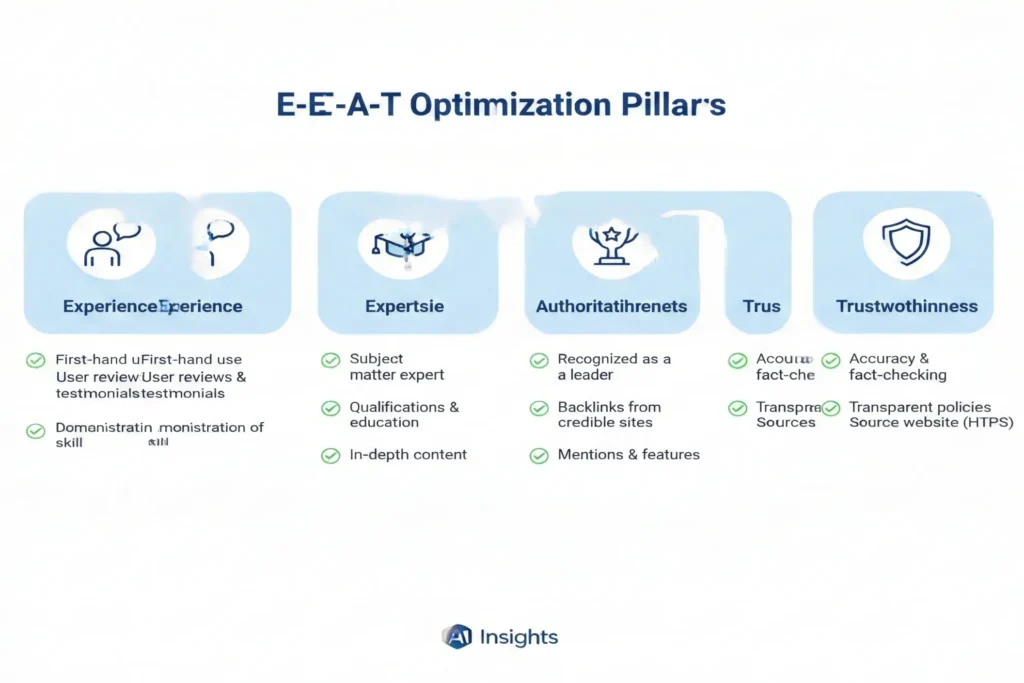
- E-E-A-T (Experience, Expertise, Authoritativeness, Trustworthiness) is foundational for AI search visibility, not optional.
- Independent research from Princeton and Georgia Tech found that targeted content optimization techniques can lift visibility in generative engine answers by up to 40% (Aggarwal et al., 2024).
- Schema markup (Article, FAQPage, Organization) gives AI crawlers machine-readable confirmation of authorship and entity identity.
- There’s no public analytics dashboard for Perplexity — visibility has to be tracked manually through query testing and referral traffic.
- The same fundamentals — structure, sourcing, freshness, consistent entity signals — apply across Perplexity, ChatGPT, Gemini, and Google AI Overviews.
Understanding How Perplexity AI Works
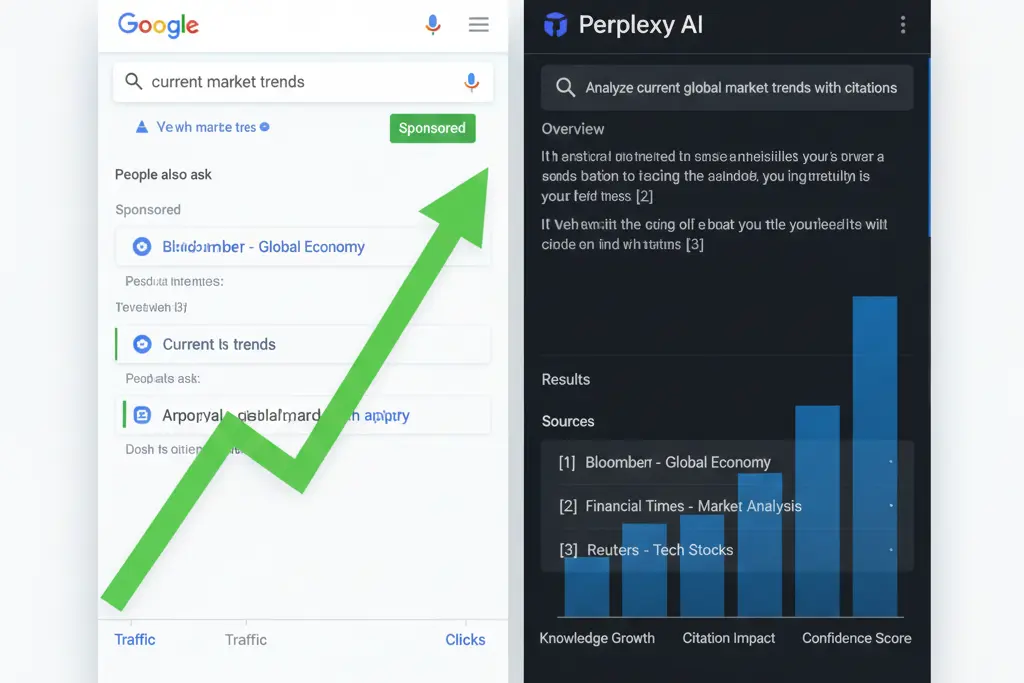
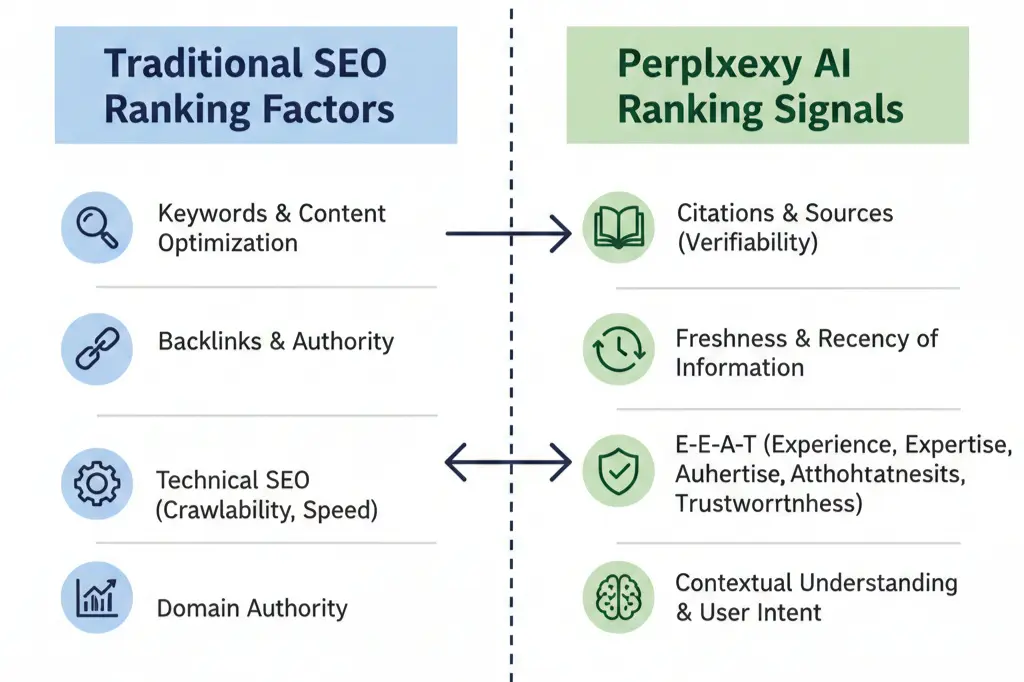
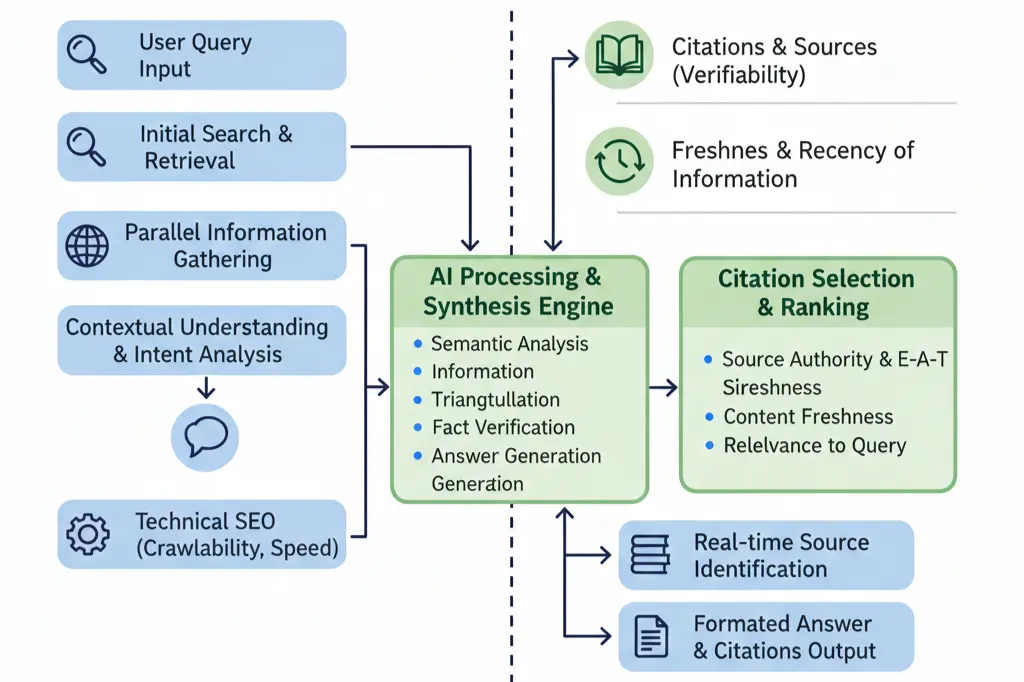
Perplexity operates differently than Google. It doesn’t just crawl and rank — it interprets. Using large language models, it understands natural language queries, expands them semantically, and retrieves relevant content in real time. According to Perplexity’s own documentation on how the product works, it combines real-time web search with LLM-based synthesis to generate a direct answer rather than a list of links.
Three things make it distinct:
Citation-first approach: Every answer includes sources. Your content needs to be clear, factual, and reference-worthy to get picked up.
Semantic understanding: It’s not about exact keywords. AI-driven search ranking focuses on context, related entities, and natural language patterns.
Trust signals: Domain authority still matters, but so does content freshness, structure, and how well you reference credible sources.
Perplexity is, in effect, asking one question of every page it considers: can I trust this source enough to cite it?
Step-by-Step: How to Optimize Content for Perplexity AI
1. Let PerplexityBot Crawl Your Site
Perplexity can only cite pages its crawler can reach. PerplexityBot finds and links websites in Perplexity’s search results, and Perplexity says it isn’t used to train AI models. Add these lines to robots.txt:
User-agent: PerplexityBot
Allow: /
If you use Cloudflare or another firewall, allow Perplexity’s published IP ranges (listed at docs.perplexity.ai) so the bot isn’t blocked. A separate agent, Perplexity-User, fetches pages when a user asks about them. It usually ignores robots.txt, so robots.txt alone won’t keep it out.
2. Choose High-Value Topics & Semantic Relevance
Focus on topics Perplexity treats as high-value: business analytics, technology trends, in-depth tutorials, industry analysis. Use semantic keywords, related entities, and natural language — not exact-match keyword stuffing. Think about what people are actually asking and what context surrounds that question.
3. Structure Content for AI & Human Readability
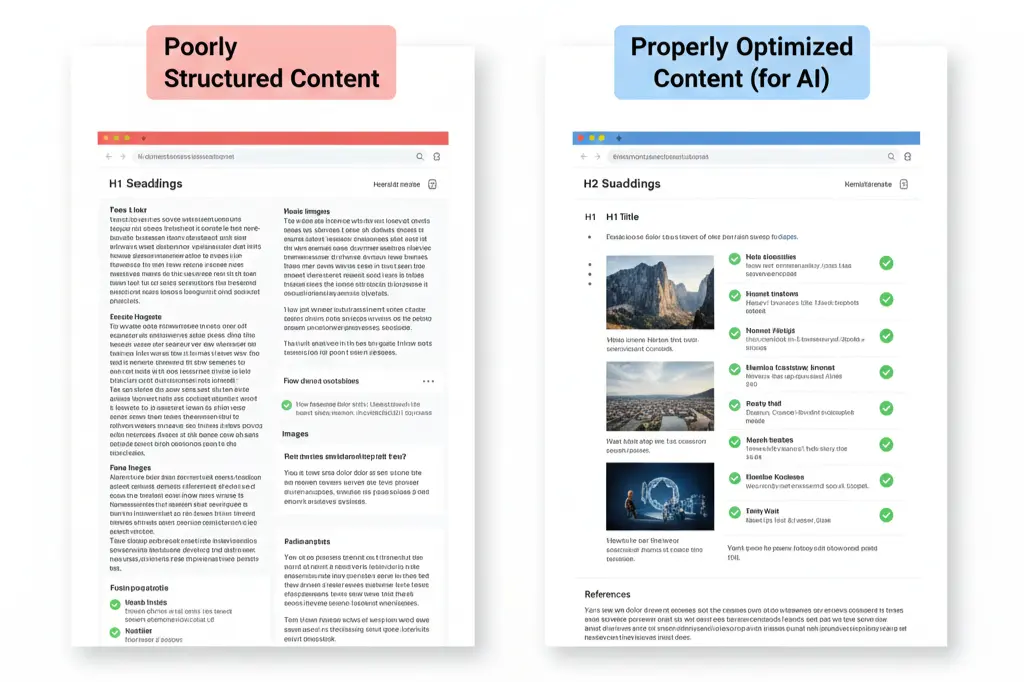
Clear headings matter — H2s, H3s, bullet points — but structure alone isn’t enough. Add a Quick Answer or Key Takeaways block near the top of the page (as in this rewrite) so AI systems can extract a concise, accurate summary while human readers get the depth further down.
4. Use Citations, Data & Authoritative References
Every claim needs backing — statistics, data, or a reference from a reputable source. Content becomes “citable” when it’s well-referenced. Link to authoritative domains — .edu, .gov, established industry publications — since this is one of the clearest trust and credibility signals AI engines evaluate.
5. Incorporate Freshness & Regular Updates
Perplexity favors current content; stale information gets deprioritized. Set an update schedule: quarterly for evergreen content, monthly or weekly for trend-driven pieces. Reference the current year, note update dates, and mention recent industry shifts — these freshness signals matter.
6. Add Multimedia & Rich Media
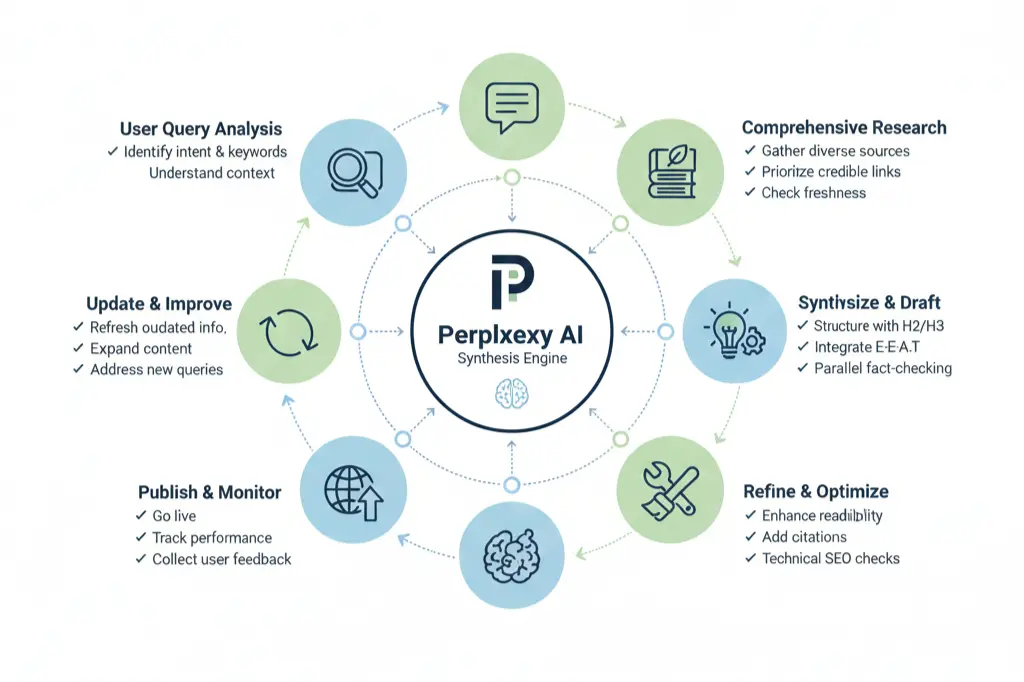
Graphics, infographics, and charts improve engagement and give AI systems different content types to reference. Flowcharts explaining a process, before/after visuals, and data charts all increase the chance of citation.
7. Implement Technical SEO & Schema Markup
The foundation still matters: site speed, mobile-friendliness, clean architecture, proper indexing. On top of that, add structured data — Article schema, FAQ schema, HowTo schema — so AI systems can detect entities and context reliably. (Full JSON-LD template below.)
8. Build Authority with Backlinks & Third-Party Mentions
Earn mentions on reputable sites through guest posts, digital PR, and features in relevant publications. Independent authority signals like these are one of the clearest ways to demonstrate — not just claim — trustworthiness to an AI system evaluating your content.
How We Approach Perplexity & AI Search Optimization
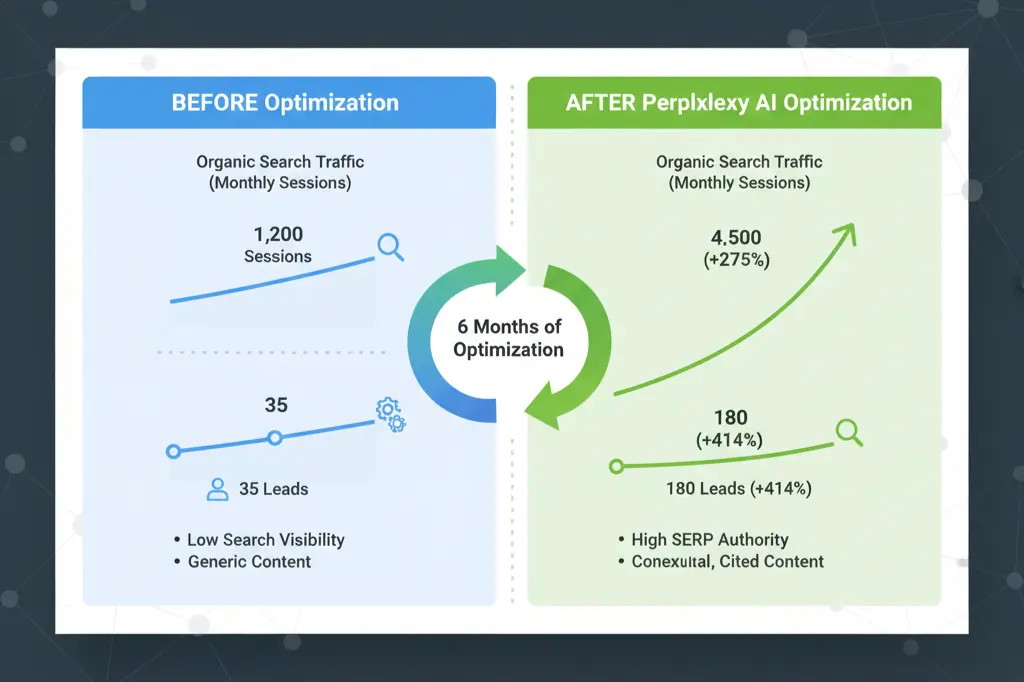
Rather than a single case study, here’s the framework we actually run with clients. See how Moving Hub earned AI citations across Perplexity and ChatGPT from a zero baseline.
Topic & entity mapping — Identify the actual questions an audience asks Perplexity, ChatGPT, and Google AI Overviews, not just what they type into Google.
Structure for extraction — Quick Answer and Key Takeaways blocks, scannable headings, and direct-answer openers so AI systems can lift a clean, accurate summary.
Citation-worthy content — Every claim tied to a real source: government data, industry research, or documented client outcomes — never an invented statistic.
Schema implementation — Article, FAQPage, and Organization markup so AI crawlers can confirm authorship, publication date, and entity identity.
Ongoing monitoring — Manual query testing across Perplexity, ChatGPT, and Gemini to track whether and how a page gets cited, since none of these platforms currently offer a public analytics dashboard.
This is the same process behind our SEO and website work for clients across e-commerce, real estate, and enterprise SaaS in the US and UK. See more outcomes on our Our Work page.
Metrics & Monitoring: Measuring Success on Perplexity AI
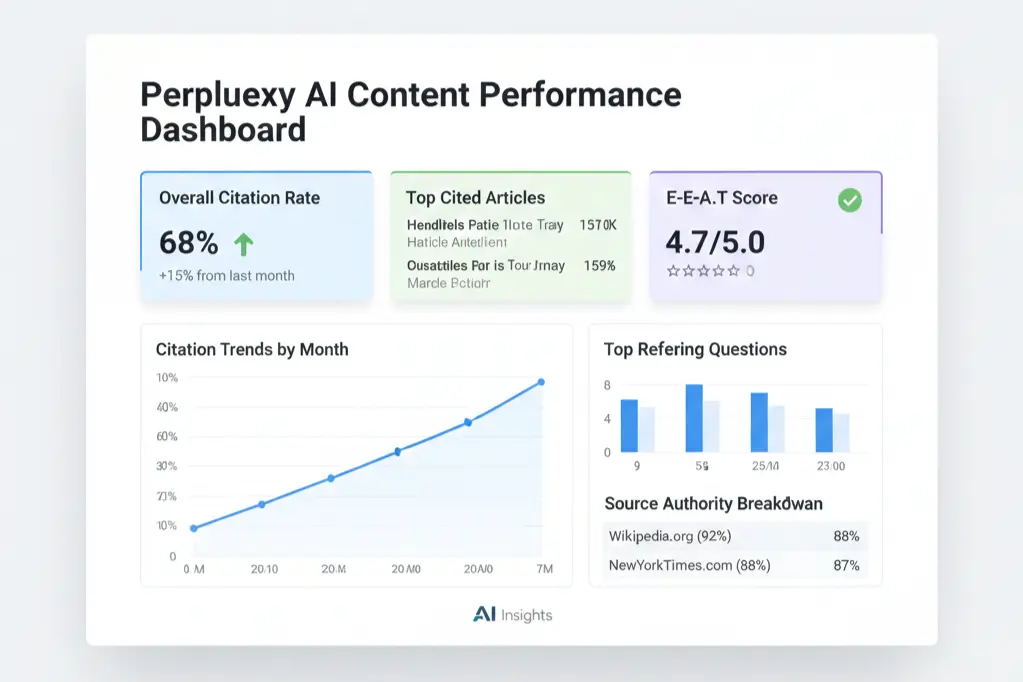
Perplexity doesn’t offer a public dashboard like Google Search Console, so tracking has to be deliberate.
Manual query testing: Run sample queries relevant to your content weekly. Document whether your page appears, at what position, and with what citation text.
Referral traffic analysis: Monitor Perplexity referral traffic in Google Analytics, using UTM parameters and custom segments to isolate the source.
Citation frequency: Track how often your content gets cited versus competitors — this is the closest equivalent to “ranking” on Perplexity.
Engagement metrics: Time on page, bounce rate, and scroll depth indirectly influence citation likelihood by demonstrating that human readers find the content valuable.
Authority growth: Track backlink acquisition and third-party mentions on a monthly cadence.
Rank Tracking for Perplexity: How to Monitor Your Citations
To track citations by hand, run your 10 most important questions in Perplexity every two weeks and log which sources it cites. To automate it, compare Perplexity rank trackers: Otterly.AI starts at $29 a month and SE Visible at $99 a month, and both track Perplexity on their entry plans.
Answer Engine Optimization (AEO): Making Your Content the Direct Answer
AEO is about structuring content so an AI system can lift a clean, accurate answer without misrepresenting it.
- Answer the question in the first sentence of any section that maps to a common query — don’t bury the answer under three paragraphs of setup.
- Use question-formatted subheadings where it’s natural (“How often should I update content for Perplexity?”) so AI systems can match query to section directly.
- Keep answers self-contained. A paragraph should make sense even if it’s the only thing an AI model quotes out of context.
- Maintain one consistent entity identity — same author name, same organization name, same logo and social profiles everywhere, so AI systems can confirm you’re a real, verifiable source.
Generative Engine Optimization (GEO): Earning Citations Across AI Platforms
GEO is the broader discipline of making your brand citable across every generative engine — Perplexity, ChatGPT, Gemini, and Google AI Overviews — not just rankable on one platform. The foundational Princeton/Georgia Tech research on GEO tested nine optimization techniques across 10,000 queries and found that adding specific statistics, direct quotations, and cited sources produced the largest measurable gains in AI-answer visibility — while keyword stuffing showed almost no effect.
Core levers:
- Source diversity — The more independent, authoritative places your data and claims appear (industry reports, your own case studies, third-party mentions), the more AI systems treat you as a corroborated source rather than a single self-interested one.
- Structured data as a trust signal — Article, FAQPage, and Organization schema give AI crawlers machine-readable confirmation of who you are and when you published.
- Consistency over cleverness — GEO rewards brands that say the same verifiable things everywhere over brands chasing one-off viral tactics.
- Crawler access — Confirm OAI-SearchBot, PerplexityBot, ClaudeBot, and Google-Extended aren’t blocked in your
robots.txt. This is a basic but easily overlooked prerequisite — no amount of content optimization matters if the crawler can’t reach the page.
For ChatGPT, Gemini and Google AI Overviews, the same principles apply with different crawlers. See our ChatGPT optimization guide.
Common Pitfalls to Avoid
Don’t keyword stuff. Exact keyword over-optimization hurts semantic richness. Use related entities, synonyms, and natural language instead.
Don’t write vague marketing claims. Statements without data or citations don’t get picked up by AI. Be specific and factual.
Don’t ignore technical SEO. Broken pages, slow loads, missing schema, and poor mobile experience all hinder visibility regardless of content quality.
Don’t treat it as “set and forget.” Freshness matters — stale content loses relevance quickly.
Don’t chase low-authority backlinks. AI engines weigh trust and authority, not link volume. Quality over quantity, always.

Conclusion & Key Takeaways
Ranking in Perplexity AI isn’t about gaming an algorithm — it’s about becoming genuinely authoritative.
It demands semantic relevance, clarity, credibility, proper structure, consistent freshness, and real authority signals. For businesses and agencies working across global markets, optimizing for Perplexity isn’t optional anymore — it’s a strategic advantage.
We combine traditional SEO best practices with Generative Engine Optimization principles, grounded in real expertise, verifiable data, and human-first writing. The opportunity here is still wide open — most competitors haven’t figured this out yet, and the ones who move now will hold the advantage.
FAQs
What kind of content performs best on Perplexity AI?
Well-structured, fact-based content with clear headings, data, citations, and semantic depth performs best — think how-to guides, case studies, and industry analyses that answer real user queries directly. Thin or keyword-stuffed content underperforms.
Do backlinks still matter for Perplexity SEO?
Yes. Authority signals and third-party mentions significantly boost citation chances. High-quality backlinks from reputable sites remain valuable for AI-driven search ranking.
How often should I update content for Perplexity optimization?
Regularly. Evergreen content should be refreshed every 2–3 months; trend-driven or data-heavy content should be updated every few weeks, since Perplexity weights content freshness heavily.
Can small or new domains rank on Perplexity?
Yes. High-quality, well-structured, semantically rich, and credible content with strong citations can help newer or smaller domains compete, especially when paired with E-E-A-T principles.
Is Perplexity SEO different from traditional SEO?
Somewhat. Traditional SEO fundamentals still apply, but Perplexity SEO places heavier emphasis on semantic relevance, citation-worthiness, content freshness, and trust signals rather than exact-match keywords.
How do I know if my content is being cited on Perplexity?
Run regular manual searches using queries related to your content, track whether your site appears as a citation source, and monitor referral traffic from Perplexity AI in your analytics. Perplexity is one of five engines we track in our Perplexity SEO services.
Ready to Dominate AI Search?
The future of search rewards expertise, authority, and genuine value.
At Paradigm Media Networks, we combine Generative Engine Optimization, traditional SEO expertise, and authoritative content creation to help brands win across Google, Perplexity, ChatGPT, and every AI-powered search platform in between — not through algorithm hacks, but by building authority that lasts.
Visit paradigmmedianetworks.com to start your Perplexity optimization journey today.
