



How to choose a SaaS SEO agency, in one line: make them show you things on the sales call instead of telling you things. Ask for a current client’s pipeline report, their month-one fixes for your site, and how they track AI search. Then read the contract. You should own the content, accounts and tracking data, and leaving should take a notice period, not a negotiation. Fail any of those and the agency is out before price comes up.
Key Takeaways:
- A rankings screenshot says nothing about demos. Ask for the CRM view.
- AI answers rarely repeat, so one ChatGPT screenshot proves little.
- Comparison and alternatives pages should go live before awareness blogs.
- If SEO and Google Ads sit with different vendors, decide who owns shared keywords.
- Set accounts up in your name on day one, not at exit.
By the third agency call, the pitches blur. Everyone has SaaS clients, everyone talks pipeline, everyone now “does AI search.” The difference is what they can pull up while you’re still on the call, and that’s what these checks test. (Our SaaS SEO guide covers the work itself. This is about picking who does it.) Not selling software? Our guide on how to choose an SEO company has a 10-point scorecard built for service businesses.
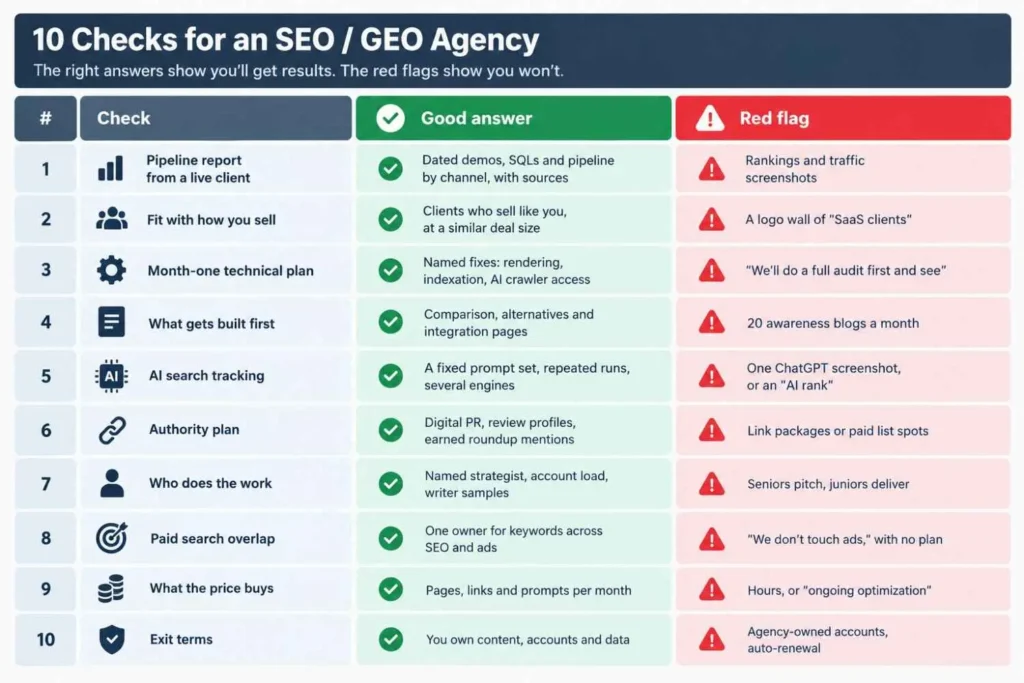
How to Choose a SaaS SEO Agency: The 10 Checks
The first three take about ten minutes, and plenty of agencies stop there. One shortcut: if anyone guarantees rankings, end the call. Google’s own hiring advice says nobody can guarantee a #1 ranking.
| # | Check | Good answer | Red flag |
| 1 | Pipeline report from a live client | Dated demos, SQLs and pipeline by channel, with sources | Rankings and traffic screenshots |
| 2 | Fit with how you sell | Clients who sell like you, at a similar deal size | A logo wall of “SaaS clients” |
| 3 | Month-one technical plan | Named fixes: rendering, indexation, AI crawler access | “We’ll do a full audit first and see” |
| 4 | What gets built first | Comparison, alternatives and integration pages | 20 awareness blogs a month |
| 5 | AI search tracking | A fixed prompt set, repeated runs, several engines | One ChatGPT screenshot, or an “AI rank” |
| 6 | Authority plan | Digital PR, review profiles, earned roundup mentions | Link packages or paid list spots |
| 7 | Who does the work | Named strategist, account load, writer samples | Seniors pitch, juniors deliver |
| 8 | Paid search overlap | One owner for keywords across SEO and ads | “We don’t touch ads,” with no plan |
| 9 | What the price buys | Pages, links and prompts per month | Hours, or “ongoing optimization” |
| 10 | Exit terms | You own content, accounts and data | Agency-owned accounts, auto-renewal |
Checks 1 to 3: can they prove it?
The pipeline report matters most. Ask them to share their screen and open one they sent a client recently. Look for dates, sources (CRM, GA4, Search Console) and demos by channel. If all they’ve got is a rising traffic graph, that’s the report you’ll get every month.
Check 2 gets skipped more than you’d think. A trial-led tool needs different pages, and a different idea of success, than a platform where six people sign off. Ask which client sells the way you do.
Checks 4 to 7: what they’ll actually build
Buyers decide on comparison and alternatives pages, so those come first. Twenty awareness blogs a month will grow traffic and probably not much else.
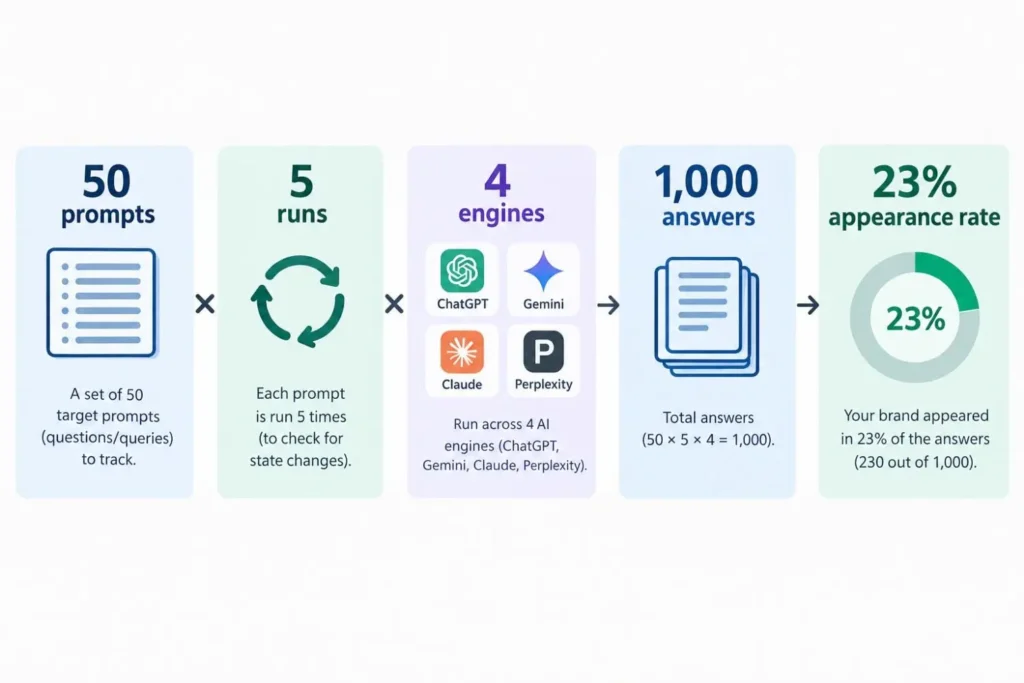
AI tracking is where agencies get vague, and the data shows why. SparkToro and Gumshoe had about 600 volunteers run 12 prompts nearly 3,000 times, and the same brand list came back twice less than once in a hundred. A real answer sounds like: 50 buyer prompts, 5 runs each, 4 engines. That’s 1,000 answers. Show up in 230 and you’re at 23%, a number you can follow monthly. Our generative engine optimization services report it that way, and our free AI visibility checker gives you a baseline before the first call.
Checks 8 to 10: the money and the way out
Jahid Hussain’s view is that the costliest mistake in SaaS search is two vendors who never talk, with the PPC agency bidding on terms the SEO agency already ranks for, sometimes for months. Ask who owns that overlap, even if this agency won’t touch ads.
On price, look for what arrives each month, not hours. Our SaaS SEO pricing breakdown shows what each budget buys and the demos needed to break even.
Got a proposal open in another tab? Send it over and we’ll check it line by line. Book a free growth audit or grab a 30-minute call.
Contract Clauses to Read Before You Sign
| Clause | Good | Watch for |
| Scope | Monthly deliverables, named | “Ongoing SEO” |
| Minimum term and notice | Short, and stated plainly | Auto-renewal in the small print |
| Content ownership | Everything produced is yours | A licence that ends when you leave |
| Account access | Ad, analytics and Search Console accounts in your name | Accounts created under the agency |
| Exit | A written handover of assets and history | Nothing in writing |

Paradigm’s agreements cover all five: three-month minimum, then month to month. Our guide on how to choose a GEO agency goes further on who owns prompt logs.
SaaS-Only or Full-Stack: Which Fits Your Team?
Go SaaS-only if paid search is in good hands and you mainly need category knowledge. Go full-stack if SEO, ads and the website sit with people who rarely talk.
AI search tips it toward the second. Citations and demos depend on landing pages, reviews and ad creative as much as SEO. A siloed SEO vendor can spot a page that isn’t converting. Usually it can’t fix it. So our B2B SaaS SEO agency team runs SEO, GEO and paid search together. For an HR tech SaaS client, 300 commercial pages over five months brought 180K+ impressions, 7,350 Bing AI citations and 15+ ICP-matched leads with no ad spend. Those are leads, not closed deals yet, and any agency should be that plain about its proof.
Our SaaS SEO agencies comparison scores seven firms. We put ourselves first, so read the method before the order.
Score Every Agency the Same Way
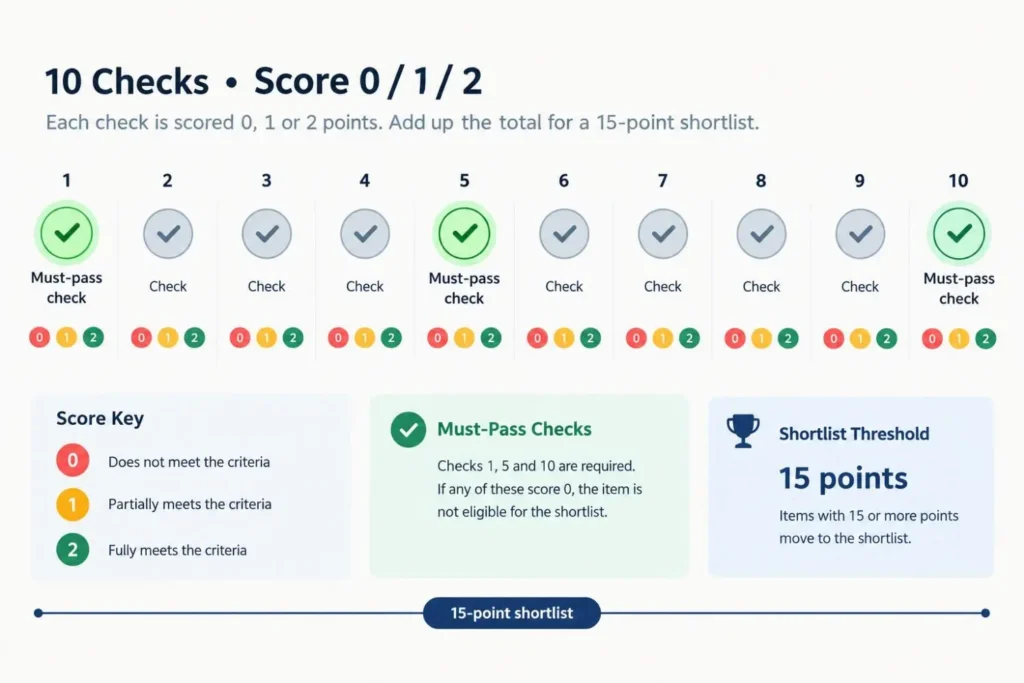
After each call, score every check 0 (red flag), 1 (vague) or 2 (they showed you something). Checks 1, 5 and 10 are must-pass: a zero on any and the agency’s out, however well the rest went. Fifteen or more makes the shortlist. Only then compare price.
Frequently Asked Questions
What should I look for in a SaaS SEO agency?
Proof from current clients: a pipeline report you can see, experience with companies that sell like you, and a clear AI tracking method. Then contract terms that leave accounts and content with you.
How much does a SaaS SEO agency cost?
Published SaaS agency retainers mostly start between $1,500 and $10,000 a month. Compare what ships, not the fee.
How long should I commit to a SaaS SEO agency?
Three months is a fair minimum, then month to month. Judge pipeline at six to twelve months.
Should I hire a SaaS-only or full-stack SEO agency?
SaaS-only, if your ads are well run and you need category expertise. Full-stack, if SEO, ads and the website don’t coordinate.
How do I know if a SaaS SEO agency is actually good?
Good agencies pull up a report or prompt log on the spot. The ones that answer with another slide tend to report that way after signing.
Where to Start
Short on time? Ask for the pipeline report, how they measure AI visibility, and what happens when you leave. Those three answers tell you most of it.
Want a Second Opinion on Your Shortlist?
Send us the proposals you’re weighing and we’ll run them through these ten checks, ours included.
Paradigm Media Networks: SEO, GEO & Ads, Engineered for the AI Era.
About the Author
Jahid Hussain | Founder, Paradigm Media Networks
Jahid Hussain founded Paradigm Media Networks to solve a problem he kept seeing: businesses spending across SEO, ads, and content that never talked to each other. He specialises in local SEO, organic growth systems, and integrated marketing strategies that connect search, paid media, and creative into one lead generation engine. Paradigm has taken clients from zero search visibility to six-figure monthly revenue pipelines, and has been featured in IANS, Eastern Herald, Sangri Times, and Dailyhunt. Jahid operates across the US, UK, UAE, and India, and writes from the standpoint of someone who has built and broken growth systems for real businesses, not from a slide deck.
